
ISLAMABAD, Jun 2 (APP):Uzbekistan is steadily strengthening its role as a key driver of regional connectivity, promoting closer economic, transport, and diplomatic cooperation between Central and South Asia through its flagship initiative, the Termez Dialogue, according to an article by Shukhrat Tukhtabaev, Chief Research Fellow at the Center for Foreign Policy Studies of Uzbekistan. Amid shifting global geoeconomic dynamics, Central Asia is emerging as an increasingly important crossroads for Eurasian …
Uzbekistan Positions itself as regional connectivity hub through “Termez Dialogue Initiative”
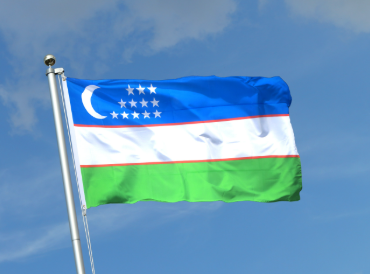
ISLAMABAD, Jun 2 (APP):Uzbekistan is steadily strengthening its role as a key driver of regional connectivity, promoting closer economic, transport, and diplomatic cooperation between Central and South Asia through its flagship initiative, the Termez Dialogue, according to an article by Shukhrat Tukhtabaev, Chief Research Fellow at the Center for Foreign Policy Studies of Uzbekistan.
Amid shifting global geoeconomic dynamics, Central Asia is emerging as an increasingly important crossroads for Eurasian trade and connectivity. In this evolving landscape, Uzbekistan has positioned itself as a proactive advocate of regional integration, with the Termez Dialogue serving as a major platform for fostering sustainable links between neighboring regions ,said a release issued here by the embassy of Uzbekistan to Pakistan here.
The inaugural meeting of the Termez Dialogue on Connectivity between Central and South Asia, held in Termez in May 2025 under the theme “Building a Common Space of Peace, Friendship, and Prosperity,” brought together nearly 200 participants from Central and South Asia, Europe, the Middle East, and the Asia-Pacific region.
The forum was jointly organized by the Institute for Strategic and Regional Studies under the President of Uzbekistan, the Ministry of Foreign Affairs, and the Chamber of Commerce and Industry of Uzbekistan.
On the Termez emerging as Strategic gateway,the choice of Termez as the venue carried significant symbolic and strategic importance. Located on Uzbekistan’s southern border with Afghanistan, the city has historically served as a bridge between civilizations and is now evolving into a major transport, logistics, and diplomatic hub.
Uzbekistan views transport connectivity as the foundation of regional integration and has actively promoted projects aimed at linking Central and South Asia through infrastructure development, energy cooperation, and people-to-people exchanges.
Among the most ambitious initiatives is the proposed Trans-Afghan Railway, connecting Termez with Mazar-i-Sharif, Kabul, and Peshawar. The railway is expected to significantly reduce cargo transit times and provide Central Asian states with direct access to Pakistan’s seaports and the Indian Ocean.
Uzbekistan continues to engage with Afghanistan and Pakistan to advance the project, which is widely regarded as a cornerstone of a future Eurasian transport network.
On the growing Importance Amid Geopolitical Shifts,according to the article, recent geopolitical developments, including instability in the Middle East and concerns over disruptions to traditional trade routes, have increased the strategic value of Central Asia as an alternative transit corridor.
The growing risks surrounding maritime transport and energy infrastructure have intensified international interest in overland routes connecting East Asia, South Asia, and Europe. In this context, Uzbekistan’s connectivity initiatives are increasingly viewed as critical components of a new Eurasian logistics architecture.
The Trans-Afghan Corridor, in particular, has gained renewed attention as a potentially efficient and secure route linking Central Asia to the Indian Ocean.
At the same time, Uzbekistan has expanded efforts to strengthen regional cooperation on energy security, logistics, and humanitarian engagement with Afghanistan, transforming Termez into an important hub for regional crisis-response and economic interaction.
On the institutionalizing regional Cooperation, beyond transport and trade, the Termez Dialogue is gradually developing into an institutional platform for broader cooperation between Central and South Asia.
Experts view the initiative as a step toward building a new framework for interregional engagement based on dialogue, pragmatism, and multilateral cooperation.
As geopolitical tensions continue to rise globally, Uzbekistan is promoting a diplomatic model focused on economic integration, regional stability, and constructive engagement. The Termez Dialogue provides a venue for addressing not only connectivity issues but also wider challenges affecting the resilience and prosperity of the Eurasian region.
The initiative has attracted growing international attention, with many of its themes increasingly discussed at major global forums, reflecting recognition of Uzbekistan’s expanding role as a regional facilitator and bridge-builder.
ON the Climate and Water Security high on agenda, the second meeting of the Termez Dialogue placed particular emphasis on climate resilience, environmental sustainability, and water security.
Participants highlighted the shared challenges facing Central and South Asia, including droughts, water scarcity, dust storms, and the impacts of climate change, stressing the need for coordinated regional responses.
Uzbekistan has called for enhanced cooperation in managing transboundary water resources within the Amu Darya and Syr Darya river basins, which are critical to regional food and energy security.
The country also continues to promote international efforts aimed at restoring ecosystems in the Aral Sea region. Large-scale afforestation projects on the dried seabed of the Aral Sea, including the planting of millions of hectares of saxaul trees, are among the region’s most significant climate adaptation initiatives.
In addition, Uzbekistan is advancing renewable energy projects, including major solar and wind developments supported by investors from the UAE, Saudi Arabia, and China. Officials view green energy cooperation as an important pillar of future regional integration.
On a vision for shared Prosperity, the article concludes that Uzbekistan is steadily consolidating its position as one of the principal drivers of regional connectivity through a combination of transport projects, diplomatic initiatives, environmental cooperation, and economic partnerships.
As Central Asia assumes a greater role in Eurasian affairs, the Termez Dialogue is increasingly seen as a symbol of Uzbekistan’s vision for a more connected, stable, and prosperous region—one built on openness, cooperation, and mutually beneficial development.