
ISLAMABAD, Dec 16 (APP):Minister for National Food Security and Research, Rana Tanveer Hussain on Tuesday chaired a high-level meeting with a delegation from Rafhan Maize Products Company Limited and other key stakeholders to discuss policy matters related to Genetically Modified (GMO) and Non-GMO maize. The focused on productivity, exports, and technological transformation in Pakistan’s agriculture sector, said a press release. During the meeting, it was highlighted that Pakistan currently exports …
Tanveer chairs high-level meeting on GMO and Non-GMO maize policy
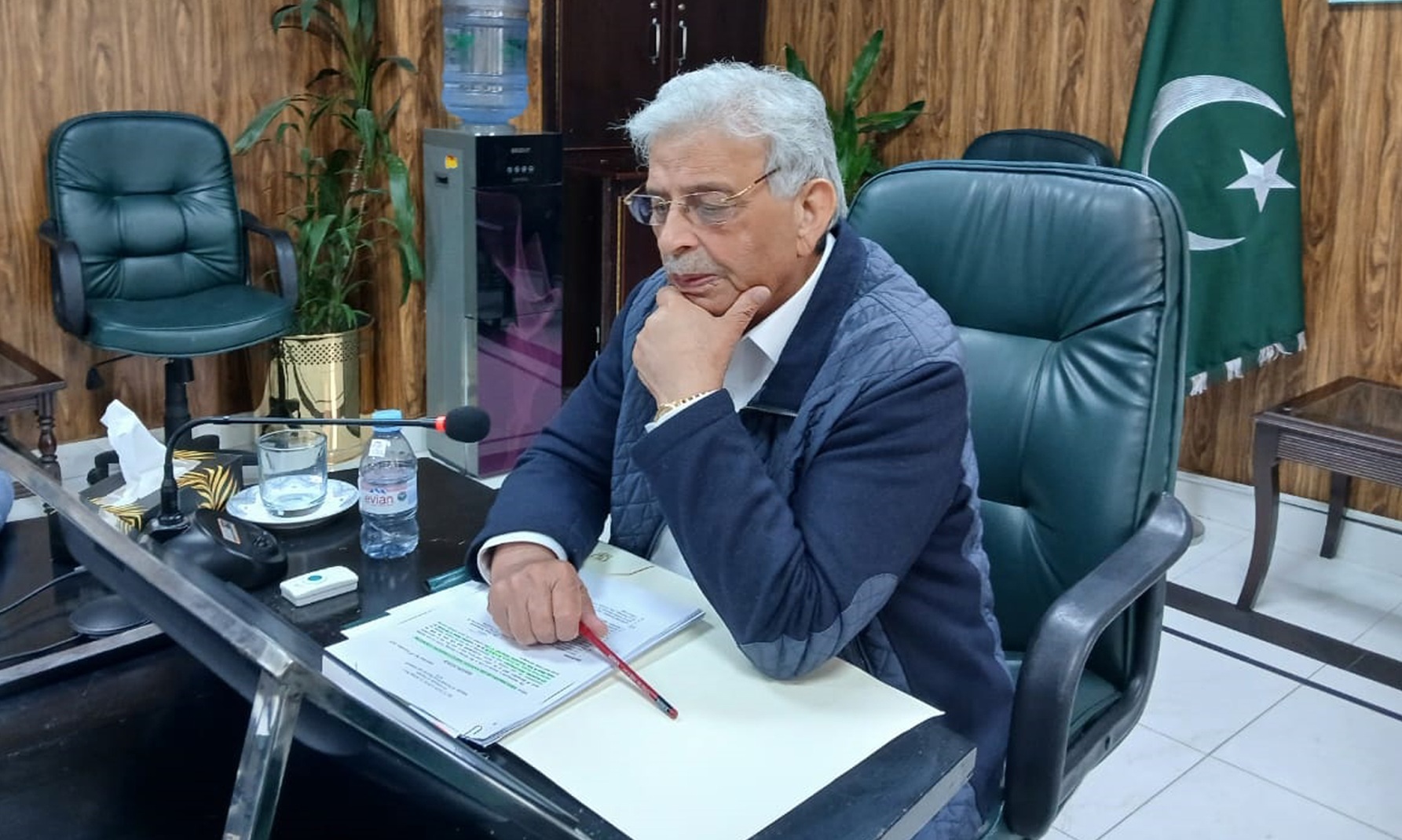
ISLAMABAD, Dec 16 (APP):Minister for National Food Security and Research, Rana Tanveer Hussain on Tuesday chaired a high-level meeting with a delegation from Rafhan Maize Products Company Limited and other key stakeholders to discuss policy matters related to Genetically Modified (GMO) and Non-GMO maize.
The focused on productivity, exports, and technological transformation in Pakistan’s agriculture sector, said a press release.
During the meeting, it was highlighted that Pakistan currently exports approximately $340 million worth of maize, which reflects the country’s strong position in international markets.
However, experts informed the meeting that the adoption of GMO maize technology could increase yields by 15–20 maunds per acre, significantly enhancing farm productivity, farmer income, and national food security.
The Federal Minister emphasized that Pakistan must transform its agricultural technology base to meet growing food demands and remain competitive globally.
He stated that biotechnology and GMO crops represent innovation-driven solutions that can help address low yields, climate stress, and resource constraints.
“This is innovation, and we must move forward by adopting modern technologies such as GMO crops to increase agricultural productivity,” the Minister said. “At the same time, we will ensure that all decisions are taken within the legal and regulatory framework of Pakistan.”
Secretary, Ministry of National Food Security and Research (MNFSR), informed the meeting that the government is actively working on the introduction of a comprehensive biotechnology policy, which will not be limited to maize alone, but will cover a broader range of crops.
He stressed the need to implement modern technology while simultaneously safeguarding the interests of investors, exporters, and consumers.
The Secretary further noted that hybrid technology is also a form of agricultural innovation, citing the example of rice. “When hybrid rice technology was introduced, Pakistan’s rice exports increased significantly.
This shows that responsible adoption of technology can lead to positive economic outcomes,” he said.
The Federal Minister clarified that adoption of GMO crops would be undertaken strictly in accordance with Pakistan’s Biosafety Rules, 2005, which regulate genetically modified organisms and their products.
These rules focus on risk assessment and control for human health and environmental safety, and cover import, export, research, and commercial use of GMOs.
“We will consider allowing GMO technology in a phased and regulated manner, ensuring full compliance with the Biosafety Rules, 2005,” the Minister stated. “Our objective is to strike a balance between innovation, food security, export competitiveness, and the protection of human health and the environment.”
The meeting concluded with consensus on continued stakeholder consultations, evidence-based decision-making, and the development of a clear policy framework to guide Pakistan’s transition towards advanced agricultural technologies while protecting existing markets and investments.