
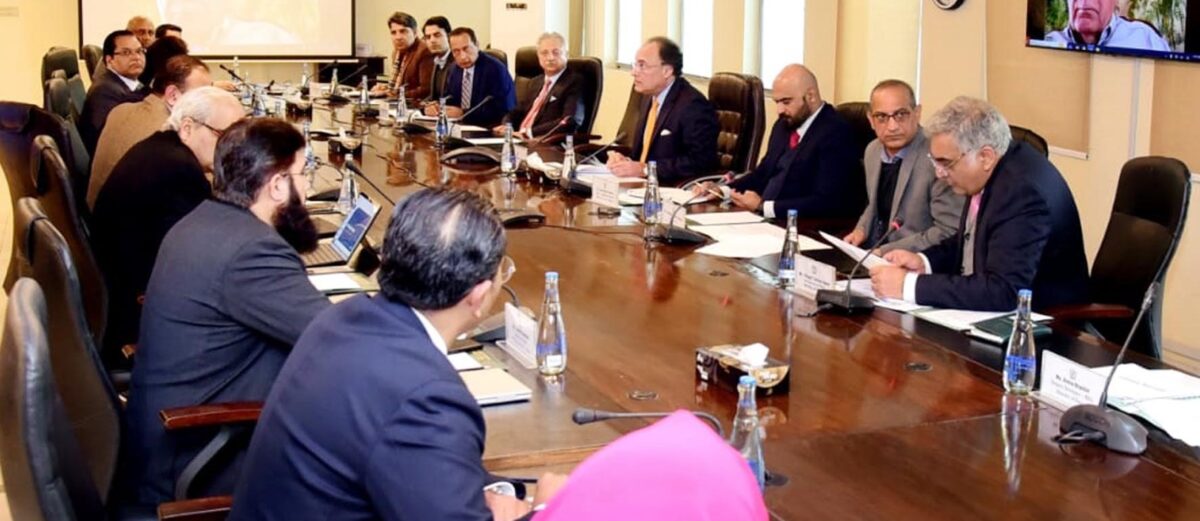

ISLAMABAD, Jan 15 (APP): Federal Minister for Finance and Revenue, Senator Muhammad Aurangzeb, chaired the second meeting of the Prime Minister’s Committee on Social Impact Financing here Wednesday to explore innovative financial solutions to drive social impact, enhance financial inclusion, and uplift marginalized communities across Pakistan.
The meeting brought together a diverse group of stakeholders from the public and private sectors, including Dr. Amjad Saqib, Founder Akhuwat Foundation; Waqas ul Hassan, CEO Karandaaz; Dr. Fatima Khushnood, CEO Pakistan Environment Trust; Hamed Yaqoob Sheikh, Team Leader REMIT; Dr. Ayesha Khan, Regional MD Acumen; Maheen Rahman, CEO InfraZamin; Shazia Maqsood Amjad, CEO Pakistan Centre for Philanthropy; Shahid Aziz, Former CEO Interloop Asset Management; Rashid Bajwa, CEO NRSP; Naveed A. Khan, Chairman Pakistan Microfinance Investment Company (PMIC).
According to press release issued by finance ministry, the meeting was also attended by Governor SBP, CEO State Life Insurance Corporation (SLIC), MD Bait-ul-Mal, Secretary BISP, Secretary PA&SS, and Secretary Finance.
Speaking on the occasion, Aurangzeb emphasized the significance of addressing both economic reforms and critical existential challenges facing Pakistan.
“While we are focused on steering the economy through various reforms, we are equally committed to tackling pressing issues such as the rapid population growth, which contributes to child stunting and learning poverty, and the ongoing climate change crisis,” he said.
In its presentation, Karandaaz highlighted the global growth of impact investing, which has reached $1.571 trillion in assets under management, growing at an annual rate of 21% since 2019.
The organization proposed the establishment of a Green Impact Fund (GIF), a $250 million initiative aimed at financing green micro and small enterprises (MSMEs).
This fund would offer concessional loans, equity with first-loss guarantees, and technical assistance, drawing support from global climate financing sources, commercial institutions, and public or donor funding.
The discussion underscored the potential of such initiatives to foster economic growth, address climate challenges, and promote bottom-up development by creating jobs and empowering underserved communities.
The Ministry of Poverty Alleviation and Social Safety also provided insights into its ongoing initiatives within the social impact financing framework. These included Benazir Income Support Programme (BISP); Nashonuma initiative, supporting 2 million pregnant women and children under two with nutrition and stipends and Kafalaat Program, offering cash transfers to 9.3 million women with a budget of Rs. 461 billion;
Likewise, under National Poverty Graduation Program (NPGP), it transferred productive assets to 151,822 households, providing 252,012 interest-free loans and livelihood training; reported a 74.4% graduation rate out of extreme poverty, with a 30% increase in income.
Under Poverty Graduation of Extremely Poor and Flood-Affected Households (PGEP), a USD 134.2 million initiative providing livelihood assets, climate-smart agricultural technologies, and interest-free loans were provided while Pakistan Bait-ul-Mal Programs was managing shelter homes, women empowerment centers, and the Orphan and Widow Support Program.
The discussions also focused on strategic priorities for advancing social impact financing, including mobilizing philanthropic capital and global impact investments for underserved communities; developing a robust regulatory framework for social impact financing; expanding financial inclusion through innovative tools and blended financing models; Leveraging public-private partnerships to address climate change and promote sustainable development and enhancing resilience through targeted interventions for disaster-affected and climate-sensitive areas.
Meanwhile, the Finance Minister emphasized the need for a structured approach to measure the actual social impact of financial inclusion efforts. He remarked, “It is crucial to focus on the structuring, monitoring, and reporting of social impact outcomes to effectively gauge the results of our initiatives.”
The Minister also highlighted the importance of capacity building across all sectors and the creation of comprehensive dashboards for tracking progress.
“While we are doing a commendable job in specific verticals, as a country, we must take a more holistic approach and scale up our efforts horizontally to ensure broader impact,” he added.
The Finance Minister urged all stakeholders to accelerate efforts in finalizing and operationalizing the proposed frameworks, ensuring that Pakistan’s goals for sustainable development, climate resilience, and poverty alleviation are realized.