Minister of State for Finance Bilal Azhar Kayani on Thursday expressed serious concerns over the sharp rise in terrorist incidents emerging in the Khyber Pakhtunkhwa province, saying that the province had increasingly turned into a “war zone” while alleging that the provincial government was failing to play its due role in combating terrorism.
Rising terrorism in KP serious concern, provincial govt. failing to contain terrorists, says Kayani
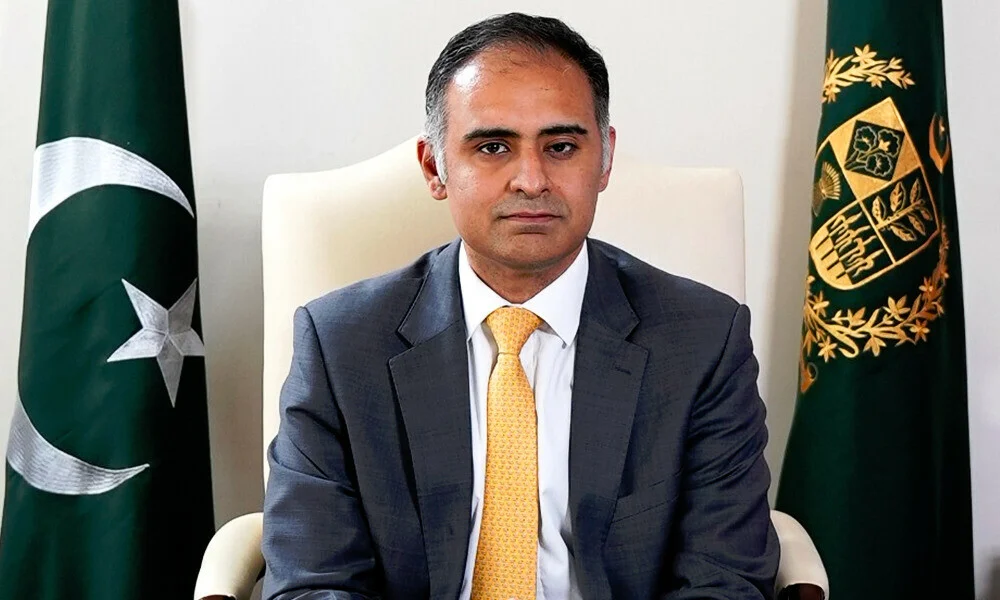
ISLAMABAD, Oct 8 (APP): Minister of State for Finance Bilal Azhar Kayani on Thursday expressed serious concerns over the sharp rise in terrorist incidents emerging in the Khyber Pakhtunkhwa province, saying that the province had increasingly turned into a “war zone” while alleging that the provincial government was failing to play its due role in combating terrorism.
Addressing a press conference, the minister said terrorist incidents had once again started reemerging in the province, with an SHO and a constable martyred in Karak that day, adding that nearly 1,200 people had lost their lives in terrorist attacks in KP during the past two years.
“The situation is that there are daily attacks in Khyber Pakhtunkhwa,” he said, adding that the people of the province, including civilians, police, Army personnel and Customs officials, were paying the price for the worsening security situation.
Bilal Kayani said the repeated funerals of security personnel and civilians had become a painful reality, with personnel from the Army, police and Customs continuing to sacrifice their lives in the line of their duties.
He alleged that despite the escalating terrorism threat, the KP government was reluctant to take responsibility for the fight against terrorism and had repeatedly maintained that the ongoing war was “not our war”.
“How can a province facing daily terrorist attacks say that this war is not its war?” he questioned, stressing that the provincial government had a responsibility to protect its citizens and support law-enforcement agencies.
The minister accused the KP government of failing to provide adequate resources, weapons, checkpoints and equipment to its police force, saying such shortcomings were directly affecting the ability of law-enforcement personnel to confront terrorists.
He said around 10 KP police personnel had been martyred over the past two months, adding that their sacrifices should not be reduced to mere statistics.
Naming some of the martyrs, Kayani mentioned Constables Saifullah Khan, Ahmed Shah and Farmanullah, as well as Shamal Khan Shalmani, said that they had sacrificed their lives while performing their duties and protecting the masses.
He also highlighted the sacrifices of Customs personnel, including Inspector Uzair Azam, who was martyred in Swabi, and Qamar Zaman, Mohammad Ibrar and Jawad Khan. “These are not just numbers. These are people who got martyred while performing their duties and fighting terrorism,” he said.
Minister of State for Finance further said that the growing number of attacks and casualties was also impacting the morale of police, Army and Customs’ personnel who were continuing to operate in high-risk areas.
He questioned how security personnel could maintain their morale high when the political leadership of the province was not standing besides them in the fight against terrorism.
The minister further alleged that the KP government had received around Rs800 billion in support for the war against terrorism and questioned how the funds had been utilized. He claimed that several areas of the province still lacked essential security infrastructure, including courts, checkpoints and bulletproof vehicles, which, exposed law-enforcement personnel to greater risks.
Bilal Kayani also criticized the alleged absence of the provincial leadership from key security and political forums, saying the KP government should actively participate in meetings concerning national security and counter-terrorism.
Referring to recent talks between the federal government and the PTI leadership, he said the federal side had sought the provincial government’s cooperation in combating terrorism rather than asking it to undertake any task beyond its constitutional responsibilities.
The minister alleged that political differences had become an obstacle to achieving consensus on counter-terrorism measures, and said the worsening security situation could not be addressed effectively without active cooperation from the provincial government.
He warned that continued inaction would further endanger the lives of citizens and security personnel, adding that the state could not afford indifference at a time when terrorist attacks were increasing. “The province of Khyber Pakhtunkhwa cannot afford leadership that is not ready to fight terrorism,” he said.
Kayani stressed that the families of martyred soldiers, police officials, Customs personnel and civilians deserved the full support of the state and political leadership.
He said the sacrifices being rendered by security personnel demanded a united national response and urged all political forces to stand behind those fighting terrorism.
“Nothing is more important than the defence of our country and the lives of our citizens,” the minister concluded.