Minister of State for Finance and Railways Bilal Azhar Kiyani on Wednesday said the federal budget for fiscal year 2026-27 was a relief-oriented budget aimed at supporting the working class, industry, exporters, the construction sector, women, youth and low-income segments, while simultaneously broadening the tax base and sustaining economic growth.
Relief-oriented budget targets public welfare, tax expansion, sustainable growth: Bilal Azhar Kiyani
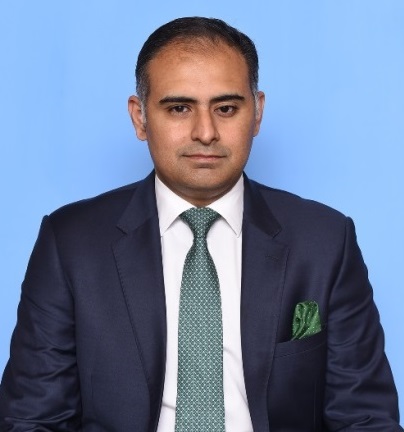
ISLAMABAD, Jun 17 (APP):Minister of State for Finance and Railways Bilal Azhar Kiyani on Wednesday said the federal budget for fiscal year 2026-27 was a relief-oriented budget aimed at supporting the working class, industry, exporters, the construction sector, women, youth and low-income segments, while simultaneously broadening the tax base and sustaining economic growth.
Addressing an online briefing alongside Minister for Information and Broadcasting, Attaullah Tarar, Kiyani said the budget reflected Prime Minister Shehbaz Sharif’s commitment to providing relief to the public and promoting sustainable economic development.
He said the budget contained incentives for industry, exporters and the construction sector, which was closely linked with employment generation and the growth of allied industries. He added that special measures had also been introduced for women, including relief on products related to women’s reproductive health through the removal of sales tax under the government’s “pink tax” initiative.
The minister said the budget also catered to citizens aspiring to own homes despite limited financial resources and included a comprehensive Prime Minister’s Youth Package. He said Rs. 110 billion had been allocated this year under the package for agricultural financing and disbursements to young people.
Responding to questions raised by citizens on social media platforms, Kiyani addressed concerns regarding the allocation for the Benazir Income Support Programme (BISP) in comparison with federal spending on education.
He explained that education and health had largely become provincial subjects after devolution, while the federal government primarily played a coordinating role and provided funding for higher education through the Higher Education Commission (HEC). Therefore, he said, a complete assessment of education and health spending should include provincial budget allocations.
The minister said Rs 838 billion had been allocated for BISP during the current fiscal year. He said the programme covered more than 10 million eligible families selected through internationally recognized criteria agreed with the World Bank, with women being the primary beneficiaries.
Answering a question regarding measures for women’s health, Kiyani reiterated that the budget had exempted sales tax on products related to women’s reproductive health, which would help reduce their cost and improve affordability.
Regarding the retail sector’s inclusion in the tax net, he acknowledged that a large number of traders remained outside the taxation system despite previous efforts by successive governments. He said approximately 3.5 million shopkeepers were currently outside the tax net.
Kiyani said the government had introduced a new scheme following consultations with traders and expressed confidence that positive results would emerge during the current fiscal year. He added that awareness and implementation efforts would be carried out in major cities and markets to ensure the scheme’s success.
The minister said the government had taken into account public feedback received through platforms including Instagram and Facebook and had attempted to address key concerns related to the federal budget.