ISLAMABAD, Feb 10 (APP): Recent trade diplomacy moves involving India, the European Union and the United States do not pose an immediate or existential threat to Pakistan’s exports, however, it may tighten the competitive environment and reduce the margin of error for Pakistani exporters. This was stated by Dr Abid Qaiyum Suleri, the Executive Director of Sustainable Development Policy Institute (SDPI), here in his televised interview. Analyzing the proposed EU-India …
Recent trade diplomacy moves by India no threat to Pakistani exports: Dr Suleri
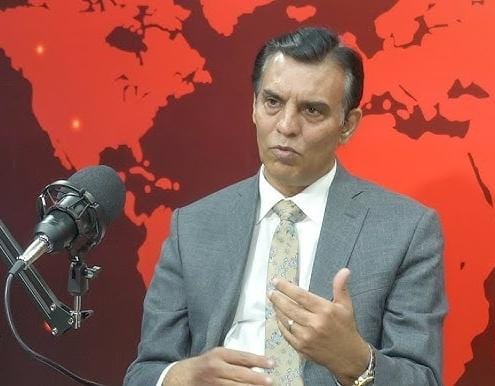
ISLAMABAD, Feb 10 (APP): Recent trade diplomacy moves involving India, the European Union and the United States do not pose an immediate or existential threat to Pakistan’s exports, however, it may tighten the competitive environment and reduce the margin of error for Pakistani exporters.
This was stated by Dr Abid Qaiyum Suleri, the Executive Director of Sustainable Development Policy Institute (SDPI), here in his televised interview.
Analyzing the proposed EU-India Free Trade Agreement and the evolving US-India trade arrangements, he warned Pakistani policymakers and exporters to prepare for tougher market conditions.
Global trade diplomacy is being reshaped less by classical economic theory and more by efforts to hedge against uncertainty, he said, adding: “Today, tariffs change with little warning, compliance rules shift mid-stream and market access is increasingly shaped by politics rather than price alone.” In this environment, he elaborated, countries are locking in bilateral and preferential deals to protect themselves from sudden policy shocks.
Dr Suleri noted that India’s recent and proposed trade agreements with the EU and the UK were part of this broader global pattern rather than an isolated development. Pakistan, he said, competes directly with India in several product categories in the EU, the UK and the US, and should respond with a clear-eyed assessment of its exposure instead of alarm.
Highlighting the scale gap, he pointed out that India approaches these markets as a diversified exporter with massive volumes while Pakistan enters as a far more specialized supplier. In 2024, EU goods trade with India reached about €120 billion compared to roughly €12 billion with Pakistan. Similarly, US imports from India stood at over $87 billion, against around $5 billion from Pakistan. “These numbers are not a judgment on policy effort; they simply show where each country stands and why Pakistan has less room for error,” he said.
Focusing on Europe, Dr Suleri said Pakistan’s exports to the EU remain heavily concentrated in textiles and clothing, accounting for nearly three-quarters of its exports to the bloc. “This concentration has remained viable largely because of duty-free access under the EU’s GSP+ scheme, under which Pakistan exports around $7 billion worth of textiles annually. India exports a similar value of textiles to the EU but currently faces tariffs of about 12 percent.”
He warned that the EU-India FTA, which is likely to be implemented after about a year, will gradually narrow the cushion Pakistan has enjoyed. Though the agreement would not push Pakistan out of the European market overnight, it would alter the buyer behaviour, he said, adding: “Prices will be scrutinized more closely, delivery schedules will matter more and compliance gaps that were once tolerated will become costly.”
Dr Suleri stressed the need for securing the continuation of Pakistan’s GSP+ status beyond 2027 as it is critical to maintain a level playing field. “Preferential access is not a given. It must be treated as an economic priority and a lifeline, especially as competition intensifies,” he said.
On the UK market, he noted that Pakistan has already benefited from preferential access under the UK’s Developing Countries Trading Scheme, meaning India’s UK deal does not immediately translate into a tariff shock. However, Indian suppliers would still approach buyers with a stronger cost and scale position, particularly in mainstream apparel categories. While the UK’s Pakistani diaspora offers niche opportunities in branded and occasion wear, bulk textile exports will continue to be driven by price stability, lead times and compliance.
Discussing the proposed US-India trade arrangement, Dr Suleri said many claims circulating in public discourse, including zero tariffs for US exports to India or India halting Russian oil imports remained unconfirmed. “US trade policy has become overtly transactional and politically contingent. Announcements often run ahead of enforceable commitments,” he said, advising Pakistan government not to treat short-term tariff signals for competitors as permanent shifts.
“Buyers do not judge suppliers on price alone. Delivery reliability and compliance cannot be offset by currency weakness,” he said.
On the broader global trade environment, Dr Suleri observed that the world was moving towards parallel systems; traditional multilateral frameworks like the WTO alongside a growing web of bilateral and regional agreements. Many countries, he said, were seeking predictability through rules-based arrangements amid uncertainty in the US trade policy.
Outlining policy priorities, he emphasized that Pakistan must defend market share where competition with India is sharpest, particularly in apparel and home textiles in Europe and the UK. This requires moving up within existing product lines through better finishing, stronger design input, higher value addition, shorter response times and stricter compliance.
He described trade facilitation as a critical reform area. “Delays at ports, unpredictable documentation and slow refunds quietly erode competitiveness every day. Reducing this friction is often cheaper and more effective than subsidizing exports,” he said.
Dr Suleri also underlined the constraints imposed by Pakistan’s IMF programme, noting that broad subsidies or energy price distortions would require negotiations with the Fund. Any support for exporters, he said, must be targeted, temporary and linked to performance within agreed fiscal limits.
Finally, he called for export diversification as basic risk management rather than a strategic luxury. Expanding into the Gulf, East Africa and parts of Asia, he said, would reduce over-dependence on a narrow set of markets and products.
“The trade deals secured by India do not spell disaster for Pakistan,” Dr Suleri said. “They simply remove a layer of comfort. In a world where preferences are never guaranteed and tariffs can change quickly, competitiveness, not fear remains the only durable defence,” he concluded.