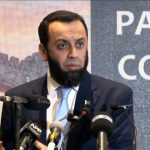
ISLAMABAD, Oct 12 (APP):Federal Minister for Finance and Revenue Senator Muhammad Aurangzeb has expressed confidence that Pakistan’s economy would grow by more than 04 percent during the current fiscal year despite elevated oil prices, while the government expects to privatize five to six state-owned entities, potentially generating more than $1 billion. In an interview with Reuters on the sidelines of the World Bank Group–IMF Annual Meetings 2026 in Bangkok, the …
Pakistan’s economy expected to grow over 4% in current FY: Aurangzeb
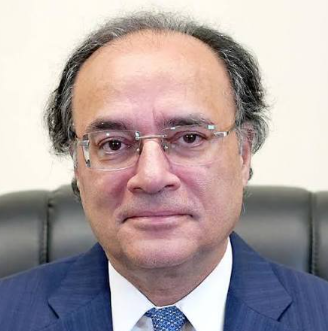
ISLAMABAD, Oct 12 (APP):Federal Minister for Finance and Revenue Senator Muhammad Aurangzeb has expressed confidence that Pakistan’s economy would grow by more than 04 percent during the current fiscal year despite elevated oil prices, while the government expects to privatize five to six state-owned entities, potentially generating more than $1 billion.
In an interview with Reuters on the sidelines of the World Bank Group–IMF Annual Meetings 2026 in Bangkok, the finance minister said Pakistan had successfully secured adequate fuel supplies despite challenging circumstances, avoiding shortages and ensuring that critical sectors, including agriculture, continued to function.
“So I’m still quite clear that we should clock north of 4 percent,” Aurangzeb said, adding that the government was closely monitoring inflation because higher oil prices could have a knock-on impact on commodity prices.
Pakistan, a South Asian country with a population of around 255 million, has also continued to advance its engagement with the International Monetary Fund (IMF) and international financial partners to support economic stability and reforms.
Aurangzeb said Pakistan, which reached a staff-level agreement with the IMF last week that could unlock about $1.21 billion in financing under the Extended Fund Facility (EFF) and a climate program , was continuing discussions with the United States on a proposed $10 billion exchange stabilization facility.
“If it comes through, this will be a great help for us,” he said, referring to the proposed facility, which is in addition to ongoing discussions with the Export-Import Bank of the United States (EXIM) and the US International Development Finance Corporation (DFC).
However, the minister said Pakistan’s access to international markets would not be affected if the proposed facility did not materialize.
“If it doesn’t come through, this does not, you know, create any problem for us in terms of access to market,” he said.
On the privatization agenda, Aurangzeb said that, following the sale of the national flag carrier Pakistan International Airlines (PIA) last year, the government had around a dozen other entities in the pipeline for privatization or private-sector participation. These include state-owned power distribution companies and plans to outsource airport operations.
“I expect about five or six of these to go through during this fiscal year,” he said, adding that the transactions could generate more than $1 billion.
Reaffirming the government’s commitment to a private-sector-led economy, Aurangzeb said the government intended to facilitate businesses and create an enabling environment for private investment.
“We are quite clear that we want the private sector to lead the country,” he said, adding that the government’s role was to support and assist the private sector by strengthening the overall economic ecosystem.