Federal Minister for Planning, Development and Special Initiatives Professor Ahsan Iqbal said Pakistan was moving beyond the export of IT services towards technology products, digital platforms and technology-driven industries as part of its broader agenda for economic transformation.
Pakistan targets tech products, digital platforms to drive export growth: Ahsan
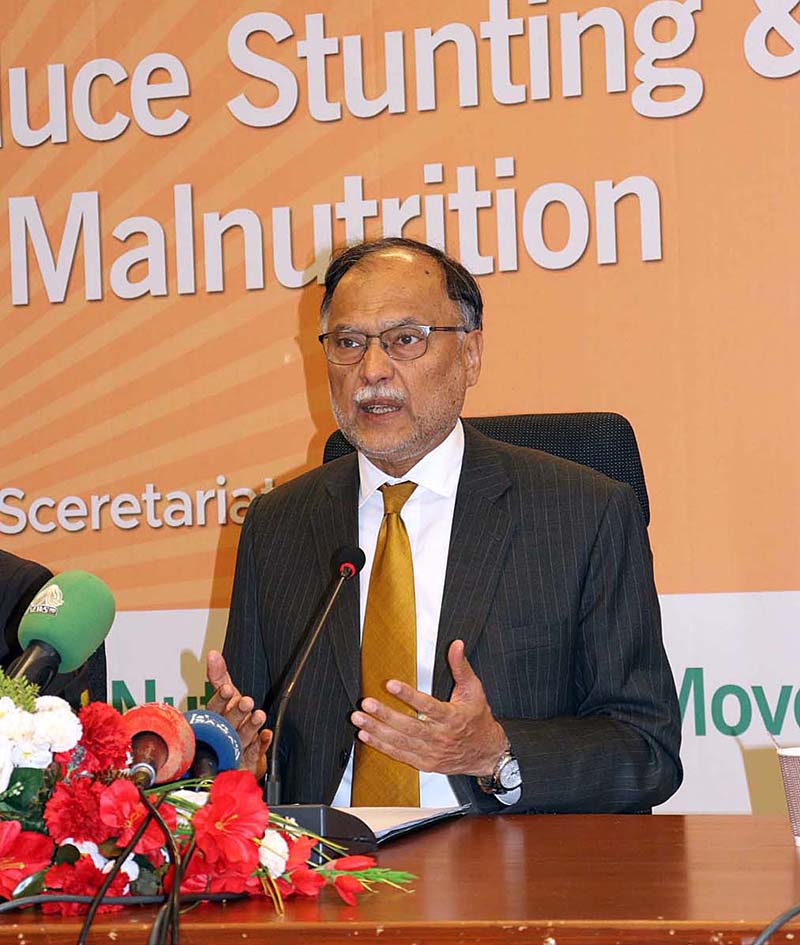
URUMQI (China), Sep 15 (APP):Federal Minister for Planning, Development and Special Initiatives Professor Ahsan Iqbal said Pakistan was moving beyond the export of IT services towards technology products, digital platforms and technology-driven industries as part of its broader agenda for economic transformation.
Addressing the 2026 Shanghai Cooperation Organization (SCO) Digital Economy Forum in Urumqi, he said Pakistan’s IT and ICT exports had reached a record $4.6 billion during the last fiscal year, while the country was focusing on exports, productivity, innovation, investment and human resources under Uraan Pakistan to achieve the target of a $1 trillion economy by 2035, a news release said on Tuesday.
“Pakistan’s next goal is not merely the export of services, but the promotion of technology products, digital platforms and technology-driven industries,” he said.
Ahsan said the digital economy was not merely a technology agenda for Pakistan but a comprehensive programme for economic transformation, with e-Pakistan, one of the five fundamental pillars of Uraan Pakistan, serving as an important component of economic development.
He said Pakistan’s digital landscape had expanded significantly, with the number of digital users crossing 150 million and data usage increasing by around 25 per cent over the past two years.
Fibre connections had increased from around 3 million to more than 5 million, while Pakistan had set a target of extending wired broadband to 10 million households, he added.
The minister highlighted progress in closing the digital gender gap, saying the disparity in mobile internet usage had declined from 35 per cent to only 8 per cent, while women’s mobile internet usage had increased from 33 per cent to 45 per cent.
“Such digital transformation that leaves women behind can neither be economically effective nor socially just,” he said, stressing that women’s participation was essential for inclusive digital development.
Ahsan said Pakistan was enhancing its capabilities in artificial intelligence, cybersecurity, cloud computing, semiconductors, advanced industry and emerging technologies.
He said seven AI centres were being established to connect research, skills, startups and industry, adding that the country was seeking to develop an ecosystem capable of translating technological capabilities into economic opportunities.
Referring to Pakistan’s regional connectivity potential, the minister said its geographical position made it an important link between China, Central and South Asia and the Middle East.
“We must turn regional connectivity into regional competitiveness,” he said.
He said digital technology could make agriculture, industry, mining, energy and other sectors more efficient and advanced, while CPEC 2.0 and Special Economic Zones could connect Chinese technology and Pakistani business capabilities with regional markets.
Ahsan said CPEC 2.0 was focused on five key areas including development, employment, innovation, green energy and regional connectivity.
He said Pakistan had proposed four priority areas for practical cooperation under the SCO, including establishment of a digital trade corridor to make cross-border trade faster, easier and less costly.
He called for integration of customs, logistics, electronic trade documentation, digital signatures and cross-border payment systems across the region.
The minister also proposed a joint SCO system for AI infrastructure and governance, saying the region should promote joint research, multilingual AI models, university partnerships and human resource development.
He stressed that digital development should not remain confined to major cities and large companies, but create opportunities for women, youth, rural populations, small farmers, and small and medium enterprises.
“The real measure of the forum’s success is not announcements alone, but the trade, investment, technology partnerships and employment opportunities generated through them,” Ahsan said.
He reaffirmed Pakistan’s readiness to work with China and SCO member states for shared development and prosperity.