Federal Minister for Finance and Revenue Senator Muhammad Aurangzeb on Monday said Pakistan is pursuing a medium-term debt strategy to diversify financing sources, extend debt maturities and expand access to international capital markets, aiming to ease external repayment pressures and improve its sovereign credit rating.
Pakistan eyes diversified financing, longer debt maturities: Aurangzeb
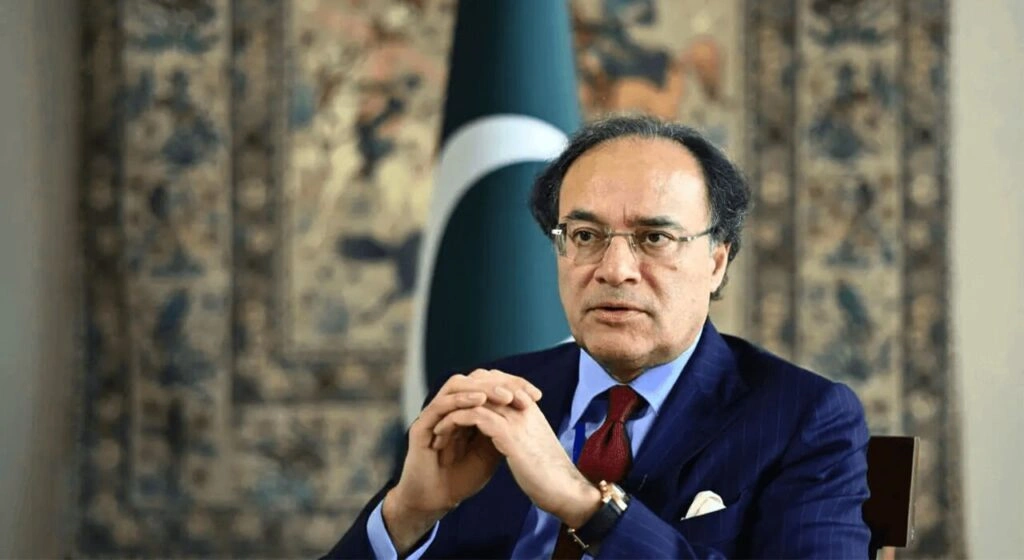
ISLAMABAD, Oct 12 (APP): Federal Minister for Finance and Revenue Senator Muhammad Aurangzeb on Monday said Pakistan is pursuing a medium-term debt strategy to diversify financing sources, extend debt maturities and expand access to international capital markets, aiming to ease external repayment pressures and improve its sovereign credit rating.
In a televised interview with Bloomberg TV on the sidelines of the ongoing IMF and World Bank Group Annual Meetings in Bangkok, the minister said Pakistan would avoid rushing into international borrowing during the current fiscal year, as it did not need to rely on global markets to meet its external financing requirements.
He said Pakistan had returned to international capital markets after a four-year gap, issuing $750 million in bonds privately in April and $3 billion in Eurobonds about three weeks ago. The Eurobond issuance attracted bids twice the amount offered, with investors participating from Asia, the Middle East, Europe and the United States.
Pakistan had also issued $250 million in Panda bonds under a $1 billion programme, with further issuances planned, he said, adding that mandates had been awarded for Islamic Sukuk and, for the first time, bonds denominated in rupees but payable in dollars. The government would also examine digital tokenisation of existing Eurobonds.
Aurangzeb said Pakistan aimed to convert some short-term external debt into longer-term obligations over the next two to three years to reduce refinancing risks while maintaining its overall external debt stock.
He said the country’s sovereign credit rating had improved three times since April last year and was currently in the B category. If progress continued, Pakistan could achieve a B-plus rating by the beginning of the next fiscal year, with the longer-term goal of entering the double-B category.
The minister said the government was shifting its approach from aid towards trade and investment, with active discussions underway with the United States on tariffs and a framework agreement. Engagement with the US Export-Import Bank and the International Development Finance Corporation covered potential cooperation in agriculture, information technology, minerals and mining.
Discussions with US officials also included possible cooperation through the Exchange Stabilization Fund, but no agreement had been reached. He said Pakistan would continue pursuing international capital market access regardless of the outcome.
Aurangzeb said Pakistan’s foreign exchange reserves had reached a historic $21.4 billion a few weeks earlier, equivalent to around three months of imports, compared with only two weeks of coverage three years ago. He attributed much of the improvement to market-based foreign exchange purchases rather than additional borrowing and expressed confidence in the rupee’s continued stability.
Pakistan’s economic growth had recovered from negative 0.3 percent three years ago to 2.6 percent the following year and 3.7 percent in the last fiscal year. The government expected growth to exceed four percent during the current fiscal year, he said.
Pakistan had achieved its tax collection targets during the July-September quarter, while its tax-to-GDP ratio had entered double digits. The government was closely monitoring the impact of the Middle East conflict on inflation and economic growth, he added.
The minister said Pakistan had managed energy procurement effectively since the conflict began in March, avoiding fuel shortages and queues at petrol stations. Arrangements were in place for October’s crude oil and gas requirements, while procurement planning for crude oil and liquefied natural gas for November was underway.
He said prolonged regional tensions could require difficult decisions on energy procurement and resource allocation, stressing that food security was equally important. Existing urea and diammonium phosphate fertiliser stocks, alongside domestic production capacity, had placed Pakistan in a comparatively favourable position.
Targeted subsidies had been provided to vulnerable segments to mitigate the impact of the conflict, he said, adding that Pakistan’s constructive engagement with the US administration and relations of trust with Iranian leadership had contributed to reconciliation efforts in Islamabad.