ISLAMABAD, Feb 11 (APP): Pakistan and Cambodia, at the Second Joint Trade Committee (JTC) meeting here on Wednesday, reviewed progress since their inaugural session held in Phnom Penh and agreed to deepen cooperation across trade, investment and multiple priority sectors while exploring a preferential trade framework and enhanced business-to-business engagement. Federal Minister for Commerce Jam Kamal Khan co-chaired the second meeting of the committee with Minister of Commerce of the …
Pakistan, Cambodia vow to deepen cooperation at 2nd JTC
ISLAMABAD, Feb 11 (APP): Pakistan and Cambodia, at the Second Joint Trade Committee (JTC) meeting here on Wednesday, reviewed progress since their inaugural session held in Phnom Penh and agreed to deepen cooperation across trade, investment and multiple priority sectors while exploring a preferential trade framework and enhanced business-to-business engagement.
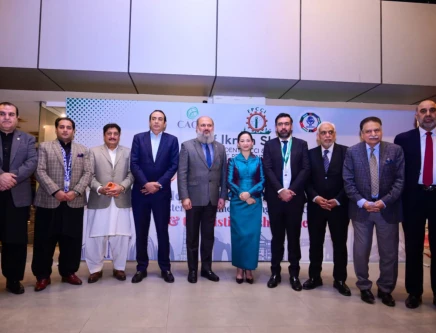
Federal Minister for Commerce Jam Kamal Khan co-chaired the second meeting of the committee with Minister of Commerce of the Kingdom of Cambodia, Cham Nimul.
The meeting formally adopted its agenda, reviewed the outcomes of the senior officials’ meeting, and concluded with the signing of the Joint Statement and the witnessing of an agreement between the Trade Promotion Organizations (TPOs) of the two countries.
Speaking on the occasion, Jam Kamal Khan emphasized that the JTC serves as a structured and effective platform to review progress, address challenges, and identify new avenues for cooperation.
He noted encouraging growth in bilateral trade while highlighting significant untapped potential in market access, investment, and sectoral collaboration. He reaffirmed Pakistan’s commitment to advancing discussions toward a Preferential Trade Agreement (PTA) to enhance market access and diversify trade baskets.
The meeting reviewed progress since the first JTC held in Phnom Penh on January 21, 2025, where both sides had agreed to institutionalize trade dialogue and explore a PTA framework. Building on that foundation, the Second JTC focused on enhancing cooperation in priority sectors.
Pakistan highlighted export potential in rice, pharmaceuticals, textiles, and agricultural products, while Cambodia identified opportunities in cassava, cashew nuts, footwear, and rubber products. Both sides agreed to facilitate direct engagement between their business communities to translate these complementarities into concrete trade flows.
On investment, Pakistan’s Board of Investment presented opportunities in energy, IT, tourism, and infrastructure, positioning Pakistan as a gateway to Central Asia. Cambodia outlined the advantages under its new Investment Law and Special Economic Zones (SEZs), proposing Cambodia as a strategic production base for Pakistani enterprises seeking access to ASEAN and RCEP markets.
The two sides agreed on advancing cooperation across multiple sectors, including agriculture through the establishment of a technical working group; aviation through nomination of focal persons toward an Air Services Agreement; double taxation avoidance through exchange of focal points; health cooperation through proposed MoUs; standards and conformity assessment; non-bank financial sector collaboration; ICT cooperation in digital transformation, AI and cyber security; and labor and vocational training exchanges.
The participation of relevant ministries, regulatory authorities, and financial institutions from both countries reflected the comprehensive scope of engagement.
At the conclusion of the session, the Joint Agreed Minutes of the 2nd JTC were adopted, reaffirming both sides’ commitment to practical implementation and sustained institutional coordination.
Speaking on the occasion, Cham Nimul expressed sincere appreciation for the warm hospitality extended by Pakistan and commended the technical teams and senior officials for their diligent work.
She reaffirmed Cambodia’s commitment to structured, result-oriented economic cooperation and welcomed Pakistan to Cambodia for the Third JTC Meeting in 2027, preferably in January or February to maintain annual continuity.
She noted that beyond formal deliberations, cultural and people-to-people exchanges further strengthen bilateral economic ties and mutual understanding.
The meeting concluded with the signing of the Joint Statement by the Co-Chairs, followed by the witnessing of the signing of the agreement between the Trade Promotion Organizations of Pakistan and Cambodia — a step aimed at enhancing information exchange, business networking, and trade promotion initiatives.
The Second Pakistan–Cambodia Joint Trade Committee marked a significant milestone in deepening bilateral economic engagement, laying a clear roadmap for enhanced trade, investment, and institutional collaboration between the two friendly nations.