ISLAMABAD, Oct 7 (APP): Federal Committee on Agriculture (FCA) on Wednesday was informed that crops including sugarcane, rice, maize, mung bean and chillies showed a significant increase during Kharif season as compared to the output of the previous year. The FCA, which met here with Minister for National Food Security and Research Rana Tanveer Hussain in the chair, reviewed the performance of the Kharif crops and set the production targets …
Output of sugarcane, rice, maize & moong bean grew: FCA told
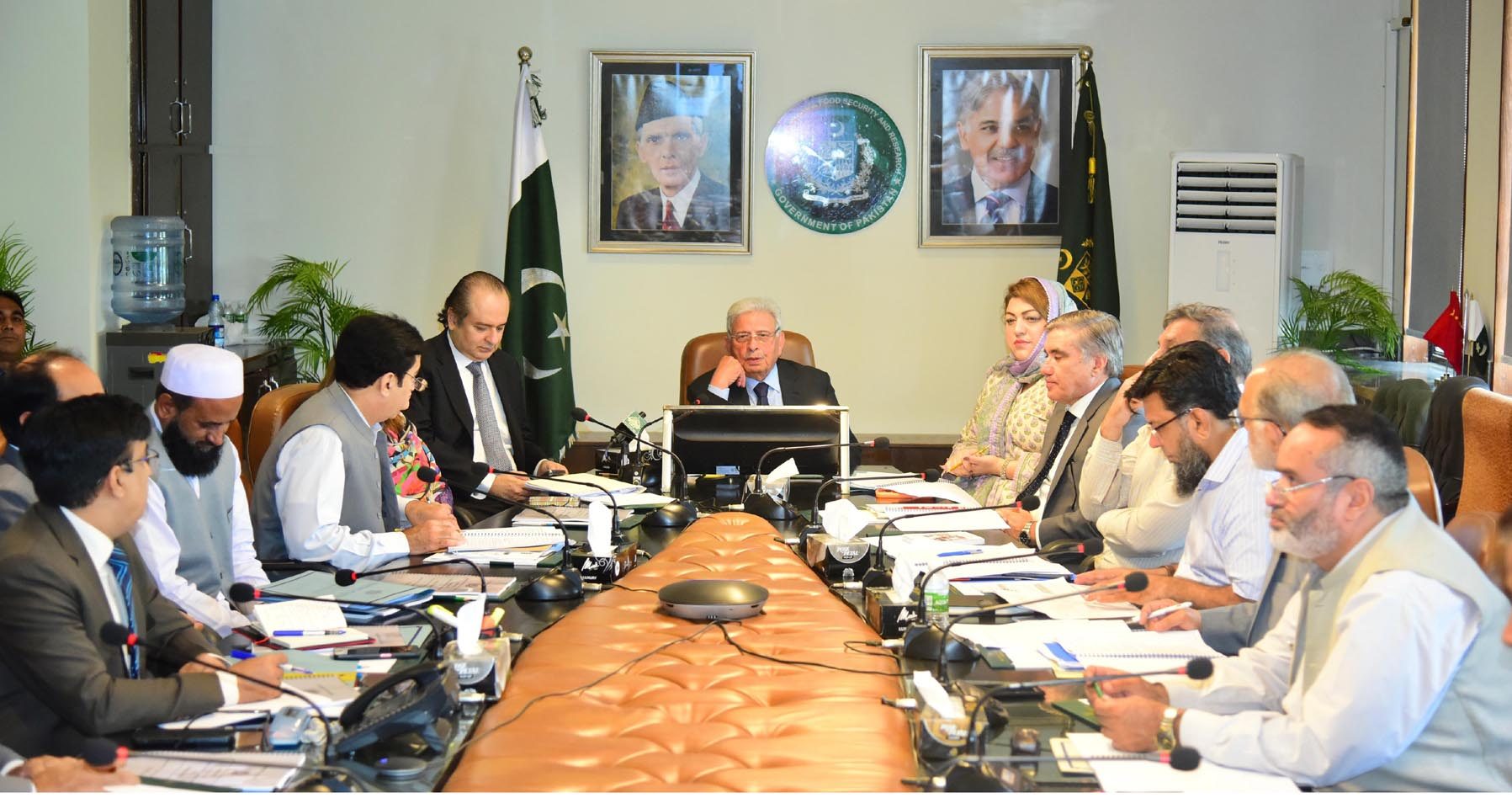
ISLAMABAD, Oct 7 (APP): Federal Committee on Agriculture (FCA) on Wednesday was informed that crops including sugarcane, rice, maize, mung bean and chillies showed a significant increase during Kharif season as compared to the output of the previous year.
The FCA, which met here with Minister for National Food Security and Research Rana Tanveer Hussain in the chair, reviewed the performance of the Kharif crops and set the production targets for the different major and minor crops during Rabi season 2026-27, said a press release.
The performance of the seven Kharif crops was reviewed and five out of the seven crops including sugarcane, rice, maize, mungbean and chillies showed an increase in production as compared to the output of the same period of the previous year.
The meeting was also attended by the provincial agriculture departments, State Bank of Pakistan, ZTBL, Pakistan Meteorological Department, Indus River System Authority and senior officers of the Ministry of National Food Security & Research and attached departments.
The Committee was informed that sugarcane production for 2025-26 is provisionally estimated at 97.2 million tons from an area of 1.358 million hectares, showing an increase of 18.5% and 21.1% in area and production, respectively.
The rice production for 2025-26 is estimated at 10.182 million tons from an area of 3.902 million hectares, showing an increase of 28.4% in area 11.0% in production. The maize production for the period under review is estimated at 9.97 million tons from an area of 1.83 million hectares, showing an increase of 21.0% in area and 3.2% in production.
It was informed that the mung bean production during the season is estimated at 171.02 thousand tons from an area of 225.70 thousand hectares, showing an increase of 32.3% in area and 14.8% in production over the targets fixed by the FCA.
The chillies have also shown growth in area, production and yield as compared to the previous year. It was also decided that the targets of the crops for Rabi 2026-27 will be finalized after the announcement of illustrative
price for wheat.
The Committee also discussed the situation of inputs for Rabi Crops (2026-27) and the seed availability for Rabi Crops was also discussed. The DG, FSC&RD informed that availability of certified seed for Rabi, 2026-27 will remain satisfactory.
For Rabi 2026-27, IRSA Advisory Committee, with the consensus of all stakeholders, based on Rim station Inflows of 21.268 MAF, indicated an anticipated shortage of 22% for Punjab and Sindh. Provinces are allocated 29.18 MAF of water.
The Meteorological Department informed that soil moisture stress is expected during September to November due to below-normal rains reported during the last three months, including monsoon season and expected below-normal precipitation during September.
However, the situation is likely to improve due to mostly above normal rains expected during October and November. Isolated showers/hails/windows may damage the standing Kharif crops, particularly in the northwestern parts of the country. A considerable amount of water would be available for irrigation, particularly over the upper half, during the forecast period.
In pursuance of government’s agenda for promotion of agriculture sector, to increase flow of credit to agriculture sector, State Bank of Pakistan (SBP) allocated an indicative agricultural credit disbursement target of Rs. 3,062 billion for fiscal year 2026, which was 19% higher than preceding year’s disbursement of Rs 2,573 billion.
Currently, 47 formal financial institutions are providing agriculture loans to the farming community, which include 5 major commercial banks, 12 medium- and small-sized domestic private banks, 6 Islamic banks, 02 specialized banks (ZTBL & PPCBL), 11 microfinance banks and 11 Microfinance Institutions/Rural Support Programs (MFIs/RSPs). During FY26, the agricultural lending institutions disbursed Rs 3,231.6 billion, which was 24.7% of the overall annual target of Rs 2,592.
Total availability of urea during 2026-27 is estimated at 3,950 thousand tonnes, comprising 765 thousand tonnes of opening balance and 3,185 thousand tonnes of domestic production. Urea offtake is expected to be around 3,596 thousand tonnes.
Total availability of DAP will be 766 thousand tonnes against expected offtake of 838 thousand tonnes. Supply/demand gap in DAP will be filled through imports by the private sector.
Speaking on the occasion, Rana Tanveer Hussain said that agriculture is the backbone of the national economy and food security, and our collective priority must be to increase productivity, reduce the cost of production, ensure efficient use of water and inputs, promote quality and climate-resilient seed, mechanization, modern technologies and strengthen market linkages.
We are conscious of the challenges faced by our farmers due to rising input, energy and transportation costs, and the government is taking measures to ensure affordable inputs and remunerative prices, including an appropriate wheat illustrative price, he added.
The minister informed that the National Seed Policy, National Agricultural Biotechnology Policy and National Olive Policy have been approved, while the National Agri-Trade and Food Safety Authority has been established to strengthen quality, food safety and export competitiveness.
We are also investing in human resource development by providing international training opportunities to agricultural graduates, including 100 graduates in the olive value chain and 1,000 graduates in China, he said, adding that the challenges facing agriculture require coordinated efforts by Federal and Provincial Governments, research institutions, academia, the private sector and farmers.
The minister urged the participants to focus on practical, innovative and result-oriented measures that increase productivity, reduce production costs, improve farmers’ incomes and strengthen national food security.
The Federal Minister also emphasized the need to strengthen and improve the agricultural extension and advisory services of the provinces to ensure timely dissemination of modern technologies and best agricultural practices to farmers.