Advisor to the Prime Minister for Industries and Production Haroon Akhtar Khan has constituted four technical groups, under the steering committee, to develop recommendations on finishing standards, technology upgradation, value addition and export promotion.
Haroon constitutes four technical groups to modernize marble industry, boost exports

ISLAMABAD, Oct 15 (APP): Advisor to the Prime Minister for Industries and Production Haroon Akhtar Khan has constituted four technical groups, under the steering committee, to develop recommendations on finishing standards, technology upgradation, value addition and export promotion.
The initiative has been taken under the National Marble and Natural Stone Policy 2026–2030, marking a key step towards modernizing the sector and enhancing its international competitiveness.
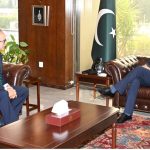
Chairing a meeting of the Steering Committee on the National Marble and Natural Stone Policy, he reviewed the challenges facing the marble industry and discussed measures to enhance value addition, improve finishing standards, modernize production processes and increase exports.
Addressing the meeting, Haroon said the steering committee had been constituted under the vision of prime minister to address longstanding challenges facing the sector, unlock its export potential and modernize the industry in line with international standards.
He said Pakistan’s marble industry had significant potential to contribute to industrial growth, employment generation and foreign exchange earnings, provided that the sector moved beyond conventional extraction practices towards modern processing, quality finishing and higher value-added products.
The advisor informed that four technical groups had been constituted under the Steering Committee to develop focused recommendations on marble finishing, technology upgradation, value addition and export promotion. These groups will work towards identifying practical solutions to industry-specific challenges and developing a roadmap for strengthening the sector’s competitiveness in international markets.
Haroon underscored the government’s commitment to working closely with the private sector to address operational bottlenecks, improve the industry’s business environment and facilitate sustainable growth.
He said the steering committee would provide a platform for identifying challenges and formulating actionable solutions in consultation with industry stakeholders.
Private-sector representatives highlighted several structural constraints affecting the industry’s performance, particularly outdated extraction techniques, inadequate access to modern technology, logistical challenges, limited value addition and insufficient access to international markets.
They observed that conventional blasting methods used in quarrying often result in substantial wastage of valuable marble, reducing the quantity of usable stone and undermining the industry’s overall productivity.
They stressed the need to adopt modern extraction technologies and improve processing techniques to minimize wastage and maximize the commercial value of the country’s natural stone resources.
The participants also emphasized that improving finishing standards, product quality and processing capabilities was essential to making Pakistani marble more competitive in international markets.
They called for greater attention to logistics, market development and export facilitation to enable local producers to access new buyers and expand their international footprint.
The private sector representatives further highlighted the importance of organizing dedicated exhibitions for the marble and natural stone industry to showcase Pakistani products, connect manufacturers with international buyers and create new business and export opportunities.
They also stressed the commercial potential of marble handicrafts and handcrafted designs, noting that value-added products featuring intricate workmanship could command greater market recognition and create additional opportunities for artisans and businesses.
The participants observed that marble’s durability and long-term utility should be highlighted through greater public awareness to encourage its wider use in construction and architectural applications.
Reaffirming the government’s commitment, the advisor said the ministry would work in close coordination with industry stakeholders to address the sector’s challenges and develop a comprehensive framework for its modernization and growth.
He expressed confidence that improved technology, reduced wastage, higher value addition, better finishing standards and stronger export linkages could help transform Pakistan’s marble and natural stone industry into a more competitive and productive sector.
The meeting concluded with an emphasis on coordinated efforts between the government and private sector to translate the objectives of the National Marble and Natural Stone Policy 2026–2030 into practical measures for sustainable industrial development and export growth.
The meeting was attended by Coordinator to the Prime Minister on Commerce and Industry Rana Ihsan Afzal, Secretary Industries and Production Ahsan Ali Mangi, the Chief Executive Officer of the Pakistan Stone Development Company (PASDEC); Additional Secretary; Joint Secretary; and representatives of the private sector.