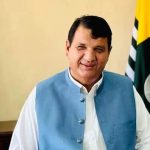
LAHORE, Dec 26 (APP):Federal Minister for National Food Security and Research Rana Tanveer Hussain said on Friday that government is pushing export-led economy, adding that a single-digit policy rate is expected in a year. Talking to business community here at Lahore Chamber of Commerce & Industry (LCCI), he said, "Prime Minister is worried over declining exports and he has directed us to go to the business community to extend the …
Govt pushes export-led economy, says Rana Tanveer
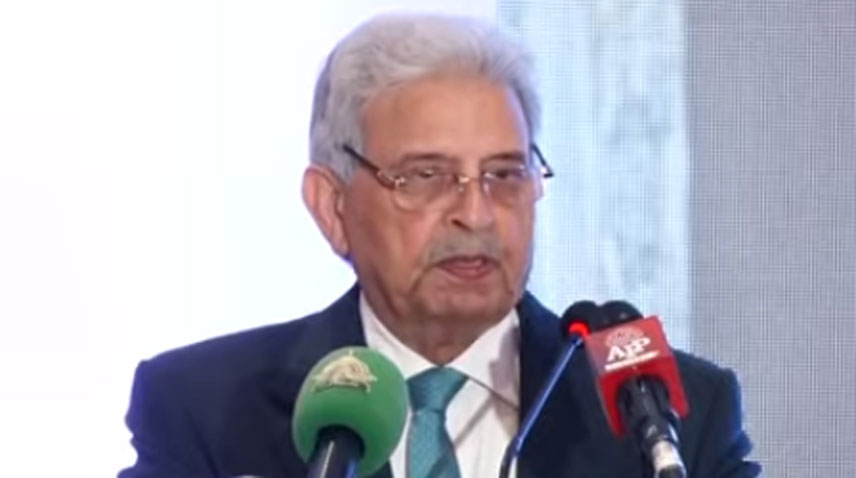
LAHORE, Dec 26 (APP):Federal Minister for National Food Security and Research Rana Tanveer Hussain said on Friday that government is pushing export-led economy, adding that a single-digit policy rate is expected in a year.
Talking to business community here at Lahore Chamber of Commerce & Industry (LCCI), he said, “Prime Minister is worried over declining exports and he has directed us to go to the business community to extend the every possible support for a turnaround in exports.”
LCCI President Faheem ur Rehman Saigol welcomed him at LCCI, while, Senior Vice President Tanveer Ahmed Sheikh, Vice President Khurram Lodhi and Executive Committee members Ahad Amin Malik, Shoaib Akhtar, Aamir Ali and Iftikhar Ahmed were also present.
The Federal Minister said that Pakistan’s exports have declined by 36 to 38 percent, which is a very serious and worrying situation. He acknowledged that high production costs, expensive energy and a complicated tax system are creating major problems for exporters. He said Prime Minister Shehbaz Sharif is in close contact with the business community and that during the last two years, consultation with businessmen has been more extensive than ever before.
The Federal Minister said that the Prime Minister has formed working groups for different sectors, led by representatives from the business community, so that real ground realities are included in policy-making.
Speaking on the occasion, LCCI President Faheemur Rehman Saigol warned that if the current decline in exports continues, it will not be possible to keep the rupee artificially stable. He said further depreciation of the rupee would increase inflation and industrial costs.
He said Pakistan’s food exports fell to USD 1.95 billion from July to November, compared to USD 3.15 billion in the same period last year, showing a 38 percent decline, which he described as extremely alarming.
He explained that the main reasons for the decline in agricultural exports include low per-acre crop yields, weak investment in research and development, smuggling of agricultural goods, hoarding and inconsistent policies. He added that Pakistan’s population is increasing by about 4.7 million people every year, while agricultural production and food supply are not growing at the same pace, creating serious future risks.
Providing details, he said rice exports dropped to USD 769 million from USD 1.5 billion, showing a decline of nearly 50 percent. Vegetable exports fell by 39 percent, from USD 110 million to USD 66 million. Oilseeds and nuts exports declined by 64 percent, from USD 262 million to just USD 92 million.
He said the situation of per-acre agricultural productivity is very concerning. Over the last two years, per-acre yields of wheat, rice and cotton have all declined. Wheat yield dropped from 3,200 kilograms per acre, rice from 2,714 kg to 1,494 kg per acre, while cotton yield fell to 590 kg per acre.
Faheemur Rehman Saigol said Pakistan is a textile-based economy, with about 60 percent of exports linked to textiles, but declining cotton production and quality are hurting value addition. He said long-staple cotton is being exported, while short-staple cotton is used locally, which limits the export of high-quality value-added textiles and garments.
He described high electricity and energy prices as the biggest threat to export competitiveness and demanded the immediate removal of the infrastructure cess imposed by the Sindh government. He said exporters have paid around USD 9.15 billion under this cess, but there is no transparent audit of how this money has been used.
He further said that removing exporters from the Final Tax Regime, delays in refunds and high production costs have badly affected industrial activity. He added that despite being an agricultural country, Pakistan spends about USD 6 billion on food imports, which is a serious food security risk. He welcomed Bangladesh’s approval to import 50,000 metric tons of rice from Pakistan and said the government should fully benefit from this opportunity.
Highlighting the potential of the livestock and processed meat sectors, he said the global halal food market is worth around USD 3 trillion, and Pakistan can capture a significant share as a Muslim country. He referred to a recently established processed meat factory with Saudi cooperation, saying Pakistan already has the basic infrastructure needed to expand exports in this sector.
Federal Minister Rana Tanveer Hussain said the government’s goal is to promote an export-based economy to reduce the current account deficit. He said Pakistan’s foreign exchange reserves have reached USD 21 billion, which is a positive development. The policy rate has come down from 22 percent to 12.5 percent and is expected to reach single digits within the next one to one and a half years. He said remittances provide temporary relief but are not a permanent solution; the real solution lies in increasing exports. Calling agriculture the backbone of the economy, he said national security is not possible without food security.
Rana Tanveer Hussain said Pakistan has vast resources, skilled human capital and strategic geographic advantages, but progress requires focus, hard work and consistency from both the government and the business community. He assured that the business community’s recommendations would be conveyed to the Prime Minister and relevant forums, and that full support would be provided to boost exports.