ISLAMABAD, Aug 31 (APP):Federal Minister for Finance and Revenue, Senator Muhammad Aurangzeb on Monday said the government was focused on building a comprehensive ecosystem to support sustainable, private-sector-led and export-driven growth. He described the launch of the Export Development Fund’s SME Risk Pool and a reinsurance partnership with the Islamic Corporation for the Insurance of Investment and Export Credit (ICIEC) as an important milestone in translating the government’s export strategy …
Govt. moves to de-risk exports, widen SME access to global markets: Aurangzeb
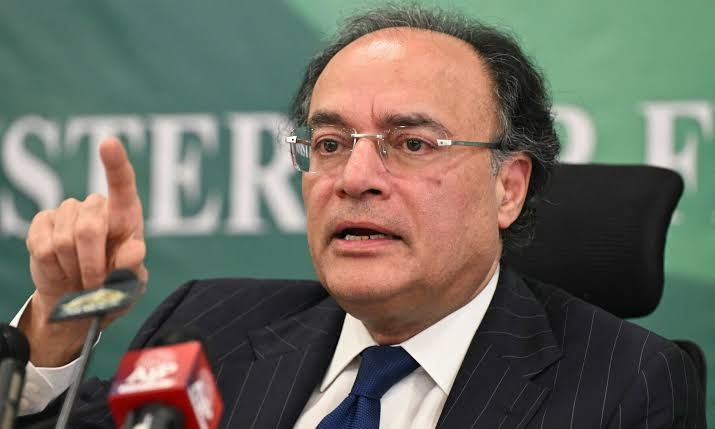
ISLAMABAD, Aug 31 (APP):Federal Minister for Finance and Revenue, Senator Muhammad Aurangzeb on Monday said the government was focused on building a comprehensive ecosystem to support sustainable, private-sector-led and export-driven growth.
He described the launch of the Export Development Fund’s SME Risk Pool and a reinsurance partnership with the Islamic Corporation for the Insurance of Investment and Export Credit (ICIEC) as an important milestone in translating the government’s export strategy into practical action.
Addressing the signing ceremony of the ICIEC Reinsurance Agreement and launch of the EDF’s SME Risk Pool, organized under the aegis of the Export-Import Bank of Pakistan (EXIM Bank), the minister said Pakistan had moved from stabilization towards growth, but the key challenge now was to ensure its sustainability.
He said the economy had recorded around 3.7 per cent Gross Domestic Product growth in the last fiscal year and the government hoped to take it beyond four per cent this year, adding that the country could no longer afford the boom-and-bust cycles associated with import dependency and balance of payments pressures.
Aurangzeb said the government’s objective was to break with that past pattern by ensuring that future growth was driven primarily by exports and the private sector. “The main challenge for us is not the growth, it’s the sustainability of that growth,” he said, emphasizing that export-led and private-sector-led growth were the two essential ingredients for long-term economic stability.
He said the government’s role was to provide the necessary enabling ecosystem and was utilizing the fiscal and external-
account space available to advance the export agenda. The recently approved federal budget, he added, had provided a clear direction for supporting export-oriented growth.
The minister highlighted a number of measures taken by the government, including reduction in super tax, with the rate reduced to zero for companies exporting more than 80 per cent of their output, abolition of advance tax and efforts to make energy costs more competitive.
He also pointed to the availability of export financing at 4.5 per cent, saying the government had effectively addressed concerns regarding the competitiveness of financing for exporters in the region.
Aurangzeb said EXIM Bank had a critical role in channeling export refinance and long-term financing facilities enabled through the budget, while stressing that access to concessional financing should extend beyond large exporters to small and medium enterprises forming an integral part of export value and supply chains.
He said a specific allocation had been made for SMEs to ensure that businesses supplying larger exporters could also benefit from subsidized financing. Such support, he added, was essential for expanding the country’s export capacity and enabling more enterprises to participate in international markets.
The minister emphasized that Pakistan also needed to diversify its export base in terms of products, services and markets, rather than relying solely on traditional export sectors.
Referring to the ICIEC reinsurance partnership, he said it would bring international expertise in credit and political-risk mitigation to EXIM Bank, enhancing its capacity, confidence and credibility.
He said Pakistan should benefit from international best practices rather than “reinventing the wheel”, adding that such partnerships would help accelerate the country’s institutional development in export financing and risk management.
The minister said the EDF’s shared risk pool would strengthen domestic risk-sharing mechanisms, particularly for SMEs, and enable the fund to serve its intended purpose of supporting the country’s export base.
Aurangzeb termed the event an important milestone because it addressed the “how” of export-led growth after years of discussion about its need and objectives.
He said no single institution could deliver the required transformation on its own, stressing the need for an integrated ecosystem comprising exporters, commercial banks, EDF, EXIM Bank, the State Bank of Pakistan and the government.
“This has to be the entire ecosystem,” he said, underlining the need to build institutional capacity as well as expand the quantum and quality of exports.
The minister noted that Pakistan’s IT exports had already shown significant progress, reaching around $4.6 billion, while freelancers were contributing about $1.7 billion.
However, he stressed that the country needed a much larger expansion in goods exports, saying marginal increases over the existing export base would not be sufficient to meet its economic requirements.
He said the quality of Pakistan’s export growth would depend on entering new markets and developing new products and services, alongside increasing export volumes.
Aurangzeb assured exporters, financial institutions and other stakeholders that the Ministry of Finance was committed to providing the necessary support and assistance, describing export-led growth as the foundation of the country’s future economic paradigm.
He expressed confidence that the partnerships launched through the event would help EXIM Bank and its partner institutions play a more effective role in strengthening Pakistan’s export ecosystem and translating the government’s export-led growth policy into sustainable economic outcomes.
Later, the minister witnessed signing of the two accords including a Re-insurance Agreement between ICIEC and Pak EXIM Bank, and a Rs 3 billion SME Risk-Pool Agreement between the Pak EXIM Bank and the EDF.
President and CEO Pak EXIM Shahbaz H. Syed, Chairman EDF Omar Saeed , CEO ICIEC Dr Khalid Khalafalla and Secretary Economic Affairs Muhammad Humair Karim also spoke on the occasion highlighted various aspects of the agreements and their significance in the set goals of export-led growth.