ISLAMABAD, May 12 (APP):Federal Minister for Finance and Revenue, Senator Muhammad Aurangzeb, held an extensive meeting with a high-level delegation representing Pakistan’s textile and apparel sector on Budget 2026–27 aimed at strengthening the competitiveness, sustainability and long-term growth of the country’s textile sector and export industry. The delegation comprised leading chambers, associations, exporters and industry stakeholders from across the country, said a press release issued by finance ministry. The delegation …
Finance Minister, textile representative discuss proposals for upcoming budget
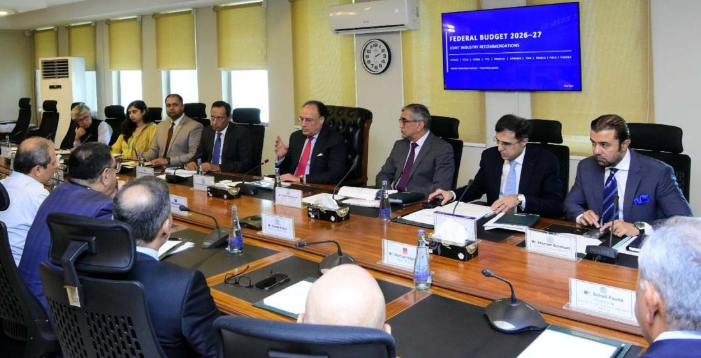
ISLAMABAD, May 12 (APP):Federal Minister for Finance and Revenue, Senator Muhammad Aurangzeb, held an extensive meeting with a high-level delegation representing Pakistan’s textile and apparel sector on Budget 2026–27 aimed at strengthening the competitiveness, sustainability and long-term growth of the country’s textile sector and export industry.
The delegation comprised leading chambers, associations, exporters and industry stakeholders from across the country, said a press release issued by finance ministry.
The delegation presented a comprehensive set of proposals and recommendations for the Federal Budget 2026–27 aimed at strengthening the competitiveness, sustainability and long-term growth of the country’s textile sector and export industry.
During the meeting, the delegation highlighted the textile sector’s vital contribution to Pakistan’s economy as a major source of exports, employment generation, industrial activity and foreign exchange earnings.
The representatives emphasized the importance of maintaining a stable, growth-oriented and internationally competitive policy environment to enable the industry to effectively respond to evolving global market dynamics and increasing regional competition.
The delegation shared a broad range of policy recommendations focusing on taxation reforms, energy affordability, export facilitation, industrial modernization, liquidity management, investment promotion and ease of doing business. The proposals were aimed at reducing the cost of production, improving industrial efficiency, enhancing exporters’ liquidity position, encouraging technological upgradation and creating a more predictable and investor-friendly business environment.
The industry representatives stressed that timely policy support and structural reforms would help strengthen Pakistan’s export competitiveness, promote value-added manufacturing, attract fresh domestic and foreign investment and facilitate greater integration into international supply chains. They noted that improving the operating environment for exporters would support industrial expansion, employment generation and economic growth while also contributing positively towards fiscal stability and foreign exchange inflows.
The delegation also emphasized the importance of addressing long-standing operational and structural challenges affecting industrial productivity and export performance, including the need for efficient refund mechanisms, rationalized energy pricing structures, facilitation for exporters and measures aimed at reducing the compliance burden on businesses.
It was highlighted that such reforms could significantly improve cash flow management, enhance investor confidence and enable industries to allocate greater resources towards expansion, modernization and workforce development.
The proposals further underscored the importance of a policy framework that supports innovation, encourages value addition, facilitates small and medium enterprises and promotes industrial diversification in line with changing global demand patterns.
The delegation noted that strengthening the competitiveness of Pakistan’s textile sector would have positive multiplier effects across the wider economy through increased exports, higher industrial output, enhanced job creation and stronger economic resilience.
On the occasion, Aurangzeb reaffirmed the government’s commitment to maintaining regular and meaningful consultations with the business community through the dedicated Tax Policy Office of the Ministry of Finance to institutionalize continuous engagement with chambers, trade bodies and associations throughout the year.
He discussed the government’s ongoing efforts to promote transparency, documentation and improved compliance through digital monitoring systems across key sectors of the economy.
He informed the delegation that digital monitoring mechanisms had already been introduced in several major sectors including sugar, cement, beverages and tobacco, emphasizing that the initiative had been implemented across the board without exception, including in sectors where business units owned by the Prime Minister’s family also operate.
The Finance Minister invited the textile sector to extend its cooperation towards the gradual implementation of similar digital monitoring mechanisms within the textile industry.
He acknowledged the importance of the textile sector in driving economic growth and exports and assured the participants that the recommendations and proposals presented during the meeting would be carefully reviewed as part of the budget formulation process.