
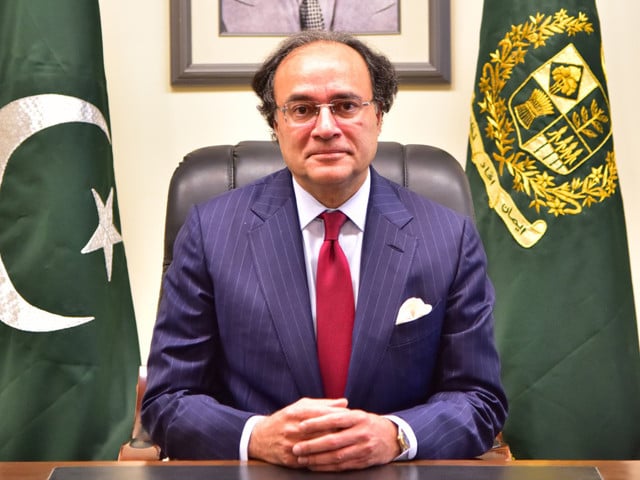

ISLAMABAD, Dec 15 (APP): Federal Minister for Finance and Revenue Senator Muhammad Aurangzeb on Monday held a detailed meeting with a delegation of the Social Policy and Development Centre (SPDC), led by its Chairman Javed Jabbar, to discuss key structural, fiscal and socio-economic challenges and explore avenues for sustained, evidence-based policy support.
The delegation included SPDC Board Members Ahmed Farooq Bazai, Ms. Mahtab Akbar Rashdi, Naveed Kamran Baloch, and Dr. Saba Gul Khattak.
The Finance Minister welcomed the SPDC delegation and appreciated the Centre’s three decades of independent and non-partisan research contributions to national policy discourse.
During the discussion, the Minister shared an overview of the government’s ongoing institutional reform and rightsizing agenda, explaining that the process is being implemented in phases to ensure depth, transparency, and manageability.
He highlighted that the focus of reforms was not on reducing employment but on addressing inefficiencies, fiscal leakages, excessive subsidies, and structural weaknesses in state-owned entities that impose a significant burden on the national exchequer.
He noted that recommendations emerging from the rightsizing process are being reviewed by the Cabinet for approval and implementation, with an emphasis on improving service delivery and fiscal sustainability.
The Minister also briefed the delegation on recent progress related to the National Finance Commission (NFC), noting that the initial meeting was constructive and helped establish a conducive environment for dialogue among the federation and provinces.
He informed the delegation that eight working groups have been notified to take forward technical discussions on various aspects of the NFC, operating strictly on the basis of consensus. He invited SPDC to provide analytical support and policy input where relevant, particularly on allocation criteria and intergovernmental fiscal arrangements under the NFC.
On the subject of governance and transparency, the Minister discussed the IMF-supported diagnostic and governance assessment, including its key recommendations and the government’s commitment to developing a time-bound action plan for implementation. He noted that several reforms are already underway, including measures related to asset declarations and public disclosure, and welcomed SPDC’s views on strengthening institutional accountability and anti-corruption frameworks.
The meeting also addressed two critical long-term challenges confronting Pakistan: climate change and population dynamics.
The finance minister emphasized that climate change poses real and escalating economic costs, citing increasing frequency and intensity of extreme weather events and their adverse impact on growth, agriculture, and fiscal stability.
He highlighted improvements in early warning systems and disaster preparedness, while stressing the need for sustained budgetary prioritization and policy urgency. On population, he underlined that the primary challenge lies not in religious or cultural barriers but in access to services, awareness, and institutional coordination, and called for informed public policy grounded in empirical evidence.
The SPDC delegation outlined areas where the Centre could support the Ministry of Finance, including intergovernmental fiscal analysis, simulation and modeling of NFC allocation criteria, and taxation and resource mobilization. Particular emphasis was placed on health-related taxes, such as those on tobacco and sugar-sweetened beverages, as policy tools that can simultaneously advance public health objectives and generate revenue.
The delegation also highlighted SPDC’s capacity for tax policy modeling and evidence-based proposals that can support the work of the Tax Policy Office and contribute to informed decision-making throughout the fiscal year.
Both sides reaffirmed the value of continuous, structured engagement beyond the annual budget cycle and expressed confidence that closer collaboration would help translate well-established policy knowledge into effective implementation.
The meeting concluded with a shared commitment to maintaining regular interaction and leveraging independent research to support sustainable economic reform and national development.