
Federal Minister for Finance and Revenue Senator Muhammad Aurangzeb and Lahore Chamber of Commerce and Industry (LCCI) President Ali Hussam Asghar Tuesday discussed key priorities, including export-led growth, improved access to financing for small and medium enterprises (SMEs) and a predictable business policy environment.
Export-led growth, SME financing key to economic revival, says Aurangzeb
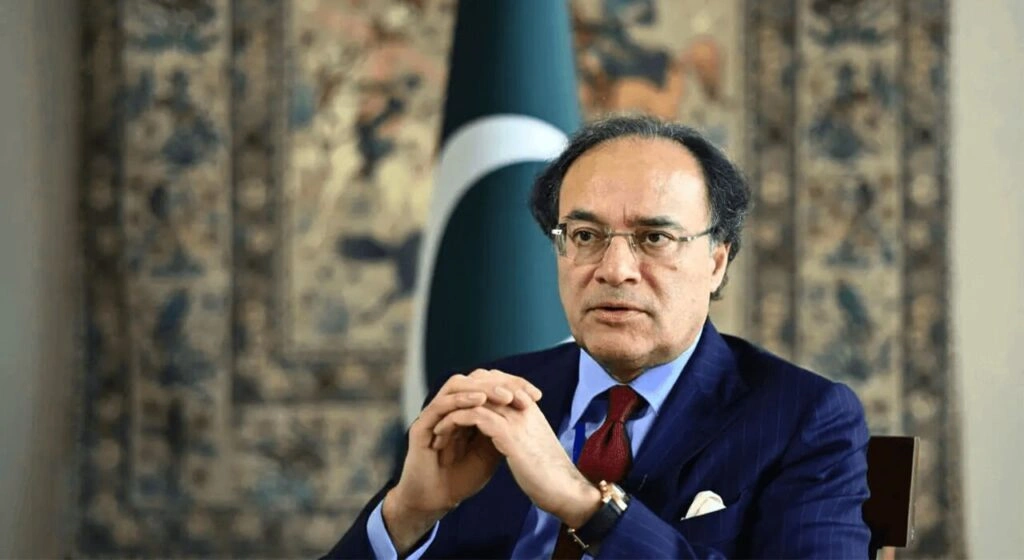
LAHORE, Nov 03 (APP): Federal Minister for Finance and Revenue Senator Muhammad Aurangzeb and Lahore Chamber of Commerce and Industry (LCCI) President Ali Hussam Asghar Tuesday discussed key priorities, including export-led growth, improved access to financing for small and medium enterprises (SMEs) and a predictable business policy environment.
During the meeting, they focused on strengthening role of private sector in economic growth, addressing business community concerns and introducing measures to improve competitiveness, investment and exports, according to LCCI spokesman here.
The finance minister welcomed Ali Hussam Asghar and highlighted the government’s commitment in achieving sustainable economic growth through greater private-sector participation, enhanced competitiveness and an expanded export base.
He said that exports must remain central to the country’s growth strategy and that policies should facilitate exporters in becoming more competitive in regional and international markets.
The meeting was also attended by Minister of State for Finance Bilal Azhar Kiyani, Governor of State Bank of Pakistan, Federal Secretary Finance, and senior representatives from the Tax Policy Office, Federal Board of Revenue (FBR) and Finance Division.
Emphasizing the importance of an improved business environment, Senator Muhammad Aurangzeb said that ease of doing business requires a facilitative and predictable policy framework, simplified regulatory procedures and effective coordination among relevant institutions. He underscored the need to address the concerns of businesses, particularly SMEs, and ensure that government policies support investment, productivity, employment generation and business expansion.
Ali Hussam Asghar presented Lahore Chamber’s perspective on promoting SMEs, improving access to finance and facilitating business expansion. He highlighted the importance of a supportive business ecosystem, greater policy predictability, modernization and export growth. He also stressed the need for continued consultation with chambers of commerce and industry to ensure that business policies address ground-level challenges and support sustainable economic activity.
The LCCI President also covered the ways to strengthen the SME sector as an important driver of economic activity, exports and employment.
The Finance Minister said that improving access to finance for SMEs, facilitating business expansion and encouraging investment in modernization and capacity-building. He said that there is a dire need for practical and targeted measures to encourage businesses to expand their operations, increase investment and contribute to economic growth.
Discussing taxation and regulatory policies, the finance minister said that these should support productive economic activity while promoting documentation and broadening the tax base. He emphasized evidence-based policymaking and constructive engagement with the business community to assess the impact of proposed measures on businesses, investment and employment.
He also underlined the importance of simplifying procedures and building greater confidence between businesses and government institutions.
Highlighting the importance of policy continuity and predictability, Senator Muhammad Aurangzeb underscored the role of the Tax Policy Office in maintaining sustained engagement with the private sector and developing a medium-term tax policy framework. He said that a stable and predictable policy environment would enable businesses to make informed investment decisions and plan for long-term growth.
The Finance Minister said that the government’s is committed to work closely with chambers of commerce, industry representatives and other stakeholders to address business-related matters, promote SMEs and facilitate exporters. He observed that sustained collaboration with the private sector is essential to building a competitive economy driven by investment, productivity and exports.