Federal Minister for Finance and Revenue Muhammad Aurangzeb said on Saturday that government’s focus was on export-led sustainable economic growth, improvement of tax system,reduction in energy costs and encouragement of the private sector for which implementation of structural reforms for economic stability in Pakistan was underway.
Export-led economic growth,encouraging private sector top priority:Aurangzeb
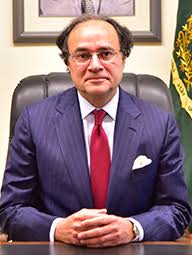
LAHORE, Oct 24 (APP):Federal Minister for Finance and Revenue Muhammad Aurangzeb said on Saturday that government’s focus was on export-led sustainable economic growth, improvement of tax system,reduction in energy costs and encouragement of the private sector for which implementation of structural reforms for economic stability in Pakistan was underway.
Addressing a ceremony here at a private university,he disclosed that IT exports are expected to reach USD 5.5 billion and remittances to USD 44 billion in the current fiscal year while the country’s foreign exchange reserves are sufficient for more than three months of imports.
The Finance Minister said Pakistan must move away from the boom-and-bust economic cycle of the past and adopt a path of growth that creates employment opportunities and brings the fruit of economic growth to the people. He said that due to over-reliance on imports,Pakistan had faced balance of payments crises in the past, after which it took four to five years to stabilize the economy.
To avoid this situation, there is a need to increase exports, improve productivity and strengthen economic fundamentals.
Muhammad Aurangzeb said that as a result of continuous efforts, Pakistan’s credit rating has improved three times since April last year.
Steps have also been taken to access global financial markets.
In April of this year, Pakistan conducted a private placement, advanced its efforts to access global markets through the issuance of Panda bonds and in the first week of September,issued bonds worth three billion Euros.
He said that orders received from investors for Pakistani Eurobonds were double the volume issued, while investors from Asia,the Middle East,Europe and the US also showed interest.
The Finance Minister said, Pakistan’s foreign exchange reserves are at the highest level in the country’s history and are sufficient for more than three months of imports while in the past these reserves were only equal to two weeks of imports.
He said that global investors were now also assessing Pakistan’s economic situation after the IMF program. Pakistan’s current IMF program was due to end in October next year, so it is necessary to implement reforms to maintain economic stability,increase investor confidence and ensure continuity in policies.
He said that the government was taking steps to improve the tax system,expand the tax net and promote exports.
Various measures have been taken to increase exports,including the abolition of super tax and reduction in tax slabs, while the facility of providing loans to exporters at an interest rate of 4.5 percent has also been included in the budget.
He said that to increase competitiveness in regional markets,it was necessary to reduce tariffs and energy costs, while there has also been talk of providing additional electricity to industries at a rate of about Rs.23 per unit.
Muhammad Aurangzeb said that Pakistan needs such economic development that creates new employment opportunities along with increased investment and production.
Just seven to eight percent economic growth was not enough but its fruits must reach the people and improve their standard of living.
He said that the government wants to promote economic activities by encouraging the private sector,providing facilities to investors and improving the business environment.
The Finance Minister said that Pakistan’s IT services exports have increased from USD 01 billion to USD 4.6 billion, while they are expected to reach USD 5.5 billion in the current fiscal year.
He said that Pakistan’s youth,especially freelancers were providing IT services to global markets while working from home and freelancers’ share in IT exports was about USD 1.6 billion.
According to him, there are vast opportunities for earning foreign exchange, providing employment and increasing Pakistan’s competitiveness in global markets from the development of the digital economy.
Muhammad Aurangzeb said that remittances are expected to reach USD 44 billion in the current fiscal year. There was a fear of a decrease in remittances due to the regional war, but despite this, they increased.
He said that the money sent by Pakistanis living abroad plays an important role in the country’s economy and the availability of foreign exchange.
Regarding the energy situation, the Finance Minister said that despite regional conflicts, Pakistan has not been allowed to experience energy shortages and there were no long queues at petrol pumps to get fuel.
The supply situation of other energy sources including crude oil is satisfactory and adequate arrangements were in place to meet the needs till November, while planning is also underway for the winter season.
He said that timely steps will have to be taken to meet the needs of gas and liquefied natural gas so that domestic and industrial consumers do not face difficulties.
Regarding providing relief to the public,Muhammad Aurangzeb said that the government has adopted the method of targeted subsidy instead of general subsidy so that aid can be delivered to the real needy segments.
He said that targeted subsidy was provided for motorcycles, three-wheelers and vehicles with engines below 800 cc, and so far a total of about 40 to 50 million people have benefited from this relief.
He said that limited government resources can be channeled to the most deserving people through targeted assistance.
Terming climate change and rapid population growth as major challenges for Pakistan,the Finance Minister said that the annual population growth rate in the country was about 2.55 percent and if the current pace continues, the population could reach 390 million.
He said that the growing population could put pressure on education, health, employment and other basic facilities, hence long-term planning and structural measures are necessary.
He said that Bangladesh,Indonesia and Iran have made progress in reducing the population growth rate to less than one percent in a decade.
Pakistan also needs to take steps to promote women’s education, participation in the workforce and public awareness.
He said that the female workforce participation rate in Pakistan was about 22.7 percent, an increase in which can boost the country’s productivity and economic growth.
Muhammad Aurangzeb said that the global economy was facing an uncertain situation and the effects of regional conflicts can affect the prices of essential commodities and energy supply.
In these circumstances, it is important for Pakistan to continue economic reforms,expand exports,encourage private investment and improve financial discipline so that the economy can be built on sustainable foundations and pave the way for employment-friendly growth.