A discussion session focusing on the role and future of the D-8 Organization for Economic Cooperation was held at the National Library of Pakistan in Islamabad.
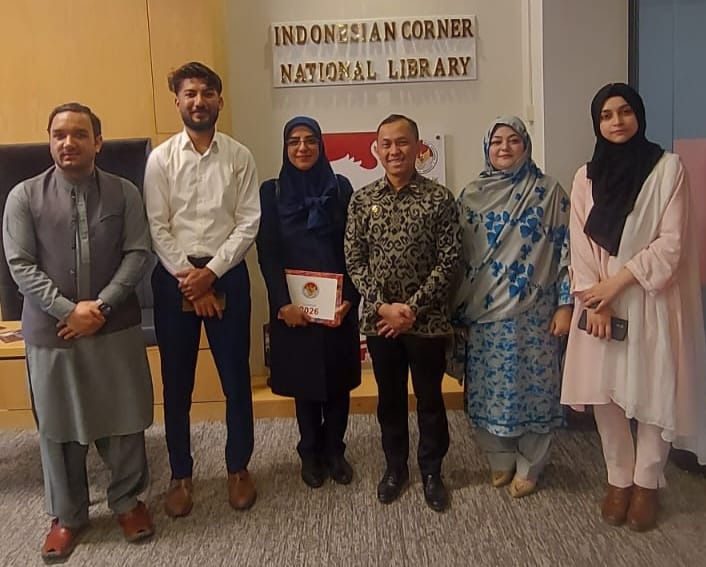
ISLAMABAD, Mar 13 (APP):A discussion session focusing on the role and future of the D-8 Organization for Economic Cooperation was held at the National Library of Pakistan in Islamabad.
The event, titled “Towards the D-8 Summit: The Relevance of the D-8 Organization for Economic Cooperation Amid Global Challenges,” was organized by the Embassy of the Republic of Indonesia in Islamabad in collaboration with the International Institute for Regional and International Studies (IIRIS), said a release issued here on Friday.
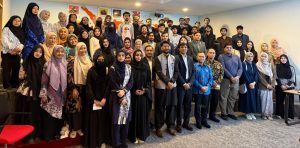
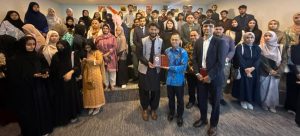
The session brought together Indonesian students studying at the International Islamic University Islamabad and Pakistani students from several prominent universities, including Quaid-i-Azam University, National Defence University, Bahria University, Riphah International University, and the National University of Modern Languages.
The gathering served as an academic platform for dialogue on the relevance of the D-8 in addressing emerging global economic challenges.
The event opened with remarks from Shafqat Rasool, President of IIRIS, who welcomed diplomats, speakers, and students from both Pakistan and Indonesia. He highlighted the importance of academic engagement in strengthening multilateral cooperation and fostering mutual understanding among member states of the D-8.
The keynote address was delivered by Dr. M. Saeed Uzzaman, Head of the Department of International Relations at the National University of Modern Languages in Rawalpindi.
His presentation, titled “Reinvigorating the D-8 Organization for Economic Cooperation: The Strategic Role of Pakistan–Indonesia Collaboration,” emphasized the potential of the D-8 to emerge as a dynamic South–South economic bloc.
Dr. Uzzaman argued that the organization could significantly expand its impact if member states enhance intra-D-8 trade, address connectivity gaps, strengthen logistics and maritime integration, and improve institutional capacity.
According to him, such initiatives could raise intra-D-8 trade to over USD 500 billion, contribute to a combined, GDP of USD 8–10 trillion, and create more than 50 million new jobs, across member countries.
During the session, Donny Ardiwidha, First Secretary for Political Affairs at the Indonesian Embassy, presented a talk titled “The Strength of D-8 Countries in Global Competition.”
He highlighted the strategic geographical positions of D-8 member states, noting that they are located along three major global trade routes: the Strait of Malacca, the Suez Canal, and the Bosphorus Strait.
Ardiwidha emphasized that the combination of strategic location and strong human capital gives the D-8 countries the potential to act as a stabilizing force in the global economy. “D-8 is a small group with a big impact,” he remarked.
Another presentation was delivered by Rahmat Hindiarta Kusuma, Coordinator for Information, Social, and Cultural Affairs at the Indonesian Embassy. He provided an overview of Indonesia’s chairmanship of the D-8 for the 2026–2027 period, highlighting its central theme, “Navigating Global Shifts: Strengthening Equality, Solidarity, and Cooperation for Shared Prosperity”.
Under Indonesia’s leadership, the organization will prioritize five key areas including economic and trade integration,development of the halal economy,blue economy and green transition, Connectivity and digital transformation and institutional reform are major to enhance the economic integration between members.
Kusuma also announced that a special session on Palestine would be included in the agenda of the upcoming D-8 Summit, reflecting Indonesia’s commitment to humanitarian values and international solidarity.
The session concluded with an interactive question-and-answer segment in which students and scholars exchanged views with the speakers on the future of D-8 cooperation and the role of youth and academia in strengthening economic partnerships among member states.
This event marked the second session in a broader discussion series on the D-8 under Indonesia’s chairmanship.
The first session was held the previous week at the Indonesian Corner and featured Noor Fatima, Chairperson of the Department of International Relations at the International Islamic University Islamabad.
The final session of the series is scheduled to take place after the Eid al-Fitr holiday.
Through initiatives such as these discussions, the Indonesian Embassy and its partners aim to encourage academic dialogue and youth engagement, strengthening intellectual and diplomatic connections between Pakistan and Indonesia while promoting the broader goals of the D-8 Organization for Economic Cooperation.