
Shams Abbasi ISLAMABAD, Sep 15 (APP):President of the Shenzhen Government Procurement Association and Chairman of the Industrial Globalization Alliance, Feng Qiang, has called for stronger digital connectivity and industrial cooperation among China, Pakistan and Africa, saying that the three regions possess complementary resources, markets and industrial capabilities that can generate new opportunities for trade, investment, employment and sustainable development. Addressing a ceremony held at the Federation of Pakistan Chambers of …
Shams Abbasi
ISLAMABAD, Sep 15 (APP):President of the Shenzhen Government Procurement Association and Chairman of the Industrial Globalization Alliance, Feng Qiang, has called for stronger digital connectivity and industrial cooperation among China, Pakistan and Africa, saying that the three regions possess complementary resources, markets and industrial capabilities that can generate new opportunities for trade, investment, employment and sustainable development.
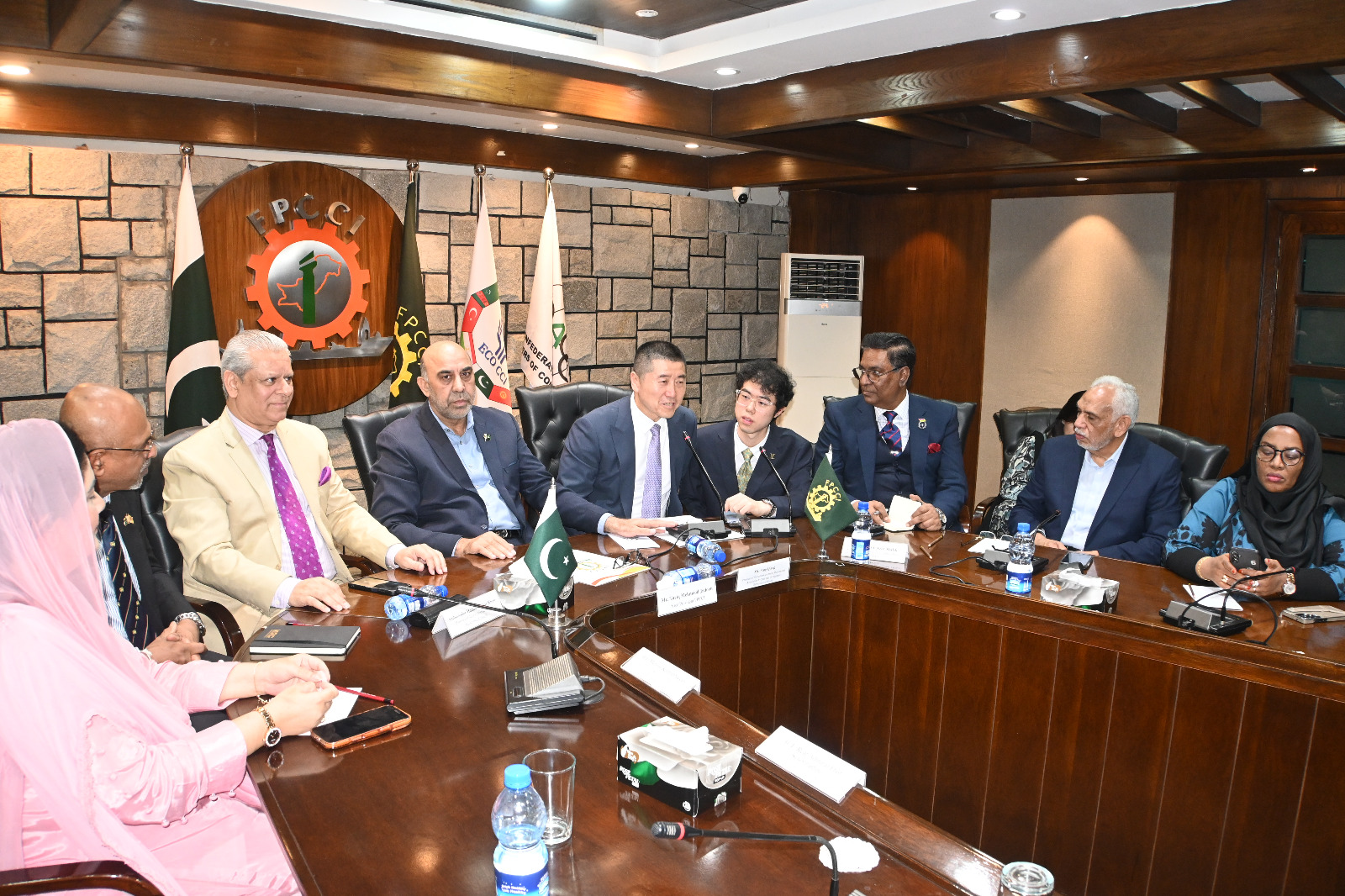
Addressing a ceremony held at the Federation of Pakistan Chambers of Commerce and Industry (FPCCI) Capital House in Islamabad in recognition of his services and to highlight the potential of Shenzhen in international economic cooperation, Feng Qiang said Pakistan, China and African countries could build a practical triangular cooperation framework by linking industrial capacity, investment opportunities, procurement demand and regional markets.
The President said that particularly appreciated the vision of Ambassador Hamid Asghar Khan, Patron-in-Chief of the Pakistan Africa Economic Council, for promoting economic and commercial linkages between China, Pakistan and Africa.
He said the Pakistan Africa Economic Council could play the role of a catalyst in expanding trade and investment ties between Pakistan, Shenzhen and African markets.
Feng Qiang also paid tribute to Ambassador Hamid Asghar Khan and Atif Ikram Sheikh, President of FPCCI, for organizing the event and promoting initiatives aimed at integrating emerging and potential economies.
He noted that Pakistan’s Uraan Pakistan Economic Transformation Plan places emphasis on export growth and digital development, while Africa’s Agenda 2063 and the African Continental Free Trade Area (AfCFTA) provide important frameworks for industrialization, regional integration and market expansion.
“China is advancing high-standard opening-up, promoting high-quality Belt and Road cooperation, and improving comprehensive services for companies operating overseas,” Feng Qiang said.
He emphasized that these development strategies create considerable room for cooperation, as China’s industrial capabilities, technology and market demand can complement the resources, industrial priorities and market potential of Pakistan and African countries.
“We come from Shenzhen, a city with strong industrial and technological capabilities, and we see significant potential for cooperation with Pakistan and Africa,” he said.
On iGlobal Platform to Connect Companies and Markets, Feng Qiang said the iGlobal platform being developed by the Industrial Globalization Alliance is designed as a digital and intelligent international cooperation platform focused on real industrial demand.
The platform aims to connect Chinese companies, overseas buyers, investment partners and professional service providers, covering the process from identifying opportunities and assessing feasibility to organizing cooperation and supporting project implementation, he said.
“We hope every project entering the platform can find the right industrial resources, local partners and implementation team, and that the experience gained from each cooperation can support the next,” he said, describing iGlobal as a practical exploration of a new model for cross-border industrial cooperation.
He said global industrial and supply chains were changing rapidly, while artificial intelligence and the green transition were reshaping production and international trade.
Feng Qiang said his experience in international economic and trade cooperation, including business dialogues and industrial-park cooperation, had demonstrated that sustainable cross-border partnerships require long-term organizational capacity and strong local services.
According to him, iGlobal would use artificial intelligence to support country analysis, multilingual communication and supply-demand matching, while professional teams and local partners would help turn opportunities into executable projects.
“Digital technology can lower the entry barriers to cross-border cooperation and allow more companies to share professional services,” he said.
On focus on Procurement and industrial investment Feng Qiang identified coordinated procurement and investment cooperation as two major areas where the platform could provide value to partner countries.
Through iGlobal, procurement requirements for public projects and business operations would be connected with Chinese supply-chain resources through demand verification, intelligent matching and cross-border coordination.
He said local “Overseas Super Partners” would use their knowledge of domestic markets to identify genuine demand and coordinate procurement, delivery and after-sales support through professional institutions.
On investment cooperation, Feng Qiang said countries seeking investors for industrial parks, infrastructure projects or manufacturing facilities needed to clearly present their industrial conditions, market opportunities and proposed cooperation models.
iGlobal, he said, would help transform such opportunities into projects that Chinese companies could understand, evaluate and potentially participate in.
On the ‘1+N’ model for international cooperation, Feng Qiang proposed a “1+N” cooperation model, under which one shared international platform would work with multiple national cooperation nodes.
The central platform would provide technology tools, industrial-resource coordination and cross-border support, while national nodes would organize local companies, demand and professional services according to their countries’ development priorities.
He described the “Overseas Super Partner” as a key local partner responsible for helping establish and operate national nodes.
“We welcome credible, market-oriented professional organizations with strong industrial resources and execution capabilities to join us in developing markets, serving companies and advancing projects,” he said.
He invited embassies, diplomatic missions, investment-promotion agencies, business associations and leading companies to collaborate with iGlobal in developing national cooperation nodes.
He proposed beginning with priority sectors in each country and identifying an initial group of procurement, investment and trade projects with strong potential for implementation.
“Open cooperation gives us shared opportunities, and digital and intelligent connectivity gives us new tools,” Feng Qiang concluded. “Through iGlobal, we look forward to working with partners in every country to expand the space for industrial cooperation and ensure that more of the benefits of development reach businesses, communities and people.”

