Faisalabad Chamber of Commerce & Industry (FCCI) President Farooq Yousuf Sheikh urged the trade and development officers to put national economic interests above institutional and individual considerations as Pakistan’s economic future hinged on replacing fragmented policymaking with a coordinated partnership between government institutions and business community.
Business-government alignment imperative to turn Pakistan’s export potential into economic strength: FCCI President
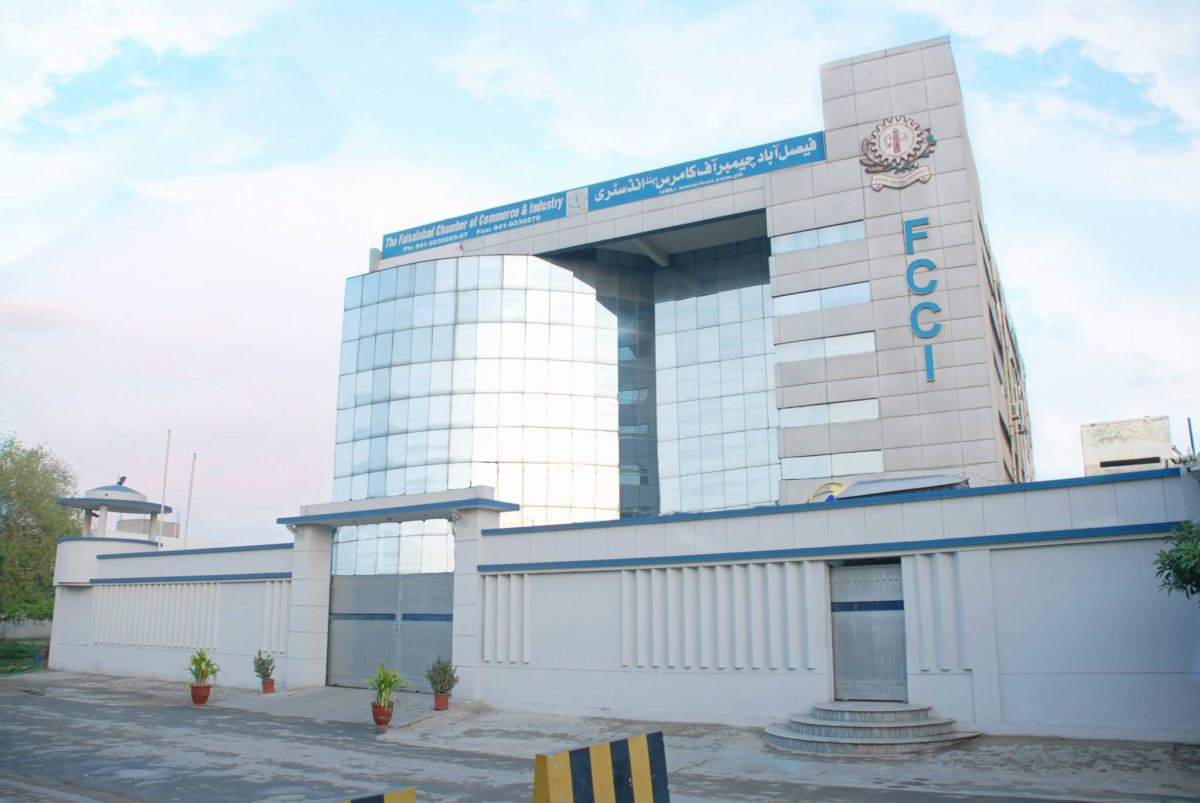
FAISALABAD, Sep 01 (APP): Faisalabad Chamber of Commerce & Industry (FCCI) President Farooq Yousuf Sheikh urged the trade and development officers to put national economic interests above institutional and individual considerations as Pakistan’s economic future hinged on replacing fragmented policymaking with a coordinated partnership between government institutions and business community.
He was addressing a delegation of officers of the 32nd Specialized Training Program of Pakistan Institute of Trade & Development (PITAD), Islamabad.
He said that dynamic, practical and result-oriented economic policies, formulated after consultation with genuine stakeholders, were imperative for achieving sustainable economic stability and unlocking Pakistan’s export potential.
He urged the officers to prepare themselves for economic challenges of the future. “Pakistan’s economic future is linked with you”, he said, urged them to develop a deeper understanding of ground realities facing industry, exporters and traders.
Highlighting Faisalabad’s economic significance, he said that Faisalabad was third-largest city of the country and it accounted for around 57 percent of Pakistan’s total textile exports. Although the city was traditionally known as textile hub of the country, yet its industrial base had now diversified considerably, he added.
He said that FCCI had around 22,000 members associated with 128 different trades and sectors while its fundamental objective was to resolve collective problems of business community.
He said that FCCI maintained continuous engagement with government institutions to put forward proposals for policymaking particularly during preparation of federal and provincial budgets.
He however expressed concern over Pakistan’s persistent external deficit and weak export growth. He said that the country’s exports had remained around $30 billion despite passage of 79 years. Now a target of increasing exports to $60 billion was set, but its achievement would remain difficult unless the cost of production was reduced and Pakistani products were made more competitive in markets, he added.
He said that exporters had to comply with international standards to access global markets, but the business community was simultaneously dealing with numerous regulatory departments. He said that involvement of around 32 departments in various business-related processes created unnecessary difficulties for traders and industrialists. “The world has moved towards one-window operations, but we have yet to develop the institutional coordination needed to make such a system fully effective”, he added.
Referring to recent developments on the international front, he said that the country had achieved diplomatic gains through the efforts of its armed forces and Prime Minister Shehbaz Sharif while Pakistan’s mediation policy was also being appreciated internationally.
During question-answer session, Farooq Yousuf Sheikh said that Faisalabad had a dry port, but many importers still preferred routing their consignments through Karachi because of comparatively efficient one-window procedures there. Faisalabad Dry Port needed to provide business-friendly system to handle consignments without unnecessary complications, he added.
Referring to his recent visits to Malaysia and South Korea, he said that Pakistan’s commercial representatives could play a much more effective role in opening new markets for Pakistani exporters.
He also offered to bring an FCCI trade delegation to Malaysia to explore opportunities for increasing Pakistani exports.
He said that large companies generally had sufficient resources to explore foreign markets independently, but Trade Development Authority of Pakistan (TDAP) should broaden its outreach to help small & medium enterprises access new international markets.
Regarding carbon-related requirements, he said that GSP Plus facility with the European Union carried a number of compliance obligations including environmental and carbon-related requirements, which Pakistan would have to meet by 2030.
He said that the government was fulfilling its responsibilities in this regard while FCCI was also organizing continuous awareness programs for its members in collaboration with TDAP, UNDP and other relevant institutions.
He suggested that interest-free or low-cost loans should be provided to businesses for making the necessary transition.
Responding to a question concerning coal suppliers from Balochistan, the FCCI President emphasized the need to document business transactions while assuring that he remained ready to facilitate the resolution of genuine problems faced by the relevant stakeholders.
TDAP Faisalabad Director Madam Naheed Akhtar, PITAD Islamabad Director Training Sohail Ahmad, FCCI Senior Vice President Naveed Akram Sheikh and PITAD representative Sarang also addressed the meeting.
Later, shields were exchanged between FCCI and PITAD as a token of appreciation while FCCI Vice President Engineer Asim Munir was also present on the occasion.