
- Advertisement -
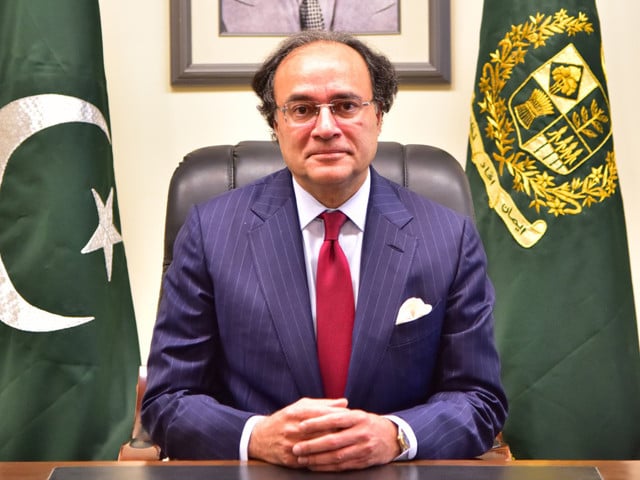
ISLAMABAD, Dec 16 (APP):Federal Minister for Finance and Revenue Senator Muhammad Aurangzeb on Tuesday underscored Pakistan’s commitment to proactive economic diplomacy aimed at deepening international partnerships, diversifying trade and connectivity routes, attracting sustainable and investment-led growth, and positioning the country as a reliable, competitive, and forward-looking partner in an increasingly complex and rapidly evolving global economic landscape.
In two separate interviews with Azerbaijan’s leading news agency, Report Information Agency (REPORT), and Russia’s prominent news agency, RIA Novosti, the Finance Minister outlined Pakistan’s economic priorities, investment outlook, and expanding engagement with regional and global partners, underscoring the government’s focus on macroeconomic stability, trade expansion, and sustainable investment-led growth.
In his interview with REPORT, the Finance Minister emphasized that Pakistan’s long-standing and strong government-to-government relations with Azerbaijan are now translating into tangible economic outcomes, with trade and investment flows gaining increasing importance.
He highlighted that Azerbaijan has publicly expressed an appetite to invest close to USD 2 billion in Pakistan, with energy, oil and gas, as well as minerals and mining identified as key priority sectors for collaboration. He noted that discussions are underway on several projects, including a potential oil pipeline investment being explored by SOCAR, describing these engagements as progressing and reflective of growing investor confidence in Pakistan.
Senator Aurangzeb further stated that any financial support or lending arrangements from Azerbaijan would be structured to facilitate trade and investment rather than aid, stressing Pakistan’s preference for sustainable financing models linked to productive economic activity.
He explained that such financing could take multiple forms, including placements with the central bank or project-linked financing to support Azerbaijani investors entering Pakistan.
The Finance Minister also highlighted Pakistan’s interest in learning from Azerbaijan’s advances in digital services, technology-led service centres, artificial intelligence, fintech and cybersecurity, noting that Pakistan is steadily moving towards a digital economy with enhanced payment systems and digital infrastructure.
Highlighting future areas of cooperation, he pointed to the growing importance of South-South cooperation amid stress in the global trading system. He underscored the potential of developing new trade and transport corridors between Pakistan, Central Asia and Azerbaijan, observing that current bilateral trade volumes do not reflect the true potential of the two economies.
He also stressed the importance of developing financial instruments such as guarantees, export credit mechanisms, banking linkages and Islamic finance tools to support the ambitious trade and investment agenda between the two countries.
In his separate interview with RIA Novosti, Senator Aurangzeb reiterated Pakistan’s desire to join BRICS, noting that Pakistan is already an active member of the Shanghai Cooperation Organisation and could play a constructive role within the BRICS framework. He acknowledged ongoing global discussions on alternative cross-border payment systems and stated that Pakistan would explore such mechanisms as its engagement with BRICS evolves.
Addressing investment facilitation, he highlighted that ensuring macroeconomic stability remains the government’s foremost priority, as investor confidence is directly linked to currency stability, repatriation of profits and overall economic certainty.
He noted that Pakistan’s foreign exchange reserves are steadily improving and approaching coverage of nearly three months of imports, describing this as essential “elementary hygiene” for investor assurance. He added that sovereign guarantees and export credit agency support could be considered on a project-by-project basis to mitigate country risk.
On digital assets, Senator Aurangzeb stated that Pakistan’s central bank is evaluating digital currencies in view of the significant number of Pakistani citizens engaged in cryptocurrency-related activity. He emphasized that the government’s objective is to bring this sector into a regulated framework, supported by the establishment of a virtual assets regulatory authority, while carefully assessing risks related to capital flows, compliance, and anti-money-laundering standards.
The Finance Minister also highlighted the transformative potential of artificial intelligence for Pakistan’s economy, particularly in agriculture, finance, healthcare and digital infrastructure.
He noted that Pakistan’s large freelancer base stands to benefit significantly from AI adoption, enabling higher productivity and income levels. He expressed Pakistan’s interest in learning from Russia’s experience in applying artificial intelligence in public finance and budgeting processes, while recognizing the continued importance of human oversight in policymaking and decision-making.
On regional connectivity, Senator Aurangzeb emphasized the importance of developing trade corridors, including the International North-South Transport Corridor, to support resilient trade flows amid global economic uncertainties.
He further identified energy, oil and gas, minerals, mining and industrial cooperation, including the possible establishment of a steel plant, as key areas of potential collaboration between Pakistan and Russia, noting that discussions are ongoing at the ministerial level.