ISLAMABAD, Oct 17 (APP):Federal Minister for Finance and Revenue, Senator Muhammad Aurangzeb on Saturday held a series of meetings with international financial institutions and banking partners in Bangkok, Thailand, to discuss Pakistan’s economic outlook, debt management, capital market instruments, investment opportunities, climate financing and structural reforms. The meetings were held on the sidelines of the World Bank Group–IMF Annual Meetings 2026, according to press release issued by finance ministry here …
Aurangzeb holds talks with global financial institutions on financing, investment, reforms
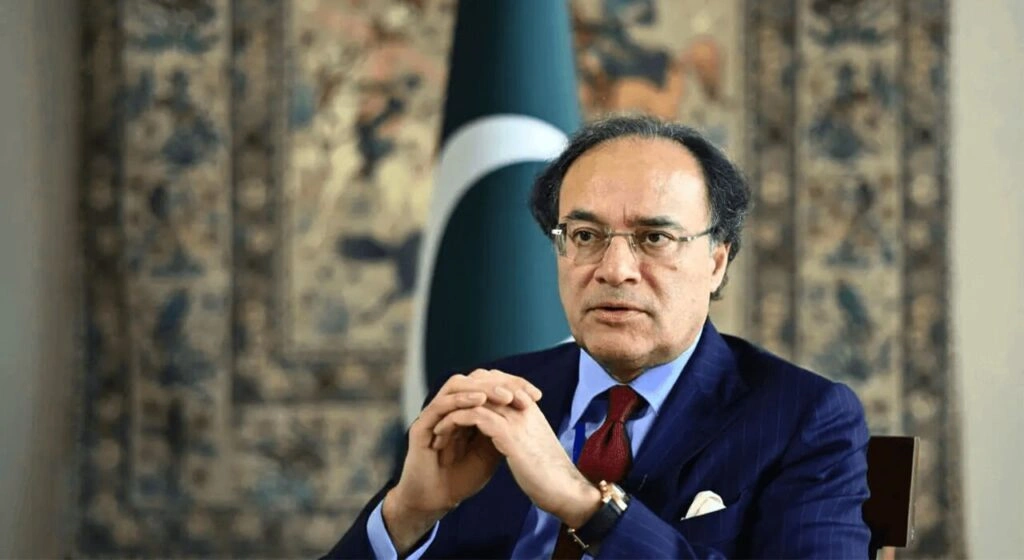
ISLAMABAD, Oct 17 (APP):Federal Minister for Finance and Revenue, Senator Muhammad Aurangzeb on Saturday held a series of meetings with international financial institutions and banking partners in Bangkok, Thailand, to discuss Pakistan’s economic outlook, debt management, capital market instruments, investment opportunities, climate financing and structural reforms.
The meetings were held on the sidelines of the World Bank Group–IMF Annual Meetings 2026, according to press release issued by finance ministry here Saturday.
In a meeting with UNDP Administrator and UN Under-Secretary-General, Alexander De Croo the minister discussed development financing, climate resilience and employment, the press release said.
He emphasized strengthening implementation capacity to translate available financing and policy frameworks into bankable projects. Both sides discussed UNDP’s Implementation Bridge and developing an investable project pipeline through the SDG Investment Fair and the V20 platform.
The meeting explored various options, including integrated financing, blended finance, public–private partnerships and closer UNDP-World Bank cooperation. The discussions also covered biodiversity financing and potential debt-for-nature and debt-for-climate swaps, considering Pakistan’s external debt composition.
The Finance Minister highlighted private sector-led job creation and expanding cash flow-based lending, digital finance and guarantees for small businesses and farmers. He outlined collaborative opportunities for cooperation on climate risk insurance, including through the Global Shield and parametric insurance.
Meanwhile, in meeting with Ajman Bank delegation the minister highlighted improved fiscal and external indicators and reaffirmed the government’s commitment to macroeconomic stability and reforms. Discussions covered prospective Sukuk issuances, rupee-denominated, dollar-settled instruments and diversification of funding sources.
He emphasized replacing expensive short-term debt, extending maturities and avoiding repayment concentrations without increasing overall external debt. The minister appreciated Ajman Bank’s interest in expanding cooperation and welcomed its participation and advice on future financing transactions.
Both sides discussed the economic spillovers of regional conflict, banking sector resilience and targeted fuel subsidies consistent with fiscal discipline. The discussion also highlighted Pakistan’s de-escalation efforts and the availability of fertilizer that had helped safeguard food security.
The minister also met with the Abu Dhabi Commercial Bank delegation to discuss Pakistan’s economic outlook, financing and investment opportunities.
He highlighted progress under the IMF programme, fiscal consolidation, stronger reserves and the Government’s commitment to sustainable export-led growth.
Discussions covered capital market issuances and debt management aimed at replacing costly short-term borrowing, extending maturities and reducing repayment concentrations.
The minister welcomed the Bank’s interest in several transactions, including restored Pakistan credit limits, participation in International Islamic Trade Finance Corporation (ITFC) financing, Multilateral Investment Guarantee Agency (MIGA)-backed financing and an International Finance Corporation (IFC)-supported Diversified Payment Rights (DPR) transaction.
He further highlighted opportunities in refinery upgrades, privatization, airport outsourcing, electricity transmission and the ML-1 railway. Both sides explored data centre financing and digital finance, including the importance of competitive electricity pricing and an effective regulatory framework.
Aurangzeb also had meeting with the Sharjah Islamic Bank during which he highlighted improved fiscal and external indicators, stronger foreign exchange reserves, credit rating upgrades and progress under the IMF programme.
Discussions covered prospective Sukuk, rupee-denominated dollar-settled instruments, further Panda bond issuance and possible Eurobond tokenization.
Both sides discussed Multilateral Investment Guarantee Agency (MIGA)-backed financing and rising global funding costs, while the delegation reaffirmed its support and readiness to participate in a Sukuk issuance.
The Finance Minister outlined investment opportunities in refinery upgrades, power distribution privatization and airport outsourcing.
The federal minister also had interaction with the J.P. Morgan delegation where he highlighted progress under the IMF programme, stronger reserves and restored market access, reaffirming the government’s commitment to structural reforms.
Both sides discussed Pakistan’s ambition to enter the BB rating category, with J.P. Morgan offering analytical support on key indicators and institutional improvements.
Discussions covered Sukuk, rupee-denominated dollar-settled bonds, Panda bonds and possible Eurobond tokenization, and prioritizing debt replacement and longer maturities.
Both sides also reviewed Multilateral Investment Guarantee Agency (MIGA)-backed financing, International Finance Corporation (IFC)-supported Diversified Payment Rights (DPR) transaction, rupee financing and potential loan conversions.
Aurangzeb also met with Director of the IMF’s Middle East and Central Asia Department, Jihad Azour to discuss economic performance and reforms.
Both sides reviewed progress on revenues, inflation, growth and the current account, noting Pakistan’s resilience despite regional conflict. They outlined energy procurement and winter preparedness measures, alongside adequate fertilizer supplies to safeguard food security.
The Finance Minister reaffirmed the commitment to sustaining primary surpluses, reducing public debt and advancing growth-friendly tax reforms while protecting social spending.
Both sides discussed privatization, greater private-sector participation and export-oriented growth to strengthen resilience and creditworthiness.
They stressed maintaining reform momentum, political commitment and effective communication, underscoring the link between economic stability and national security.