ISLAMABAD, Jan 1 (APP):Federal Minister for Planning, Development and Special Initiatives Professor Ahsan Iqbal on Thursday highlighted the centrality of credible data for evidence-based policymaking, saying the Household Integrated Economic Survey (HIES) 2024–25 marked a major milestone for informed planning and sustainable development in the country. Addressing the launch ceremony of HIES 2024–25, the minister congratulated the team behind the survey and the SDGs framework, stressing that “data is the …
Ahsan urges data-driven growth as HIES signals economic turnaround
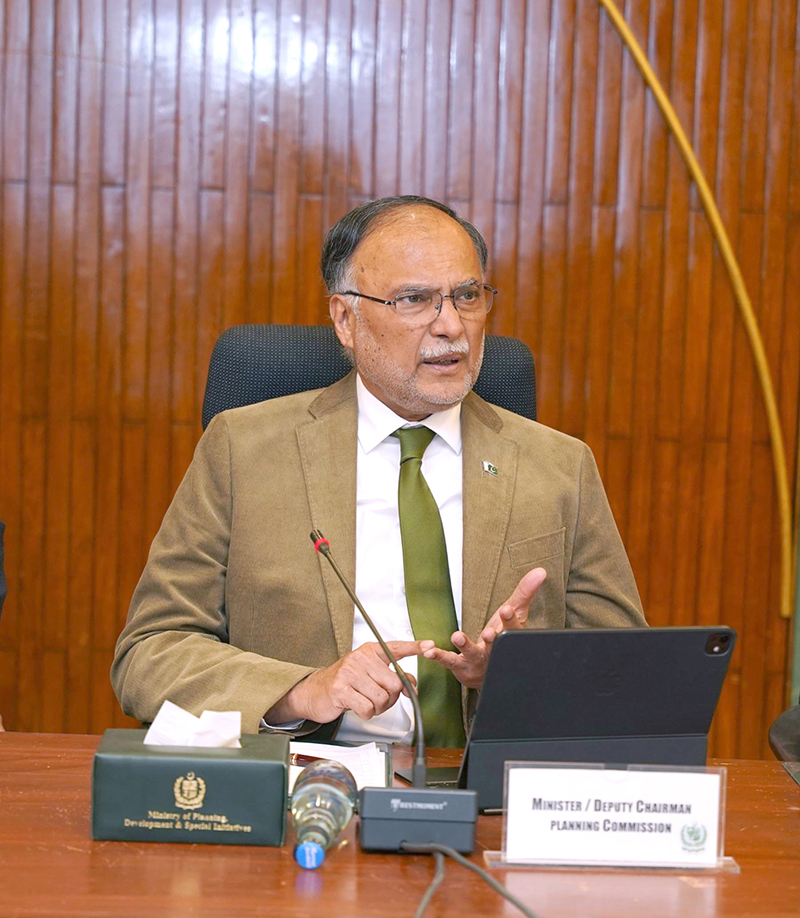
ISLAMABAD, Jan 1 (APP):Federal Minister for Planning, Development and Special Initiatives Professor Ahsan Iqbal on Thursday highlighted the centrality of credible data for evidence-based policymaking, saying the Household Integrated Economic Survey (HIES) 2024–25 marked a major milestone for informed planning and sustainable development in the country.
Addressing the launch ceremony of HIES 2024–25, the minister congratulated the team behind the survey and the SDGs framework, stressing that “data is the foundation on which accurate and scientific planning is built.”
He said the Ministry of Planning had assumed ownership of clearing long-pending statistical backlogs and had completed surveys that remained stalled for six to seven years. “Alhamdulillah, all pending work has been completed and approved for the nation,” he added.
Ahsan Iqbal said the availability of updated data would strengthen government policymaking while enabling researchers, businesses and youth to undertake better research, business planning and national analysis. “This survey is a milestone for the country,” he remarked.
Referring to the findings of HIES, the minister said Pakistan had faced a series of economic shocks over the past six to seven years, beginning with policy disruptions after 2018 that derailed the growth momentum built between 2013 and 2018.
He said mismanagement, particularly the surge in imports in 2022 to around $80 billion, resulted in a massive current account deficit and depletion of foreign exchange reserves, causing currency instability and prolonged inflation.
“There was no economic plan or direction; only reactive measures, and retaliatory measures do not run an economy,” he said, adding that the situation was exacerbated by COVID-19 and subsequent global commodity and supply shocks.
The minister said the survey showed the lower middle class had been the most affected, with sharp changes in income and consumption patterns. “Food inflation and rising utility prices consumed most of their income, leaving little room for other expenses,” he said.
Despite the turbulence, Ahsan Iqbal said the economy had now moved past the worst phase and was on a recovery path.
He cited GDP growth of 3.71 percent in the first quarter as “very encouraging” and expressed optimism that growth could reach four percent or higher if the current trajectory was maintained.
However, he cautioned against artificial, consumption-led growth driven by excessive imports. “We do not want short-lived growth that crashes due to foreign exchange shortages,” he said, stressing the need to align growth with export earnings, remittances, foreign direct investment and other inflows.
He said the government was pursuing a prudent growth policy alongside reforms under the IMF programme to ensure stability and sustained high growth in coming years.
On social indicators, the minister acknowledged relative improvements in literacy, health and infant mortality but said progress remained insufficient.
He pointed out that literacy had risen only from around 60 to 63 percent, far short of global benchmarks.
“Under an education emergency, we must raise literacy to 90 percent in the next five to six years,” he said, calling for joint efforts by governments, civil society and individuals.
Highlighting the Uraan Pakistan agenda, Ahsan Iqbal said the survey reinforced the urgency of accelerating socio-economic development while ensuring peace and stability.
He urged a shift in national discourse from political confrontation to issues shaping the country’s future, such as child stunting, literacy and universal primary enrolment.
“The future belongs to nations that prioritise their economy and socio-economic development,” he said, adding that strong socio-economic foundations were essential for political stability.
The minister called upon media, opposition, private sector and civil society to use the survey as a basis for constructive debate and collaboration. “We can only achieve our goals through cooperation as Team Pakistan,” he said.
Describing the HIES as “an invitation to think and act,” he reiterated the resolve to transform Pakistan’s social and economic indicators under Uraan Pakistan, while achieving a $1 trillion economy by 2035.