ISLAMABAD, Nov 11 (APP):Federal Minister for Planning, Development and Special Initiatives Professor Ahsan Iqbal on Wednesday proposed a series of reforms to strengthen parliamentary oversight, including time-bound audits, digital tracking of Public Accounts Committee (PAC) directives, professional research support and performance-based accountability of government departments. Addressing an event titled “Strengthening Parliamentary Oversight – Public Accounts Committee” here, he called for Parliament, the Auditor General of Pakistan and the Finance Division …
Ahsan proposes time-bound audits, digital tracking to strengthen parliamentary oversight
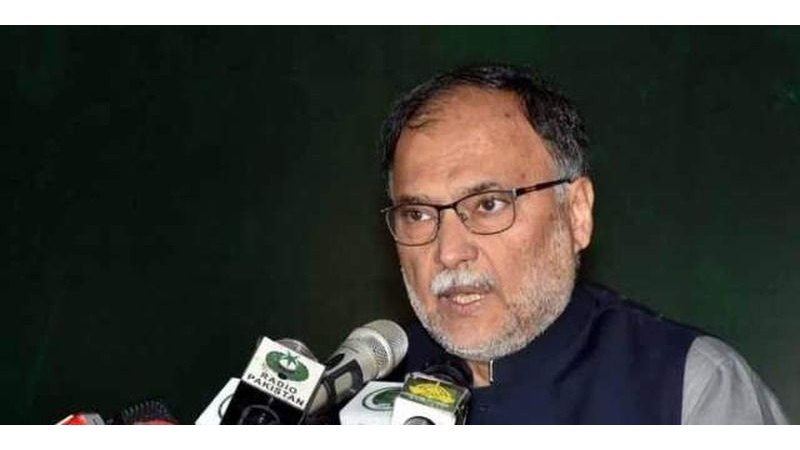
ISLAMABAD, Nov 11 (APP):Federal Minister for Planning, Development and Special Initiatives Professor Ahsan Iqbal on Wednesday proposed a series of reforms to strengthen parliamentary oversight, including time-bound audits, digital tracking of Public Accounts Committee (PAC) directives, professional research support and performance-based accountability of government departments.
Addressing an event titled “Strengthening Parliamentary Oversight – Public Accounts Committee” here, he called for Parliament, the Auditor General of Pakistan and the Finance Division to agree on a clear target of presenting audited reports to the PAC within 12 months of the end of each financial year.
He proposed making real-time and risk-based audits of major development projects a regular practice rather than an exception, while ensuring that every PAC directive carried a clearly defined deadline for compliance.
The minister also proposed establishing a digital compliance-tracking mechanism linking the PAC Secretariat with the Auditor General’s office, supported by a dashboard showing the status of departmental compliance with committee directives.
He said Principal Accounting Officers (PAOs) repeatedly ignoring PAC directives should face consequences in their performance evaluations, with their Annual Confidential Reports (ACRs) reflecting how seriously they followed the committee’s recommendations.
Stressing the need to strengthen the institutional capacity of parliamentary oversight, he proposed establishing permanent professional research wings within the PAC, comprising analysts, accountants and data experts.
He said development partners, including UNICEF, could support the initiative through institutional training, technical assistance and provision of necessary tools, while Parliament and its institutions should also invest in building their own capacities.
Ahsan Iqbal further called for a shift from merely financial auditing towards greater emphasis on efficiency and performance audits, particularly of major social sector programmes.
He said the Auditor General should give equal importance to assessing the actual performance and outcomes of key social sector initiatives, while the PAC should accord special attention to their results.
Referring to child-focused development, he said annual audit findings could provide a strong basis for reviewing the performance of social sector programmes, with technical support from UNICEF.
The minister also proposed strengthening coordination between the Auditor General’s office, Planning Commission and the Public Sector Development Programme (PSDP) to ensure that audit findings informed development planning and budgetary decisions.
He stressed that repeated failures and shortcomings in projects should be thoroughly audited before fresh allocations were approved, adding that audit findings must help determine whether projects were delivering the intended results and deserved further budgetary support.
Highlighting the country’s human development challenges, Ahsan Iqbal said around 40 per cent of the population was being left out of the development process, undermining Pakistan’s ability to harness its demographic dividend.
He said a large population could become an economic asset only when people were healthy, educated and equipped to contribute to national development.
He stressed that stunting should be treated as a national emergency, while achieving at least 90 per cent literacy was a necessary condition for national development. He said no country had achieved development without first attaining a literacy rate of 90 per cent.
He said no country had achieved development without first attaining a 90 per cent literacy rate.
The minister appreciated UNICEF for organising the event and facilitating discussion on strengthening parliamentary oversight and institutional accountability.