ISLAMABAD, Sep 18 (APP):Federal Minister for Planning, Development and Special Initiatives Professor Ahsan Iqbal on Friday emphasized the need for Pakistan to develop human resources and design capabilities in chip designing and other advanced technologies to build the foundations of a modern, export-oriented economy. Addressing an event organized by Ghulam Ishaq Khan Institute of Engineering Sciences and Technology (GIKI), the minister said that semiconductor chips were at the heart of …
Ahsan Iqbal stresses chip design, human capital to drive Pakistan’s future exports
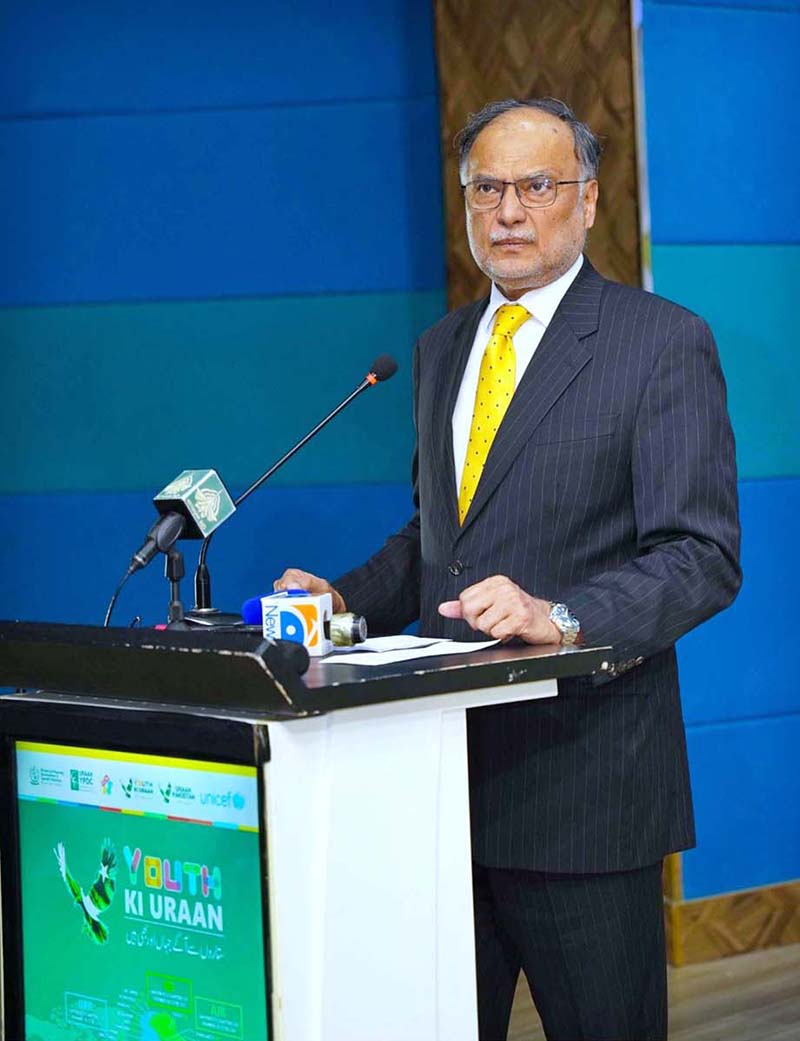
ISLAMABAD, Sep 18 (APP):Federal Minister for Planning, Development and Special Initiatives Professor Ahsan Iqbal on Friday emphasized the need for Pakistan to develop human resources and design capabilities in chip designing and other advanced technologies to build the foundations of a modern, export-oriented economy.
Addressing an event organized by Ghulam Ishaq Khan Institute of Engineering Sciences and Technology (GIKI), the minister said that semiconductor chips were at the heart of virtually every modern device, from mobile phones and laptops to vehicles, sophisticated machinery and small equipment.
“This is the capability on which the modern economy is based,” he said, stressing that Pakistan had lagged behind in the sector but could still establish its ecosystem by investing in human resources and design capabilities.
The minister said the first building block for developing any new technological ecosystem was skilled human capital capable of designing and developing advanced technologies.
He welcomed the participation of around 160 trainees in the program, including approximately 46 women, saying that it was encouraging to see Pakistani women preparing to play a meaningful role in modern technological fields.
He expressed the hope that some trainees would establish small chip-design laboratories, while others would find employment with international companies and, eventually, build billion-dollar technology companies.
The minister said the modern value chain was no longer limited to acquiring knowledge or education, but required the ability to transform knowledge into technology, technology into products and products into commercially viable businesses.
He observed that in the past, exports were largely associated with physical goods transported through containers, whereas the future economy would increasingly be driven by intellectual property, knowledge and knowledge-based products.
The trainees to emerge from the program as technology entrepreneurs capable of converting their skills into intellectual property, commercially successful products and businesses that could contribute to Pakistan’s economic development, he added.
Recalling his earlier association with the vision behind the GIKI, the minister said he had witnessed how an ambitious institutional concept could ultimately be transformed into reality. He said the institute had developed into a major engineering institution and was contributing highly trained human resources to Pakistan.
Referring to Pakistan’s economic and technological history, the minister said the country had been regarded as a rising star internationally during the 1960s and 1970s, but had gradually fallen behind other nations.
He stressed the importance of national self-confidence and said the way an individual or nation viewed itself could affect its sense of self-esteem and its ability to move forward.The minister also discussed the changing nature of power in the modern world, saying that influence was not confined to military strength but also involved the ability to shape how people think and perceive the world.
He said education should develop questioning, higher-order thinking and collective capabilities rather than merely produce individuals trained within existing structures. The minister emphasized the need for an education system that could develop critical thinking and collective competence, enabling young Pakistanis to understand technological opportunities and contribute to national development.
Minister for Planning said that investment in advanced technological skills, entrepreneurship, intellectual property and exports would be important for Pakistan as it sought to strengthen its position in the emerging knowledge economy.