Ahsan chairs meeting on GB, Gwadar energy projects
Ahsan chairs meeting on GB, Gwadar energy projects
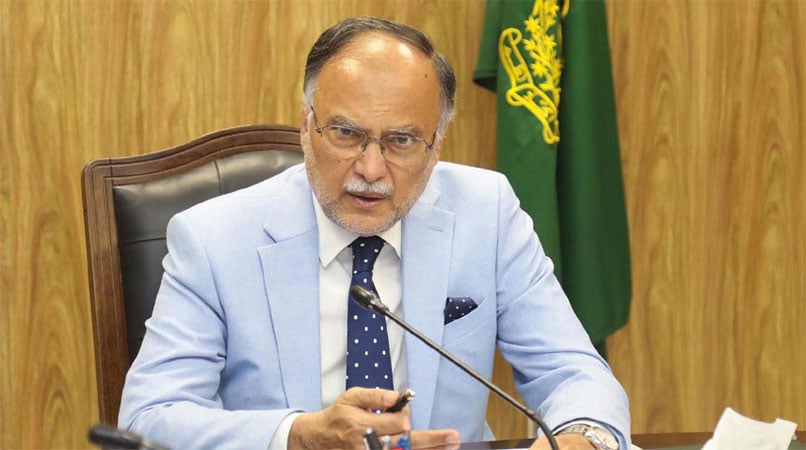
ISLAMABAD, Dec 04 (APP): Minister for Planning, Development and Special Initiatives Professor Ahsan Iqbal on Thursday chaired the third high-level meeting of the PM Committee constituted to devise a permanent solution to recurring water and power outages in Gwadar district, and reviewed progress on ongoing and planned power projects in both Gilgit-Baltistan (GB) and Gwadar.
The meeting was attended by Federal Minister for Power Awais Leghari along with senior officials from relevant ministries and stakeholders, a news release said.
Speaking at the meeting, Ahsan Iqbal said the government was committed to resolving the chronic electricity shortages affecting communities in GB and Gwadar, noting that uninterrupted power supply was vital for economic activity, service delivery, and long-term development in these regions. He emphasized that the Prime Minister had directed that energy projects critical to GB’s requirements be treated as high priority and executed within the stipulated timelines.
“The people of Gilgit-Baltistan must be provided adequate and reliable electricity, and we are taking all necessary steps to ensure this,” he said.
An action plan for the accelerated implementation of energy projects in Gilgit-Baltistan had been approved in line with the Prime Minister’s directives.
Under this plan, GB is expected to be supplied with a 100 MW addition to its power generation capacity by June 2026.
The 100 MWp Distributed Photovoltaic (DPV) Solar Project is currently under development at multiple sites across Gilgit-Baltistan. The project comprises an 18 MW rooftop solar component and an 82 MW utility-scale component, with an estimated total cost of Rs 24 billion.
The Planning Minister reiterated that timely deployment of the solarisation programme was essential for enhancing energy access and reducing dependence on costly and environmentally unsustainable generation options. He directed the departments concerned to ensure that budgetary allocations required for initiating the GB solarisation works were secured without delay.
Turning to Gwadar, the committee reviewed the status of the Solarisation of Pumping Stations and Desalination Power Plants, an initiative valued at Rs 1.9 billion.
The project aims to reduce operating costs and improve efficiency of the port city’s water supply infrastructure.
Officials briefed the forum that the project has a payback period of only 2.7 years, making it both economically and operationally viable.
The study on grid stability has also been completed, while deployment of the ±50 MVAR Static Synchronous Compensator (STATCOM) at Pasni (132 kV), along with the establishment of a local generation plant in Gwadar (132 kV), is expected between October and December 2026.
Ahsan Iqbal instructed to ensure deployment of the STATCOM within the stipulated timeframe and to expedite the solarisation of pumping stations and the desalination plant so that water supply challenges in Gwadar could be addressed in a sustainable manner.
“Ensuring stable and affordable electricity in Gwadar is not merely a technical matter—it is essential for the livelihoods of its residents and for the success of ongoing and future development projects,” the minister noted.
During the deliberations, Ahsan Iqbal stressed that the improvements in Gwadar’s power infrastructure must be matched by strengthened service maintenance at the Gwadar Port and effective law and order enforcement, so that development
gains translate into long-term economic activity.
He emphasized that coordination with the Government of Balochistan and the Gwadar Development Authority (GDA) must be maintained throughout the planning and execution phases of all power-related projects.
The Planning Minister reaffirmed the government’s commitment to providing reliable power supply to Gilgit-Baltistan and Gwadar, and directed all relevant entities to adhere strictly to timelines and deliverables.
He said that the planned interventions contribute effectively to improving quality of life and enabling sustainable
development in both regions.