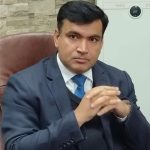
The Balochistan government has unveiled a total budget outlay of Rs. 1089 billion for the fiscal year 2026-27. Provincial Finance Minister Mir Shoaib Nosherwani presented the budget in the Balochistan Assembly, outlining allocations aimed at balancing development priorities with fiscal discipline.
Balochistan unveils Rs. 1089 billion budget for FY 2026-27

QUETTA, Jun 17 (APP): The Balochistan government has unveiled a total budget outlay of Rs. 1089 billion for the fiscal year 2026-27. Provincial Finance Minister Mir Shoaib Nosherwani presented the budget in the Balochistan Assembly, outlining allocations aimed at balancing development priorities with fiscal discipline.
Presenting the budget Mir Shoaib Nosherwani said that the development budget has been set at Rs. 206 billion, including Rs. 106 billion for new schemes and Rs. 100 billion for the completion of ongoing projects. In addition, the province will benefit from Rs. 45 billion in federal development grants and Rs. 40 billion through foreign project assistance, which are separate from the provincial development program.
Shoaib Nosherwani announced the creation of 5,000 new jobs in the provincial budget for the fiscal year 2026-27, aimed at expanding employment opportunities for youth across the province.
According to the budget details, 3,000 jobs will be created in the Departments of Schools and Colleges to strengthen the education sector. The Health Department will receive 500 new posts to improve medical services and address staffing shortages. In addition, 1,000 jobs will be introduced in newly formed districts to enhance administrative capacity, while another 500 posts will be allocated across various provincial departments.
The Balochistan government has set a revenue target of Rs. 170 billion for the upcoming fiscal year 2026-27, according to budget documents presented in the provincial assembly.
The Balochistan government has earmarked a total of Rs. 96 billion for the health sector in the provincial budget for fiscal year 2026-27, underscoring its commitment to improving healthcare facilities across the province.
Provincial Finance Minister Mir Shoaib Nosherwani announced that Rs. 6 billion has been allocated under the development budget and Rs. 90 billion under the non-development budget. He emphasized that healthcare remains the government’s foremost priority, noting that a strong health system not only improves quality of life but also contributes to economic growth.
The minister highlighted key allocations, including Rs. 7.7 billion for initiatives such as the Balochistan Health Card, PPHI programs, medicines, trauma centers, Sheikh Zayed bin Nahyan Hospital, and nutrition projects. A modern trauma center in Quetta has been allocated Rs. 1.3 billion, while the grant for the Balochistan Health Card has been increased from Rs. 4.5 billion to Rs. 6 billion. Similarly, the PPHI grant has been raised from Rs. 7.6 billion to Rs. 8.8 billion, and the medicines budget has been boosted by 23 percent, from Rs. 6.9 billion to Rs. 8.5 billion.
Special allocations include Rs. 10 million for a thalassemia center in Kech and Rs. 9 million for a similar facility in Gwadar. The Sheikh Zayed Institute of Cardiology’s grant has been increased from Rs. 2.2 billion to Rs. 2.8 billion, while Rs. 1.1 billion has been set aside for postgraduate trainees and house officers. The Nawab Ghaus Bakhsh Raisani Memorial Hospital in Mastung will see its grant rise from Rs. 400 million to Rs. 735 million, and Rs. 400 million each has been allocated for the Burn Unit in Quetta and Prince Fahd Hospital in Dalbandin. The Pak-Oman Hospital in Pasni will receive Rs. 279 million, up from Rs. 200 million, to enhance medical services.
In addition, Rs. 1.5 billion has been allocated for the Balochistan Nutrition Program, a comprehensive initiative aimed at combating malnutrition. The budget also includes the creation of 500 new posts in the Health Department to strengthen service delivery.
The Balochistan government has unveiled 11 new projects in the provincial budget for fiscal year 2026-27, aimed at reducing the financial burden on the provincial exchequer, improving agriculture, promoting online business, enhancing mineral resources, and raising the quality of development schemes.
Shoaib Nosherwani said that one of the key initiatives is the introduction of a comprehensive insurance system through Bolan Insurance Company Limited under a public-private partnership. This will cover government properties, accidents, natural disasters, health, and other projects, ensuring compensation for financial losses without adding extra strain on the provincial treasury.
To strengthen agriculture and provide affordable energy, Rs. 3.8 billion has been allocated for the solarization of tube wells. The government has also earmarked Rs. 10 billion for the establishment of the Bank of Balochistan, and Rs. 3 billion for the creation of the Balochistan Aviation Company, of which Rs. 2 billion will be returned by the company. Additionally, Rs. 3 billion has been set aside for master planning of divisional headquarters.
Other initiatives include the establishment of third-party validation mechanisms to improve the quality and design of development projects, the creation of e-commerce centers to promote digital economy and online business, and the allocation of Rs. 490 million to boost mineral resources and investment opportunities. For cultural preservation, Rs. 85 million has been earmarked to promote heritage and archaeology.
A new integrated system for addressing public complaints from the tehsil to the provincial level has also been announced. To modernize revenue collection, the government has made it mandatory that all provincial taxes and fees be paid through Balochistan e-Pay, replacing manual collection methods. This system will allow citizens to pay their dues online from anywhere in the country, with funds transferred directly into government accounts, reducing inconvenience for the public and preventing revenue losses.
Provincial Finance Minister Mir Shoaib Nosherwani, while unveiling the budget, emphasized that the government is determined to strengthen its financial base by enhancing provincial income. He noted that the administration has adopted strict fiscal discipline, ensuring that expenditures are limited to essential needs so that resources can be directed toward priority development projects.