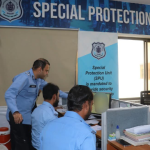
The Provincial Assembly’s Standing Committee on Excise and Anti-Narcotics convened a meeting under the chairmanship of Zmarak Khan Achakzai at the Assembly Committee Room.
Balochistan Assembly committee reviews Anti-Narcotics Bill 2026

QUETTA, May 14 (APP):The Provincial Assembly’s Standing Committee on Excise and Anti-Narcotics convened a meeting under the chairmanship of Zmarak Khan Achakzai at the Assembly Committee Room. Committee members Muhammad Khan Lehri, Maulvi Noorullah, and Safia Bibi attended, alongside Assembly Secretary Tahir Shah Kakar, Excise Secretary Syed Zafar Ali Bukhari, Special Secretary Committees Abdul Rahman, and Additional Secretary Law Saeed Iqbal.
The session focused on detailed deliberations over the Balochistan Control of Narcotics Bill 2026, aimed at strengthening provincial legislation against drug-related crimes. Officials briefed the committee that following the 18th Constitutional Amendment, responsibility for narcotics control was devolved to the provinces. In line with this, the Balochistan government amended its Rules of Business in 2012, assigning the mandate to the Excise and Anti-Narcotics Department.
According to the briefing, the proposed bill seeks to establish a robust legal framework to curb the production, processing, smuggling, and distribution of narcotics and prohibited substances. To support this effort, a Counter-Narcotics Wing has recently been established within the Excise Department, with plans underway to set up Narcotics Control Stations across divisional headquarters.
Chairman Zmrak Khan Achakzai emphasized that narcotics are a cancer destroying the youth and the future of society. He stressed that enforcement of the law must be impartial, urging authorities to take indiscriminate action against drug traffickers. He further highlighted that combating drugs is not solely the responsibility of government institutions, but requires active participation from parents, teachers, religious scholars, and civil society to raise awareness among youth.
Committee member Maulvi Noorullah added that Islam strictly prohibits all forms of intoxicants, noting their destructive impact on human intellect, health, and social life. He underscored the importance of religious and moral education in protecting the younger generation from the menace of drugs.