QUETTA, Sep 18 (APP):Federal Minister for National Heritage and Culture Aurangzeb Khan Khichi reaffirmed the federal government’s commitment to extend full support to the provincial government in ensuring the development and prosperity of Balochistan. Speaking at the conclusion of the High-Level Consultative Session on Regional Realities, Regulatory Environment, and Strategic Alignment, hosted by the Pakistan Poverty Alleviation Fund (PPAF) in collaboration with CoE-CVE Balochistan, Khichi said his ministry would serve …
Aurangzeb Khichi pledges federal support for Balochistan’s development, education & heritage preservation
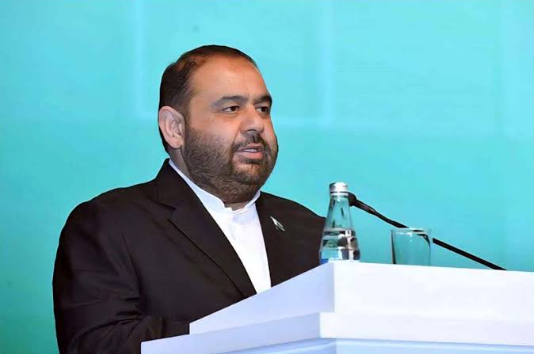
QUETTA, Sep 18 (APP):Federal Minister for National Heritage and Culture Aurangzeb Khan Khichi reaffirmed the federal government’s commitment to extend full support to the provincial government in ensuring the development and prosperity of Balochistan.
Speaking at the conclusion of the High-Level Consultative Session on Regional Realities, Regulatory Environment, and Strategic Alignment, hosted by the Pakistan Poverty Alleviation Fund (PPAF) in collaboration with CoE-CVE Balochistan, Khichi said his ministry would serve as a helping hand for NGOs and civil society organizations, assisting development bodies in their efforts to uplift the province.
He emphasized that the federal government is determined to showcase the talent of local artists on international platforms, offering institutions such as Lok Virsa and the Pakistan National Council of the Arts (PNCA) to promote cultural heritage globally.
Aurangzeb Khan Khichi praised the role of NGOs and civil society in supporting provincial initiatives, noting that their contributions are vital to complement government efforts. He lauded the provincial government under Chief Minister Mir Sarfraz Bugti for working tirelessly for the welfare of the people of Balochistan while simultaneously countering terrorism.
Highlighting education initiatives, the Minister said the Prime Minister has announced the establishment of 10 Danish Schools across various districts of Balochistan. Construction work is underway on six schools, while the PC-1 for the remaining four is in the final stages. These institutions aim to provide quality education to students in remote areas.
Aurangzeb Khichi further revealed that the Ministry of National Heritage and Culture has allocated 80 percent of its sanctioned PSDP 2026-27 budget for development projects in Balochistan. He vowed to include the Mehrgarh Civilization, located on the Kacchi Plain near the Bolan Pass, in the UNESCO World Heritage List by next year. “Mehrgarh, dating back 9,000 to 11,000 years, is one of the world’s oldest civilizations and deserves global recognition,” he said.
He added that the federal government, in collaboration with the provincial administration, plans to restore heritage sites across Balochistan to preserve the province’s rich cultural legacy. “Pakistan is a land of immense diversity,” he remarked, reiterating: “Pakistan without Balochistan is incomplete, and Balochistan without Pakistan is incomplete.”
Condemning terrorism, Aurangzeb Khichi said extremist elements are acting on foreign agendas and harming the country. He stressed that unity and development are the strongest responses to such threats. He also lauded the role of Ziaullah Langau in countering terrorist narratives of deprivation and underdevelopment propagated by foreign elements.
Balochistan’s Home Minister Mir Ziaullah Langau has said that a democratic path exists to end deprivation and secure the rights of the people of Balochistan, stressing that there is no justification for taking up arms against the state.
Addressing a high-level session with civil society organizations, Langau said terrorism is undermining peace and development in the province. He urged all segments of society to play their role in projecting Pakistan’s positive image and countering hostile narratives.
The Minister said that terrorism in Balochistan is being supported by India and Afghanistan’s soil is being used to destabilize Pakistan and obstruct projects such as CPEC. He said enemies consider Pakistan a soft target and are attempting to damage the interests of both Pakistan and China.
Zia Langau emphasized that deprivation is not unique to Balochistan, as similar challenges exist in parts of Sindh and Punjab. However, he said, rights must be pursued through democratic means, not violence. “If deprivation were the real issue, the narrative would focus on schools, hospitals, and roads. Instead, some elements are talking about breaking the country, funded by foreign money. This will never be allowed,” he declared.
He noted that Balochistan is gradually progressing, though terrorists continue to target resources and installations. He cited the abduction of two members of the Hazara community, who were released after ransom payments, as evidence that terrorism is not a freedom struggle but part of an enemy agenda.
Zia Langau praised NGOs and civil society for their constructive role in addressing public issues and promoting development. He stressed that all stakeholders must unite to defeat the anti-Pakistan narrative and safeguard the province’s future.
Welcoming the participants, CEO PPAF Nadir Gul Barech emphasized that such platforms provide an important opportunity for open dialogue, exchange of perspectives and stronger coordination among key stakeholders working for the development of Balochistan.
He highlighted the valuable role of Civil Society Organizations in understanding community needs, identifying emerging challenges and connecting development efforts with realities on the ground. He expressed the hope that the consultation would contribute to constructive dialogue, greater institutional coordination and practical, locally informed approaches for inclusive and sustainable development in Balochistan.
Barech reaffirmed PPAF’s commitment to working closely with government institutions, civil society and communities to support people-centered development and create meaningful opportunities for vulnerable and underserved segments of society.