
While technology continues to transform homes, workplaces and everyday lifestyles, millions of women across Punjab remain trapped in a centuries-old routine, washing clothes by hand for hours, often in cold water, with little relief from the physical demands of this exhausting household chore.
Modern Punjab, traditional routines: millions of women still wash by hand
Muhammad Atif Ismail
MULTAN, Nov 29 (APP):While technology continues to transform homes, workplaces and everyday lifestyles, millions of women across Punjab remain trapped in a centuries-old routine, washing clothes by hand for hours, often in cold water, with little relief from the physical demands of this exhausting household chore.
In a province widely regarded as the country’s most developed, the absence of even a basic household appliance remains a harsh reality for millions of families.
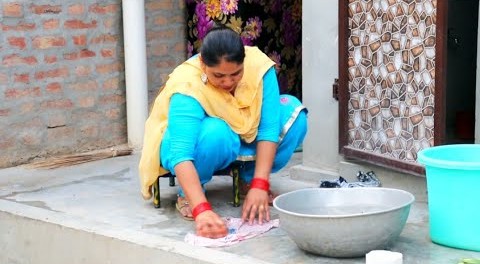
Behind the image of modern Punjab lies another picture, women sitting beside tube wells, irrigation canals and narrow water channels, scrubbing, rinsing and wringing clothes with their bare hands, while technological advancement remains beyond their reach.
According to data from the Punjab Socio-Economic Registry (PSER), the province has approximately 28 million households, but only 9.5 million have washing machines. This means that nearly 33 per cent of households have access to the facility, while the remaining 67 per cent continue to depend on traditional methods of washing clothes.
These figures reveal more than a household appliance gap.
They highlight the continuing physical burden of unpaid domestic labour shouldered by women, many of whom spend hours every day performing tasks that modern technology could otherwise make easier.
From remote villages and rural settlements to small towns and urban neighbourhoods, hand-washing remains a common practice.
For some women, it is a matter of habit or personal preference, while for countless others, it is simply the only available option because they cannot afford to purchase a washing machine.
Sakeena Bibi, a domestic worker residing in a suburban area of Multan, said washing clothes by hand remained common in rural Punjab. She observed that some women were hesitant to use washing machines and preferred traditional methods, while many others could not afford the appliance because of their limited financial resources.
For these women, laundry is not merely another household responsibility. It is a physically demanding routine that consumes valuable time and energy, often leaving little room for rest or other activities. In larger families, the burden becomes even heavier, as piles of dirty clothes accumulate almost every day.
The struggle becomes particularly painful during winter.
Cold water, prolonged exposure to detergents and repeated contact with soaps and cleaning chemicals can gradually damage the skin, turning an ordinary household chore into a source of persistent pain and discomfort.
Women who regularly wash clothes and dishes manually often suffer from excessive dryness, irritation, skin cracks and other dermatological problems. What begins as a minor inconvenience can eventually develop into a painful condition that makes even routine activities difficult.
Renowned skin specialist Dr Waqas Arqam said hand eczema was a common problem among women, particularly during winter, with frequent exposure to detergents and cleaning agents being among its major contributing
factors.
He explained that women who repeatedly washed clothes with strong detergents and used soaps while washing dishes were particularly vulnerable to irritant contact dermatitis and hand eczema.
According to him, the condition often developed gradually. Initially, women might not notice any significant symptoms. However, repeated exposure to irritating substances could gradually strip the skin of its natural protective oils, leaving the hands excessively dry.
As the skin lost its flexibility, small cracks began to appear, which could eventually develop into eczema. These cracks often caused considerable discomfort because water, air and other substances coming into contact with damaged skin could trigger irritation and a burning sensation.
Dr Waqas Arqam also warned against relying on certain commonly practiced home remedies without proper medical advice. He said repeatedly soaking affected hands in neem water could aggravate irritation rather than provide relief, particularly when the skin’s protective barrier was already damaged.
He recommended that women take simple but effective preventive measures to protect their hands while performing household chores.
Wearing protective gloves while washing clothes and dishes was among the most important steps, as gloves created a barrier between the skin and potentially irritating substances, including detergents, soaps and
water.
He also advised frequent application of white petroleum jelly to keep the hands moisturized and help restore their natural protective barrier.
Explaining its benefits, he said petroleum jelly helped reduce transepidermal water loss, the process through which moisture escapes from the skin.
With retaining moisture and strengthening the skin’s protective layer, it could help prevent excessive dryness and painful cracks. However, more severe cases might require medical treatment depending on the patient’s
condition.
Although these precautions can help protect women’ s hands, they cannot eliminate the larger problem confronting millions of households: the unequal distribution of domestic facilities and the continuing burden of unpaid labour.
The absence of a washing machine may appear to be a minor household inconvenience to families that can afford modern appliances.
However, for women who spend hours scrubbing clothes by hand, it represents a daily struggle against poverty, limited resources and physically exhausting responsibilities.
The contrast is striking. As modern households increasingly embrace automated appliances to save time and effort, millions of women across Punjab continue to follow traditional methods that have remained virtually unchanged for generations.
Punjab’s development story cannot be measured solely through roads, buildings, infrastructure, economic growth and technological progress. Its real success must also be reflected in the everyday lives of ordinary families, particularly women whose labour keeps households running.
Until modern conveniences reach their homes, millions of women will continue to face the same exhausting routine, their hands bearing the marks of work that technology has already made easier for others.
The question is no longer simply how many households own washing machines. It is whether Punjab’s progress has reached the women who need it most or whether, behind the province’s modern image, generations of women will continue to wash clothes by hand, carrying a traditional burden in an increasingly modern world.
Ultimately, the true measure of Punjab’s development lies not only in its visible progress but in whether that progress has reached ordinary households, transformed traditional domestic practices and improved the everyday lives of women.