By Fakhar e Alam PESHAWAR, Nov 09 (APP):Seventeen years before Pakistan emerged as an independent state on the world map, a visionary poet and philosopher from the Indian subcontinent articulated an idea that gradually transformed the political destiny of millions of Muslims and reshaped the history of South Asia. It was December 29, 1930, when Dr Allama Muhammad Iqbal, one of the greatest intellectual figures of the Muslim world, delivered …
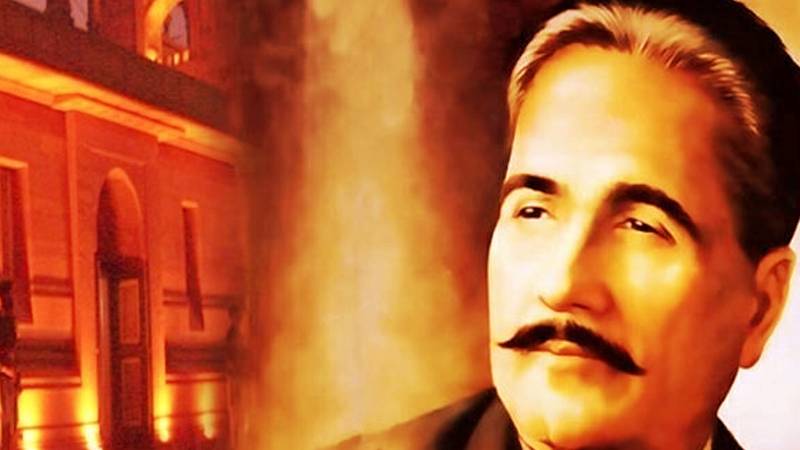
Dr. Iqbal’s 1930 Allahabad address: The historic vision that laid the foundation of Pakistan
By Fakhar e Alam
PESHAWAR, Nov 09 (APP):Seventeen years before Pakistan emerged as an independent state on the world map, a visionary poet and philosopher from the Indian subcontinent articulated an idea that gradually transformed the political destiny of millions of Muslims and reshaped the history of South Asia.
It was December 29, 1930, when Dr Allama Muhammad Iqbal, one of the greatest intellectual figures of the Muslim world, delivered his historic presidential address at the 25th session of the All-India Muslim League in Allahabad, presenting a political vision that eventually became one of the ideological foundations of Pakistan.
More than an ordinary political speech, the historic Allahabad address reflected Dr. Iqbal’s profound understanding of the historical, cultural, religious and political realities confronting Muslims under British colonial rule. It provided an intellectual direction to a community struggling to protect its distinct identity and secure an honourable political future in the subcontinent.
At a time when the future constitutional arrangements of British India were being debated, Allama Muhammad Iqbal boldly argued that Muslims constituted a distinct nation with their own religious traditions, cultural values, historical experiences and collective aspirations, which could not be adequately protected through a political system dominated by the Hindu majority.
Historians and political scholars regard the address as a landmark in the evolution of Muslim political thought, as it transformed the discussion about Muslim rights from the demand for constitutional safeguards into a broader vision of political self-determination.
“The Allahabad address marked a significant turning point in the political consciousness of Muslims in British India. Dr Iqbal presented a clear argument that Muslims were not merely a religious minority but a distinct nation entitled to political autonomy and the opportunity to shape its own future,” Professor Dr Muhammad Naushad Khan, former Vice Chancellor, Islamia College Peshawar while talking to APP.
He said Dr. Iqbal’s political vision emerged from a deep understanding of the historical circumstances in which Muslims found themselves following the decline of Muslim political power and unsuccessful War of Independence in 1857.
The aftermath of 1857 had profoundly changed the political and economic circumstances of Muslims in the subcontinent. The end of the Mughal Empire, the establishment of direct British colonial administration and subsequent political developments had weakened their traditional institutions and influence.
He said the emergence of representative politics, constitutional reforms and competing nationalist movements created fresh challenges for a community concerned about preserving its religious, cultural and political identity.
Against this historical backdrop, Dr Iqbal’s Allahabad Address offered a new political perspective and clear direction to achieve Pakistan.
The great philosopher-poet proposed the consolidation of Punjab, Sindh, Balochistan and the then North-West Frontier Province (now KP) into a single Muslim-majority political unit in northwestern India.
“I would like to see the Punjab, North-West Frontier Province, Sindh and Baluchistan amalgamated into a single State. Self-government within the British Empire, or without the British Empire, the formation of a consolidated North-West Indian Muslim State appears to me to be the final destiny of the Muslims, at least of North-West India.”
The significance of these words of Dr Allama Muhammad Iqbal laid not merely in the geographical proposal but in the political philosophy behind it.
Dr. Iqbal believed that the Muslim-majority regions of northwestern India possessed the historical, cultural and demographic foundations necessary to develop their own political institutions and pursue their collective aspirations.
He also maintained that Islam was not simply a set of individual religious beliefs but a comprehensive social and civilizational framework that shaped the collective life of its followers.
According to Dr Naushad, Dr. Iqbal’s concept of Muslim political identity was deeply rooted in his philosophical understanding of Islam, social justice, equality, spiritual freedom and collective responsibility.
“Dr Iqbal was not simply advocating a territorial arrangement. His central concern was the preservation of Islamic civilization, cultural identity and the intellectual independence of Muslims. He wanted them to become active participants in shaping their political and social future,” he said.
The historical importance of the Allahabad address becomes even more evident when viewed against subsequent political developments in British India.
During the 1930s, the demand for Muslim political rights gradually gained momentum as constitutional negotiations and political developments exposed the limitations of existing arrangements for protecting Muslim interests.
The Round Table Conferences in London, the constitutional debates and the introduction of provincial autonomy under the Government of India Act, 1935, further intensified discussions about the future political structure of the subcontinent.
Dr. Allama Muhammad Iqbal continued to express his political concerns through correspondence, speeches and intellectual writings. His letters to Quaid-e-Azam Muhammad Ali Jinnah in 1936 and 1937 are particularly significant, as he urged the founder of Pakistan to provide dynamic leadership to Muslims and work towards a political arrangement that could secure their future.
Although Dr. Iqbal passed away on April 21, 1938, his political and philosophical ideas continued to influence the Muslim League’s struggle.
Quaid-e-Azam Muhammad Ali Jinnah, who had returned to active Muslim politics and assumed the leadership of the All-India Muslim League, transformed the organization into a powerful political platform capable of mobilizing Muslims across the subcontinent.
The historic Lahore Resolution, adopted on March 23, 1940, at the annual session of the Muslim League, represented another decisive milestone in this political journey.
The resolution called for independent states in Muslim-majority areas of northwestern and eastern India, providing a clear political direction to the demand for Muslim self-determination.
Although the resolution did not explicitly mention the name Pakistan, its political significance was closely associated with the aspirations articulated by Dr. Iqbal a decade earlier.
“The Allahabad Address provided the intellectual and ideological direction, while the Lahore Resolution gave the Muslim political struggle a concrete constitutional and political shape. Quaid-e-Azam subsequently transformed this demand into a mass movement,” Dr Naushad observed.
Interestingly, the name Pakistan had already been proposed by Choudhry Rahmat Ali in 1933 in his pamphlet Now or Never, published in Cambridge, reflecting the growing demand for a separate political identity for the Muslims of the subcontinent.
The period between 1940 and 1947 witnessed an extraordinary transformation in the political landscape of British India.
The Muslim League expanded its organizational network, strengthened its political influence and increasingly emerged as the principal platform representing the demand for a separate Muslim homeland.
The 1945-46 elections proved particularly important in this regard. The Muslim League won all 30 Muslim seats in the Central Legislative Assembly, demonstrating its overwhelming electoral support among Muslim voters at the central level.
However, the political situation in the then NWFP remained complex, where the Congress formed the provincial government following the 1946 elections. The subsequent referendum held in July 1947, in which voters opted to join Pakistan, became a decisive chapter in the province’s political history.
For the people of the northwestern region, Dr. Iqbal’s vision carried particular historical significance because the area he had specifically included in his proposed Muslim political unit eventually became an integral part of Pakistan.
His geographical vision also highlighted the strategic, economic and cultural importance of the region, which continues to occupy a significant position in Pakistan’s national life.
The final chapter of the freedom struggle unfolded amid intense political negotiations, communal tensions and the British decision to transfer power.
On August 14, 1947, Pakistan emerged as an independent sovereign state under the leadership of Quaid-e-Azam Muhammad Ali Jinnah, who became its first Governor-General.
The establishment of Pakistan fulfilled the central aspiration for a separate homeland for Muslims, although the geographical boundaries and political circumstances of the new country differed from the broader political vision initially discussed by Iqbal.
Although Dr Muhammad Iqbal did not live to witness the emergence of Pakistan, his intellectual contribution had become deeply embedded in the political consciousness of Muslims before his death.
His poetry, philosophical writings and political thought had consistently encouraged Muslims to rediscover their intellectual strength, overcome political stagnation and develop confidence in their collective abilities.
Through his celebrated concept of Khudi (selfhood), the great poet philosopher emphasized individual dignity, self-realisation, determination and the power of human potential. He believed that nations could achieve greatness only when their individuals developed intellectual independence, moral strength and a strong sense of purpose.
His poetry, particularly Bang-e-Dara, Bal-e-Jibril, Zarb-e-Kalim and Asrar-e-Khudi, continues to inspire generations of readers across Pakistan and the wider Muslim world.
For the younger generation, Dr. Iqbal’s Allahabad address carries a message extending beyond its historical circumstances. It highlights the importance of visionary leadership, political awareness, national unity and the courage to imagine a different future during periods of uncertainty.
The experts said the address should be studied not merely as an event associated with the creation of Pakistan but as an important document of political philosophy and nation-building.
“Iqbal gave Muslims a sense of direction at a critical juncture in their history. His vision encouraged them to recognise their collective identity, develop political awareness and struggle for a future based on their own aspirations,” said Manzoorul Haq, former Ambassador while talking to APP.
Today, the Allahabad address remains an important subject of historical research, academic discussion and national reflection. Its significance lies in the way it connected Muslim political identity with the broader questions of constitutional rights, self-government, cultural preservation and collective destiny.
As Pakistan reflects on the historical journey leading to its independence, Dr. Iqbal’s message from December 1930 continues to remind the nation that the creation of a country was preceded by decades of intellectual struggle, political mobilization and visionary leadership.
The dream was not realized overnight and it evolved through the thoughts of Dr. Iqbal, the political determination of Quaid e Azam Muhammad Ali Jinnah and the collective struggle of millions of Muslims who believed in the possibility of a separate homeland.
Dr Iqbal’s Allahabad became a defining milestone in the intellectual journey that helped shape the idea of Pakistan and changed the course of South Asian history.
The best tribute to Dr Iqbal on his 149th birthday to work tirelessly in our respective field to make it economic stronger.