
By Matiullah Mati Quetta , Nov 10 (APP):For Zara Bibi, a young woman from Noshki, Balochistan's first-ever job fair for skilled women was more than just an event. It was an opportunity to turn the skills she had acquired through technical training into a source of income, explore new career possibilities and take a step towards financial independence. Like hundreds of other women …
By Matiullah Mati
Quetta , Nov 10 (APP):For Zara Bibi, a young woman from Noshki, Balochistan’s first-ever job fair for skilled women was more than just an event. It was an opportunity to turn the skills she had acquired through technical training into a source of income, explore new career possibilities and take a step towards financial independence.
Like hundreds of other women who gathered at the fair, Zara stood at the threshold of a new beginning, hoping to transform the skills she had painstakingly acquired into a livelihood, turn her training into tangible opportunities and carve out a future defined by dignity, confidence and financial independence.
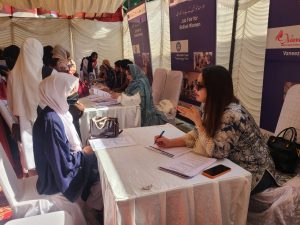
The event offered her an opportunity to connect with potential employers, learn about the job market and explore career opportunities that might otherwise have remained out of reach.
Zara had completed an eight-week technical training programme, which she said had helped her acquire new skills. She also appreciated the support and guidance provided by her instructors throughout the training period.
“I am excited about an upcoming three-day visit to Lahore, which will provide further opportunities to learn and develop professionally,” she said.
“Organizing such job fairs is the need of the hour. If we empower women in a society like Balochistan, our future generations will also become stronger,” she added.
Managing a household is not easy, Zara said, but women should also have opportunities to develop their skills, connect with institutions and participate in economic activities. For her, the job fair provided an opportunity to learn new things and understand how vocational training could lead to employment.
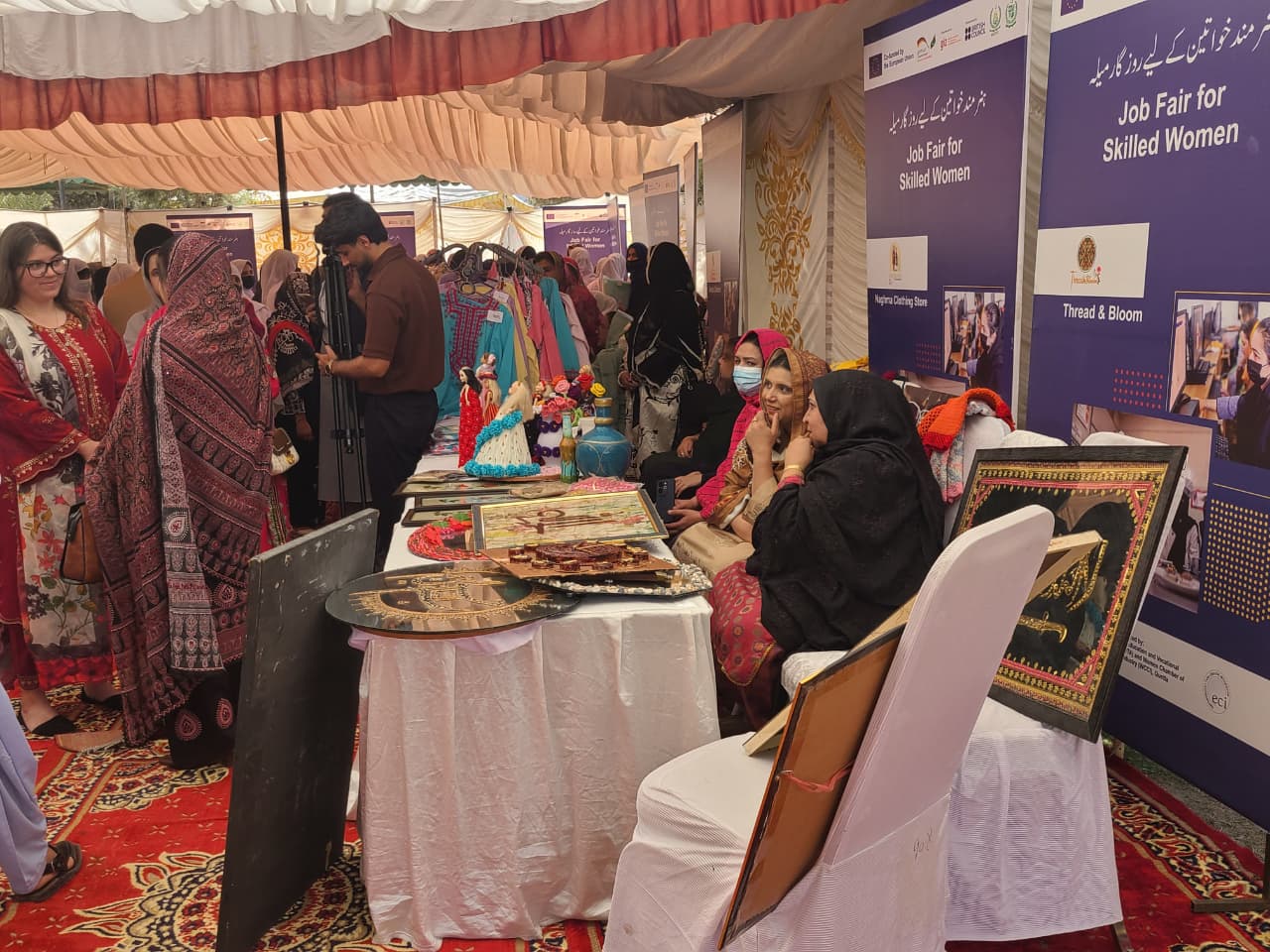
The Balochistan Technical Education and Vocational Training Authority (B-TEVTA) organized the province’s first job fair for skilled women, bringing together trained women, businesses, potential employers and financial institutions under one roof.
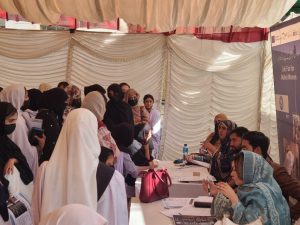
A total of 365 skilled women participated in the event, of whom 61 received job offers, while 110 were selected for paid internships designed to prepare them for professional employment. Twenty-five business organisations also participated, conducting interviews with women trained in various vocational fields.
The initiative aimed to bridge the gap between vocational training and the employment market while creating new opportunities for women seeking jobs or exploring entrepreneurship.
For Sabira Sultana, provincial coordinator of ECI, the job fair represented the culmination of 10 months of sustained efforts, supported by the German development organization GIZ.
She said more than 250 female trainees participated in the event, while 25 business organisations were invited to assess their skills and consider them for employment opportunities.
According to Sultana, organizers made efforts to facilitate women’ s participation while taking into account the challenges they face in accessing employment and professional networks.
She described the initiative as an important opportunity for women in Balochistan to establish direct connections with the market.
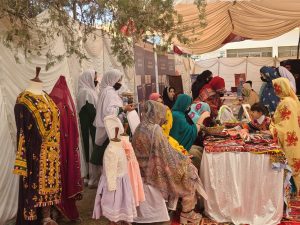
Sultana said the broader objective was to enable women to utilize their training in different ways, whether by securing jobs or establishing their own businesses. The fair, she added, sought to connect the skills acquired at training centers with the actual requirements of employers and markets.
Fatima Nazir, who runs a beauty studio in Quetta, attended the fair because her business was attracting more customers and she needed additional staff.
For her, the event provided a practical opportunity to meet potential employees and assess their abilities before making recruitment decisions.
Fatima interviewed around 38 women during the fair, of whom 11 met the standards required by her business.
Some candidates already had professional experience, while others were eager to learn and further improve their skills.
She welcomed the organization of a dedicated job fair for women in Balochistan, describing it as a positive step towards expanding their access to employment.
Fatima said career counseling sessions and job fairs were organized for students in other countries, making the introduction of a similar initiative for women in Balochistan particularly encouraging.
Shabnam Naz, principal of the Women Technical Training Centre, said her institution offered training in 12 different fields, including mobile phone repair, electrical work and other technical trades.
Under the theme “My Skills, My Pride,” the centre aims to equip women with practical skills alongside their education, enabling them to pursue economic independence.
Saleh Muhammad Nasar, secretary of Labour and Manpower in Balochistan, told APP that the provincial government was taking steps to promote the economic empowerment of young people and women and provide them with sustainable employment opportunities.
He encouraged students to establish clear goals and work consistently to improve their abilities. Professional competence, he added, should be accompanied by good conduct and a respectful attitude.
He said Balochistan needed to improve its vocational training institutions and align them with changing economic requirements.
The province has 135 vocational training institutions that require further improvement. Alongside introducing modern skills, Nasar emphasized the importance of promoting traditional occupations, including embroidery and locally manufactured products.
He said the government and relevant institutions were working to prepare young people for domestic and international employment markets by equipping them with skills suited to contemporary economic conditions.
Managing Director B-TEVTA Abdul Kabir Zarkoon expressed hope that the job fair would help trained women secure employment after completing their courses.
He said B-TEVTA was focusing on vocational training aligned with market demand and intended to invite more national and international companies to future job fairs.
According to Zarkoon, the authority would also work to expand employment opportunities for women and improve market access for products made in Balochistan. For women who cannot easily enter conventional workplaces, entrepreneurship could provide an alternative route to earning an income.
Vice Chairman of the Balochistan Board of Investment and Trade Bilal Khan Kakar said investment, industrial development and the establishment of new economic zones could create additional employment opportunities across the province.
He emphasized that practical skills had become increasingly important alongside conventional educational qualifications. Women, he said, could contribute not only to their households but also to business activities and the wider economy.
He added that women entering the business sector should be supported in establishing strong foundations for their enterprises, expanding their activities and accessing markets for their products.
The Women Chamber of Commerce is also working to strengthen women’ s participation in business.
Its Vice President Huma Jamali said the chamber was making efforts to help women access employment and business opportunities.
She added that steps would be taken to register women entrepreneurs with the chamber, enabling them to connect with one another and benefit from shared experiences.
Formal business networks can help women exchange information, develop professional relationships and learn about opportunities that might otherwise remain inaccessible.
They can also provide a platform to raise common concerns and engage with institutions involved in business development.
Balochistan’s first job fair for skilled women has highlighted the importance of connecting vocational training with employers, financial institutions and business networks.
For Zara, the job fair was more than an opportunity to find employment; it was a glimpse of a future in which her skills could translate into financial independence and a life of greater possibilities. For Fatima Nazir, it was a chance to find skilled hands to support her growing business.
Together, their stories reflect the promise of an initiative that seeks to turn women’ s potential into economic opportunity.
Beyond job offers and business connections, Balochistan’s first women’ s job fair has carried a powerful message: when women are equipped with skills and given access to opportunities, they can transform not only their own lives but also the economic future of their families and communities.
