RAWALPINDI, Jul 08 (APP):The government to develop a cogent National Industry Policy with embedded effective implementation frameworks that promote realistic regulation and government-academia-industry collaborations to achieve sustainable growth. This was the crux of a consultative session held by the Revenue Mobilisation Investment and Trade (ReMIT) project and Sustainable Development Policy Institute (SDPI) with the Rawalpindi Chamber of Commerce and Industry (RCCI) to garner key recommendations and expert suggestions for the …
Govt, academia, industry troika imperative to gain economic sustainability
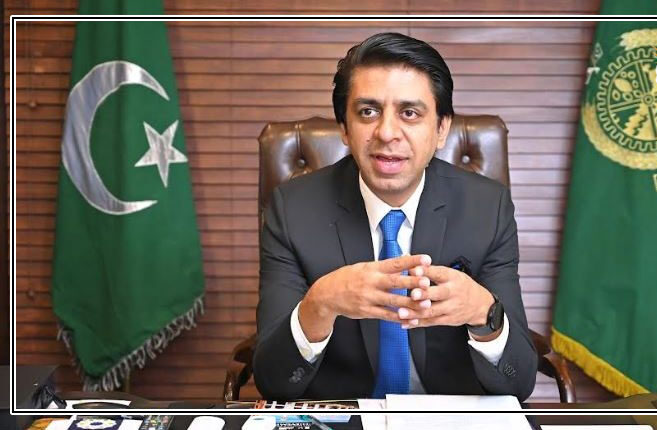
RAWALPINDI, Jul 08 (APP):The government to develop a cogent National Industry Policy with embedded effective implementation frameworks that promote realistic regulation and government-academia-industry collaborations to achieve sustainable growth.
This was the crux of a consultative session held by the Revenue Mobilisation Investment and Trade (ReMIT) project and Sustainable Development Policy Institute (SDPI) with the Rawalpindi Chamber of Commerce and Industry (RCCI) to garner key recommendations and expert suggestions for the policy draft to be prepared for National Industry Policy.
Chairman, of the Executive Committee, and President RCCI, Saqib Rafique said there were alternatives to growing imports of a country to manage its imports which were absent in the country and demanded the policymakers to shift their focus on developing Indigenous solutions instead of squeezing the already burdened sectors to manage its revenue demands.
He urged that the Industry demand consistency of policy to achieve optimum results as there is no effective implementation of already existing policy frameworks.
Senior Vice President, RCCI, Hamza Sarosh said the purpose of the consultative meeting was to provide policy recommendations to ReMIT and SDPI who were preparing a policy draft for industry policy.
He said due to heightened tax slabs and over-regulated regimes the country will not be able to avail benefits of its so-called strategic locations which is futile owing to declining revenue, business, exports and employment opportunities.
Sarosh noted that Vietnam has more foreign direct investment (FDI) and business growth than China. In contrast, problems for the Pakistani industry are growing every day with policies having narrow and shortsighted approaches.
Umar Bhatti, Industrial Policy Consultant, SDPI presented a detailed presentation on discussion on national industrial policy.
He said the country’s GDP equation from FY 2021-23 indicated the Pakistani economy being consumption-driven.
In contrast, its exports have been depleting since 2001 with some economic recovery post-Covid-19 pandemic but that diminished in 2022.
Bhatti underscored that the country’s export sector needs to embrace export diversification, product value addition, modern technology, highly skilled labour on cutting tech-based machines and targeted policies keeping in view growing regional and international trade rivalries that provide ample space for Pakistan to step in and exploit those economic opportunities.
Senator Mian Ateeq Shaikh said the national policy-making process is a sacred duty and stakeholders share a great responsibility in that regard. He said Pakistan must gain the trust of foreign investors and economic enterprises that are showing reluctance to invest in the country due to the latter’s violation of agreements and misuse of treaties done in the realm of industry.
He said the policy and governance of the industrial sector needs to be modernized keeping in view the growing risks and challenges in the modern world.
Kashif Shabbir, former President of RCCI said without improvement in macroeconomic policies no betterment is expected in the microeconomic domain. However, no industry can grow without the support of the government and finances to compete with its international counterparts.
He demanded the government reduce the regulatory role, enhance finances and access to land and promote an economically viable business environment for industrial growth.
The other participants hailing from diverse industrial backgrounds noted that debt restructuring and access to finance was a great hurdle for the industry as 25 percent markup cost has made it impossible for the industry to grow.
Moreover, it was noted that there was no industrial bank in the country that could understand the problems of the industry to promote better financial solutions in line with the market demands and challenges.
They also demanded that the government should adopt a one-window policy for promoting exports and industry simultaneously. Moreover, industry-academia collaboration to get cutting-edge technology should be enhanced whereas Polytechnique colleges’ quality of education also needs to be improved to produce a well-skilled technical workforce.