Daanish Schools have proved that lasting national progress depends on investing in people, where every child deserves a fair chance to learn.
How Daanish Schools are turning poverty into opportunity: A remarkable journey from educational deprivation to excellence, social equity & national transformation
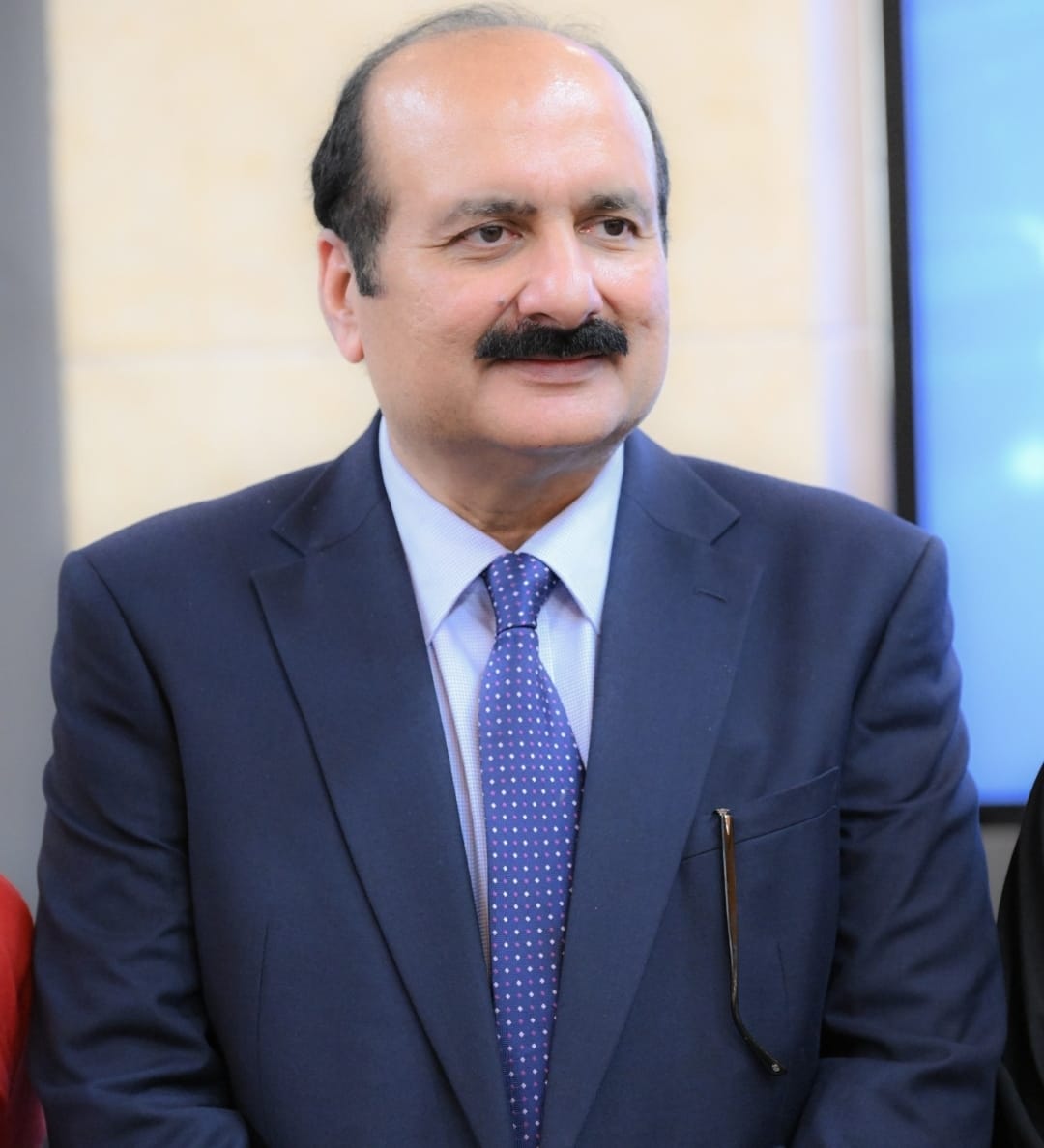
By Rana Mashhood Ahmed Khan, Chairman Prime Minister’s Youth Programme
The greatest tragedy of poverty is not merely the lack of material comfort, but the countless dreams left unfulfilled and the extraordinary human potential lost simply because opportunity is denied. Across Pakistan, generations of bright children have inherited both economic hardship and the barriers of poor schooling. For too many, the circumstances of birth have dictated the limits of their future.
A gap of opportunity, not talent: In 2010, Punjab presented a stark contrast. Major cities boasted reputable institutions, while southern and western Punjab remained held back by poverty and isolation. For the children of landless farmers, daily-wage labourers, widows, and orphans, admission to prestigious residential schools like Aitchison College or Sadiq Public School was unimaginable. Yet a child in a remote village of Rajanpur, Dera Ghazi Khan, or Rahim Yar Khan possessed the same natural intelligence as a peer in Lahore. The difference was never talent only opportunity.
Against this backdrop, then Chief Minister Mian Muhammad Shehbaz Sharif (in 2010) conceived a bold idea built on a simple conviction: poverty must never block excellence. His vision was to bring the standards of elite residential schooling free of cost to the poorest yet brightest children, directly within Pakistan’s most deprived districts.
From vision to reality: Backed by the Punjab Daanish Schools and Centres of Excellence Authority Act 2010, the first campus opened in Rahim Yar Khan on 13 January 2011. Today, the initiative spans 20 purpose-built residential campuses 10 for boys and 10 for girls across underserved areas including Chishtian, Hasilpur, Mianwali, Jand, Fazilpur, Mailsi, Kot Qaisrani, and Mankera. Instead of forcing disadvantaged children to migrate to prosperous cities, the schools brought world-class facilities, laboratories, libraries, and hostels to their doorstep.
Eighty per cent of seats are reserved strictly for deserving students, prioritising double orphans, children of widows, and households facing illiteracy, unemployment, or disability. Ten per cent are allocated to students from other provinces, and 10 per cent are self-financed. With roughly 18 applicants competing for every seat, the demand underscores how deeply families value this lifeline. Crucially, separate but adjoining campuses ensure equal access for girls in regions where female education has historically been cut short.
Nurturing the whole child: Covering Class VI to Class XII, the schools recognize that impoverished children need more than textbooks to thrive. Funded students receive free boarding, nutritious meals, uniforms, healthcare, counselling, and sports facilities. Residential life instils discipline, tolerance, and confidence through debating, arts, and leadership activities shaping not just high scorers, but principled citizens.
The academic results speak volumes. In Matriculation, A+ grades surged from 41.12 per cent in 2015 to 84.14 per cent in 2026, with 96.41 per cent of students securing A+ or A grades. At the Intermediate level, combined A+ and A grades rose from 52.46 per cent in 2017 to 84.61 per cent in 2026. These outcomes disprove the myth that academic brilliance belongs only to the privileged.
The journey beyond school: To ensure seven years of schooling translate into lasting upward mobility, dedicated placement cells connect graduates with over 50 chartered universities and scholarships, notably through the Punjab Educational Endowment Fund (PEEF). Between 2017 and 2025, out of 8,117 Intermediate graduates, 7,157 (88 per cent) entered higher education. Thousands have since joined the workforce including 1,049 entrepreneurs, 586 educators, 463 engineers, 224 Armed Forces officers, and 206 IT professionals—lifting entire families out of poverty.
A vision carried across sixteen years : Unlike many initiatives that fade with political transitions, Daanish Schools have endured for sixteen years and are now expanding under Prime Minister Shehbaz Sharif to Islamabad, Balochistan, Sindh, Khyber Pakhtunkhwa, Gilgit-Baltistan, and Azad Jammu and Kashmir aligning directly with UN Sustainable Development Goal 4.Yet sustained success requires addressing critical questions: managing per-student costs in remote regions, defining the model’s role alongside millions of out-of-school children, commissioning independent impact studies through institutions like PIDE, guaranteeing continuous university scholarship funding, and safeguarding strict merit during expansion. Partnerships with the Aga Khan University Examination Board and LUMS’ National Outreach Programme already demonstrate how academic quality can be strengthened.
Ultimately, Daanish Schools prove that lasting national progress depends on investing in people. Every child deserves a fair chance to learn, and no dream should perish simply because it was born in poverty.