
RAWALPINDI, Nov 26 (APP):Justice Ayesha Malik, Supreme Court of Pakistan (SCP) Judge, on Thursday said that Pakistan possesses strong statutory laws to protect women, but turning legal rights into real protection requires legal literacy, effective enforcement, and a gender perspective that challenges entrenched patriarchal mindsets. Delivering the keynote address at a seminar titled "Human Rights and Legal Awareness", organized at Fatima Jinnah Women University (FJWU) under the 16 Days of …
Knowing anti-harassment laws empowers women to turn legal rights into real protection: Justice Ayesha Malik
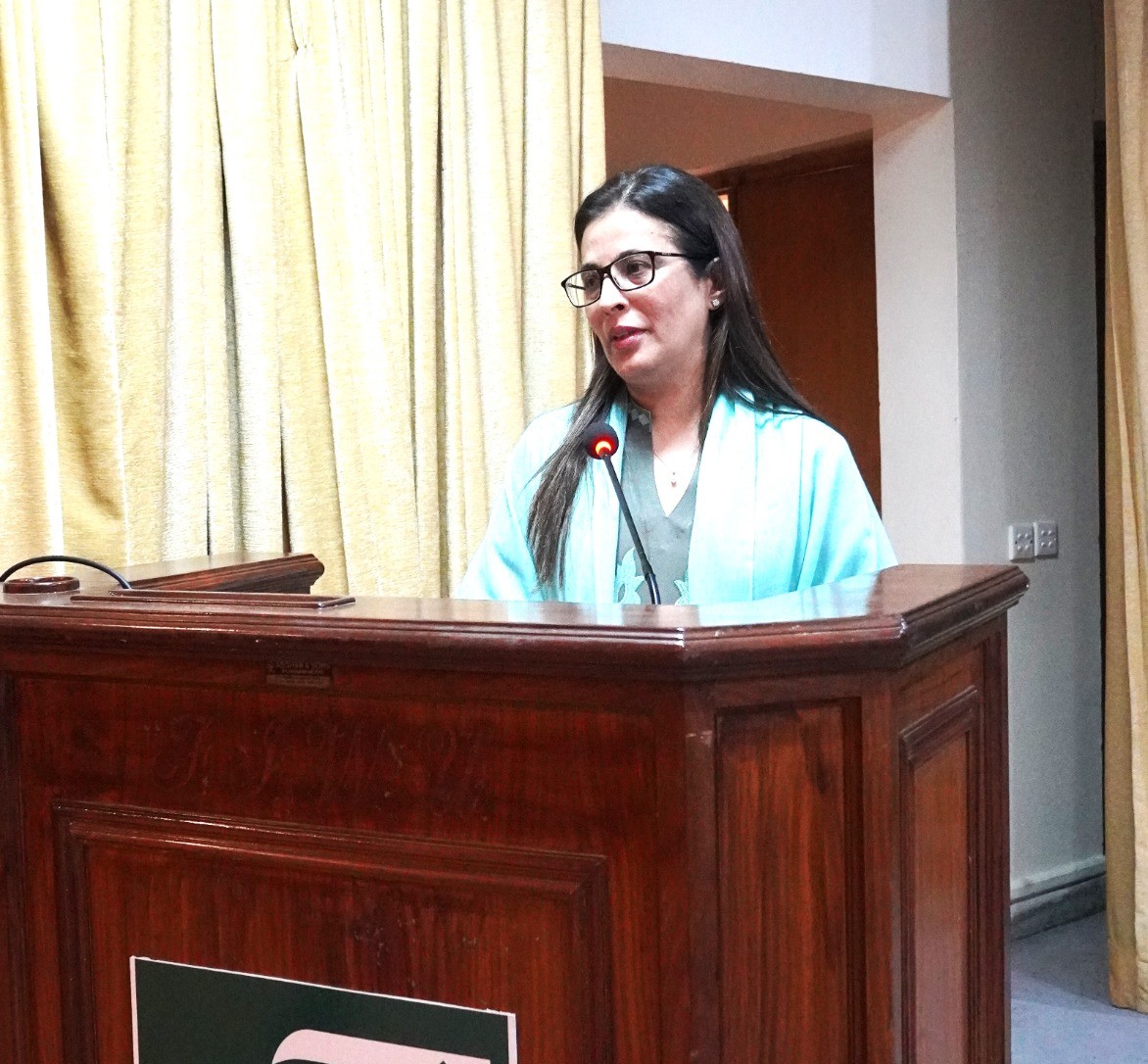
RAWALPINDI, Nov 26 (APP):Justice Ayesha Malik, Supreme Court of Pakistan (SCP) Judge, on Thursday said that Pakistan possesses strong statutory laws to protect women, but turning legal rights into real protection requires legal literacy, effective enforcement, and a gender perspective that challenges entrenched patriarchal mindsets.
Delivering the keynote address at a seminar titled “Human Rights and Legal Awareness”, organized at Fatima Jinnah Women University (FJWU) under the 16 Days of Activism Against Gender-Based Violence campaign, Justice Ayesha Malik observed that despite comprising 49 percent of the country’s populating, women lack substantive equality, noting that only 14 percent hold bank accounts, 2 percent own homes or debit cards, 33 percent possess mobile phones and 24 percent participate in the workforce.
Identifying entrenched social mindsets, male-centric narratives and weak enforcement as the three primary barriers to gender justice, she explained how landmark judicial rulings, including the Nadia Naz case review and the abolition of the unscientific “two-finger” virginity test, broadened workplace harassment jurisprudence beyond physical acts to cover gender-based discrimination, power dynamics, psychological bullying, and cyber harassment.
She emphasized that university students and employees are legally protected through mandatory institutional inquiry committees, requiring at least one female member, and provincial ombudspersons, along with parallel remedies under criminal law and the Prevention of Electronic Crimes Act (PECA).
Clarifying evidentiary rules, she underlined that a complainant’s credible testimony is sufficient without eyewitnesses, reporting delays do not invalidate a complaint, and strict confidentiality is legally guaranteed to prevent retaliation and protect survivor dignity.
She urged young women to reject victim-blaming stereotypes, collect disaggregated gender data and build supportive communities where women believe and assist one another without judgment.
“Legal reform only succeeds when educated citizens actively enforce the law’s promise in everyday life rather than leaving protections confined to paper”, she said.
She underlined the importance of creating awareness among massive women population through writings, organzing seminars and using university radio service.
In her closing remarks, FJWU Vice Chancellor Prof. Dr. Bushra Mirza thanked Justice Ayesha Malik for sharing profound judicial insights and paving the way as the first woman judge of the Supreme Court, adding that having women on decision-making benches ensures a vital gender perspective in legal interpretation.
She expressed FJWU’s keen interest in collaborating with Justice Ayesha Malik’s office through its Women Research and Resource Center to conduct data-driven research addressing real life gender challenges.
The seminar was attended by a number of faculty members, large number of students and media representatives.