By Muhammad Atif Ismail Multan, Nov 26 (APP):At a time when extravagant wedding halls, lavish buffets and glittering celebrations have increasingly become symbols of social prestige, an age-old tradition in the villages of South Punjab continues to tell a different story one in which a simple meal, shared responsibilities and neighbourhood solidarity matter more than grandeur and display. Known as Chalawein Roti, this distinctive wedding …
Chalawein Roti keeps South Punjab’s centuries-old wedding culture alive
By Muhammad Atif Ismail
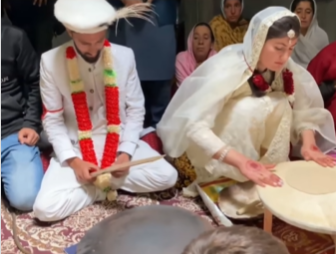
Multan, Nov 26 (APP):At a time when extravagant wedding halls, lavish buffets and glittering celebrations have increasingly become symbols of social prestige, an age-old tradition in the villages of South Punjab continues to tell a different story one in which a simple meal, shared responsibilities and neighbourhood solidarity matter more than grandeur and
display.
Known as Chalawein Roti, this distinctive wedding custom transforms a family celebration into a community-wide occasion, bringing food to the doorsteps of neighbors and relatives while preserving the spirit of collective participation that has defined rural life for generations.
Unlike conventional wedding receptions, where hundreds of guests gather under one roof, Chalawein Roti follows a remarkably simple yet meaningful arrangement.
The bridegroom’s family prepares food at home, while households across the village bring their own cooking pots and utensils to collect meals according to the number of their family members.
The practice ensures that almost every household becomes part of the festivities, even without attending a formal reception.
Arrangements are generally settled in advance between the wedding family and participating households, while relatives and guests arriving from distant areas are welcomed into the wedding home and served with traditional hospitality.
Food is also delivered to nearby relatives who cannot collect it themselves.
The enduring custom was recently witnessed in Chak Inam Wala, a rural locality on the outskirts of Multan, where a wedding family prepared and distributed meals among nearly 50 households, demonstrating how an inherited tradition continues to flourish despite changing social trends.
Muhammad Javed, brother of the bridegroom, told APP that Chalawein Roti was deeply embedded in the area’s cultural fabric and had been observed by local families for generations.
“We do not arrange wedding receptions in marriage halls. Instead, we prepare food at home, and families with whom we have marriage and social ties bring their own utensils and collect meals according to the number of their household members,” he said.
He explained that the village elders had also established a mutual understanding under which participating families contributed a fixed amount of money to the wedding household whenever the traditional arrangement was observed.
“This contribution helps reduce the financial burden on the wedding family to some extent. It is a collective arrangement based on mutual understanding and cooperation,” he added.
For local residents, however, the significance of Chalawein Roti extends far beyond financial convenience. It represents an enduring social bond in which happiness is shared, hospitality is extended to every household and no neighbor is excluded from an important family occasion.
Muhammad Shaukat, another resident, described the custom as a beautiful reflection of community life, offering practical benefits while keeping traditional relationships intact.
“Every family receives food according to the number of its members. There are several benefits. The wedding family saves the considerable expense of arranging a reception at a marriage hall, food reaches almost every household, and the arrangement requires less effort from the hosts because people bring their own utensils and collect their meals themselves,” he said.
He added that visitors travelling from distant places were treated as special guests, with the wedding family making separate arrangements to accommodate and serve them at home.
At a time when wedding expenditure is placing mounting pressure on ordinary households, the tradition offers a practical alternative to costly celebrations. Marriage halls, professional catering, elaborate seating arrangements and extensive guest management can consume substantial financial resources, often forcing families to stretch their means to meet social expectations.
Chalawein Roti, by contrast, replaces much of this commercial extravagance with a community-based system built on cooperation, familiarity and shared responsibility.
Muhammad Yameen, a resident of Basti Nawabad, said the tradition remained popular in his area despite the growing inclination towards marriage halls and professionally organized wedding functions.
“Although many families have now shifted towards marriage halls, we still prepare food at home and distribute it among households. This helps us avoid many difficulties and prevents unnecessary financial pressure,” he told
APP.
Beyond its economic advantages, the custom carries a deeper message about the meaning of celebration. It reflects a social philosophy in which a wedding is not merely an occasion belonging to an individual family but a collective moment of happiness for the entire neighbourhood.
The sight of residents arriving with their own pots and utensils, collecting meals for their loved ones and participating in arrangements settled by village elders illustrates a remarkable tradition of mutual understanding.
Every household has a role, every family shares the occasion and every meal becomes a symbol of
belonging.
The practice also reinforces the unwritten social bonds that hold rural settlements together. In communities where relationships are nurtured through generations of interaction, such customs help sustain trust, reciprocity and a sense of shared identity.
Although the precise historical origins of Chalawein Roti remain difficult to establish, its continued observance across parts of South Punjab highlights the resilience of indigenous traditions in the face of changing lifestyles, economic challenges and the growing commercialization of weddings.
Its survival also raises an important question about modern celebrations: should the success of a wedding be measured by the magnificence of its venue and the richness of its menu, or by the happiness it brings to people?
For families continuing this practice, the answer lies in a simple philosophy a celebration becomes meaningful when its joy reaches everyone.
As lavish wedding trends continue to reshape social expectations, Chalawein Roti stands as a powerful reminder that tradition does not always require expensive arrangements to remain relevant.
Sometimes, the strongest expression of generosity is a meal prepared at home, collected in a neighbor’s cooking pot and shared with an entire community.
In the villages of South Punjab, this humble custom keeps alive a timeless message: a wedding may belong to one family, but its happiness belongs to everyone.