
China unveiled 15 landmark brain-computer interface (BCI) achievements at a conference in Beijing, showcasing advances in neural signal acquisition, implantable devices, medical rehabilitation and industrial applications, as a new report highlighted the rapid expansion of the global BCI industry.
China unveils 15 landmark Brain-Computer Interface achievements as global industry expands
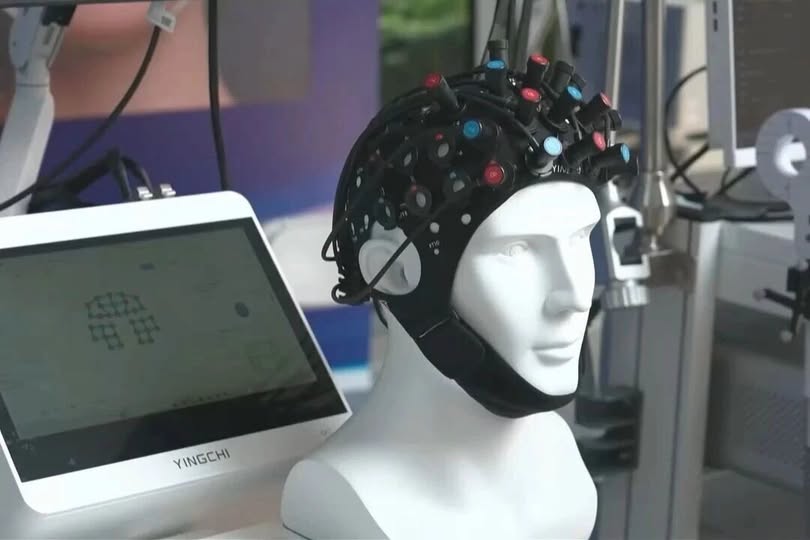
BEIJING, Nov. 24 (APP): China unveiled 15 landmark brain-computer interface (BCI) achievements at a conference in Beijing, showcasing advances in neural signal acquisition, implantable devices, medical rehabilitation and industrial applications, as a new report highlighted the rapid expansion of the global BCI industry.
The achievements were released at the 2026 Brain-Computer Interface Conference, held in Changping, Beijing, from November 19 to 22.
Together, the results span both invasive and non-invasive interfaces, as well as applications in neurological rehabilitation, cognitive assessment, human-machine interaction and workplace safety.
The conference also released the Research Report on the Innovative Development of Brain-Computer Interfaces (2026), compiled jointly by the China Academy of Information and Communications Technology and the Brain Computer Interface Industrial Alliance, CEN reported.
According to the report, the number of BCI companies worldwide reached 1,175 in 2026. In China, three major urban clusters, the Yangtze River Delta, Beijing-Tianjin-Hebei and the Guangdong-Hong Kong-Macao Greater Bay Area, host 390 BCI companies, accounting for 77.4 percent of the national total.
The report identifies a shift in the industry’s technological development, from single-direction neural signal reading towards multimodal systems and AI-native integration. It also highlights growing participation by major companies from the information and communications technology and medical sectors, with competition extending across software, hardware, chips and end-user devices.
Research and medical applications currently account for the main sources of industry revenue, the report said. However, many medical BCI products remain in research, clinical trials or regulatory approval, while non-medical applications are still at an early stage.
The report also identifies challenges including insufficient clinical evidence, incomplete payment and talent systems, the need to verify long-term reliability, and the importance of demonstrating practical demand for BCI applications.