Dr. Kao Kim Hourn said that Pakistan and ASEAN together represented a market of nearly 950 million people with a combined economy exceeding $4.6 trillion in 2025.
Pakistan, ASEAN agree to deepen multi-sector cooperation, vow to translate vast potential into reality
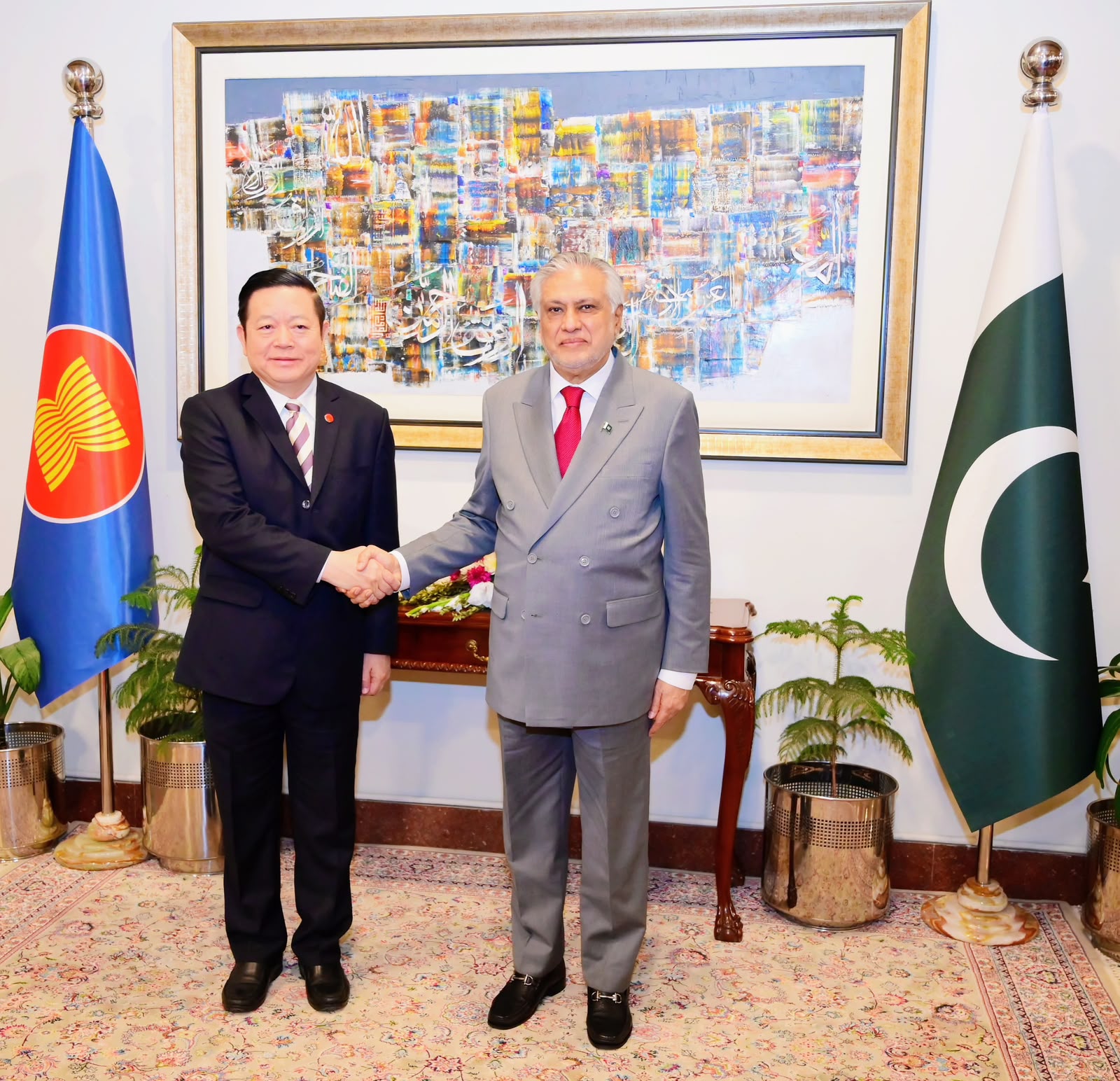
ISLAMABAD, Nov 19 (APP): Pakistan and the Association of Southeast Asian Nations (ASEAN) on Thursday agreed to deepen cooperation in multiple sectors including trade, digital economy, climate change, food security, cyber threats, and connectivity, pledging to translate their vast untapped potential into tangible achievements.
The Pakistan-ASEAN ties and cooperation were discussed at length during the delegation-level talks between Deputy Prime Minister and Foreign Minister Senator Ishaq Dar and Secretary-General Dr. Kao Kim Hourn here, which ran 45 minutes over schedule due to the depth of discussions.
At the invitation of the Deputy Prime Minister Dar, Dr. Hourn is on a working visit to Pakistan which is the first by an ASEAN Secretary-General in over two decades.
At a joint press stakeout following the talks, the deputy prime minister said that both sides were aligned on translating potential into reality.
He noted that as ASEAN’s oldest sectoral dialogue partner since 1993, expressing the hope that the visit would advance its bid to become a Full Dialogue Partner of the bloc in the due course.
He said that both sides agreed to foster closer links between their chambers of commerce and universities, particularly in artificial intelligence and digital skills, while tackling non-traditional security threats including climate change, food insecurity, energy disruptions, and cyber threats.
During the talks, DPM Dar also briefed the ASEAN chief on the humanitarian situation in Gaza, reiterated Pakistan’s support for an independent and viable Palestinian state based on pre-June 1967 borders with Al-Quds Al-Sharif as its capital, and stressed the need for a peaceful resolution of the Jammu and Kashmir dispute in line with UN Security Council resolutions.
He also highlighted India’s unilateral move to hold the Indus Waters Treaty in abeyance as a breach of international law threatening the security of 250 million Pakistanis, and voiced deep concern over the continued use of Afghan soil for cross-border terrorism against Pakistan.
Deputy Prime Minister Dar said that Pakistan and ASEAN enjoyed long-standing, friendly relations founded on mutual respect, goodwill, and shared aspirations for peace and prosperity.
He said that at a time of growing international uncertainty and an evolving geopolitical landscape, ASEAN’s model of promoting dialogue and regional integration has become increasingly vital.
He also paid tribute to Pakistani professionals living and working in ASEAN member states for their valuable contributions to their host countries and for bringing the peoples closer together.
DPM Dar stressed that secure sea routes and uninterrupted supply chains were essential to regional economies, and that Pakistan remained engaged with international partners to promote diplomacy and adherence to the UN Charter.
In his remarks, Secretary-General Dr. Kao Kim Hourn said that Pakistan and ASEAN together represented a market of nearly 950 million people with a combined economy exceeding $4.6 trillion in 2025. While two-way merchandise trade stood at approximately $10.29 billion in 2025, he said that there was substantial scope to boost two-way investment and enhance air and port-to-port connectivity.
Calling ASEAN the world’s third-largest trading bloc, Dr. Hourn invited Pakistan to tap into ASEAN’s rapidly expanding digital economy, which reached $305 billion last year and is projected to grow to $2 trillion.
He also identified promising avenues for collaboration in renewable energy, citing Pakistan’s experience in solar energy deployment alongside the halal industry, sustainable agriculture, science and technology, education, tourism, and poverty alleviation.
The secretary-general encouraged Pakistan to make greater use of ASEAN’s centres and institutions for capacity-building and knowledge-sharing.
He said that as both sides were approaching the 35th anniversary of the sectoral dialogue partnership in 2028, they have time and opportunity to build on their strong foundation and translate the long-standing relationship into more substantive cooperation and tangible benefits for their peoples.
Dr. Hourn acknowledged Pakistan’s active role in the ASEAN Regional Forum and UN peacekeeping, and highlighted the potential to deepen cooperation against terrorism, violent extremism, human trafficking, and transnational crime.
The ASEAN chief welcomed Pakistan’s constructive role in mediating the ceasefire between the United States and Iran and reiterated the bloc’s call for an immediate cessation of hostilities across all fronts.