
Pakistan’s growing youth population faces mounting challenges in education, skills development and employment, prompting calls for stronger government policies, greater economic opportunities and meaningful youth participation in national decision-making.
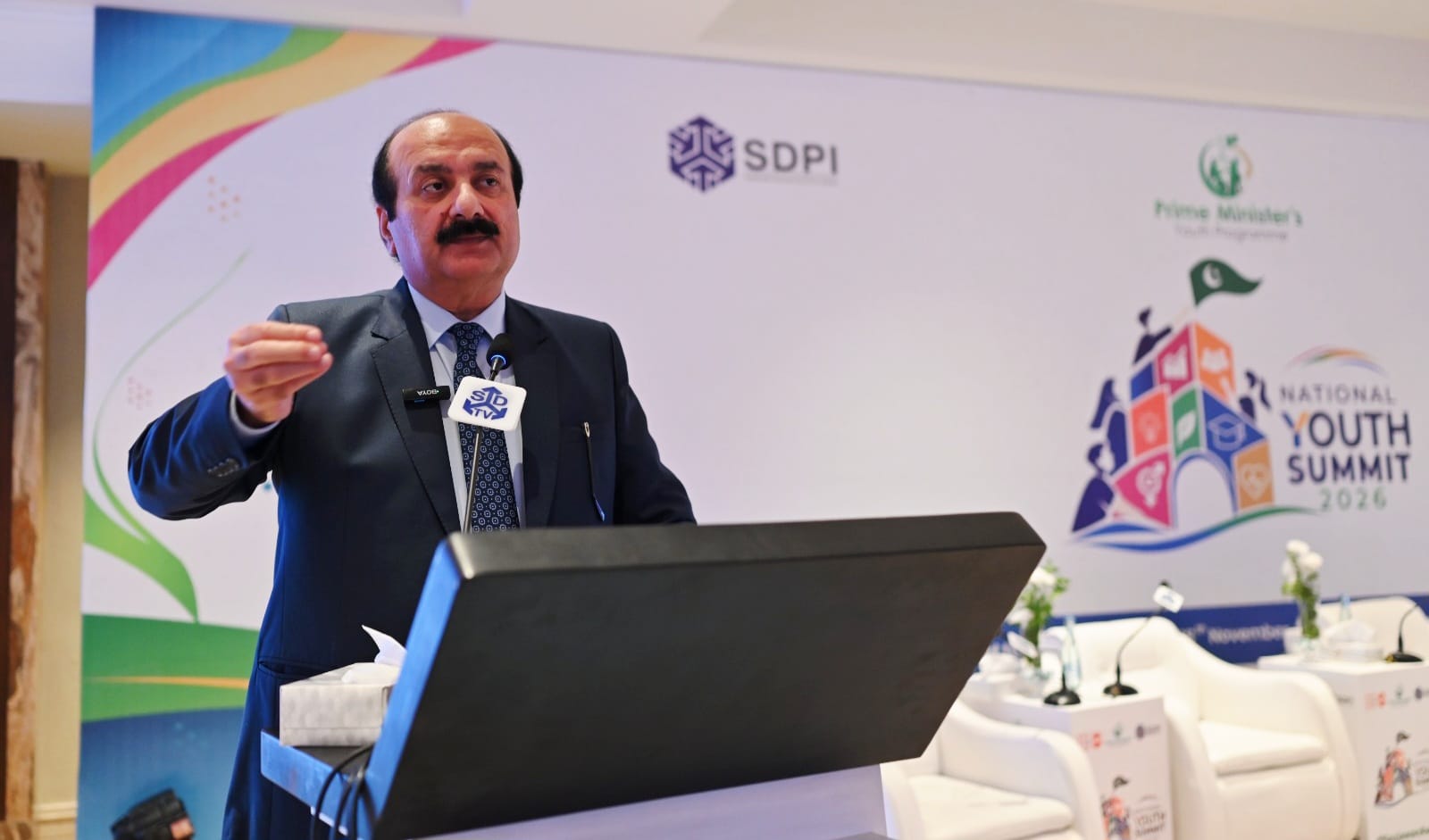
ISLAMABAD, Nov 18 (APP): Pakistan’s growing youth population faces mounting challenges in education, skills development and employment, prompting calls for stronger government policies, greater economic opportunities and meaningful youth participation in national decision-making.

Speakers at the National Youth Summit 2026 stressed that investing in young people was essential for sustainable development, urging policymakers to translate youth aspirations into concrete policies and employment opportunities.
The summit was organised by the UNFPA Pakistan in collaboration with the Prime Minister’s Youth Programme and the Sustainable Development Policy Institute (SDPI) here on Wednesday.
Chairman Prime Minister’s Youth Programme Rana Mashhood Ahmad Khan said the government would launch Pakistan’s first National Adolescent and Youth Policy in the coming months and declare 2027 as the Year of Skills.
He said the government was also implementing the National Youth Employment Policy and had introduced the country’s first Artificial Intelligence (AI) and semiconductor policies to expand opportunities for young people.
Mashhood said the National Youth Employment Policy, approved by the federal cabinet, aimed to ensure at least 35 percent representation of women in the labour force annually and encourage young entrepreneurs to account for at least 10 percent of new company registrations every year.
He said the Prime Minister’s Youth Programme was built around four pillars — education, engagement, employment and environment — encompassing information technology, AI, technical education, science and technology, arts, culture and sports.
UNFPA Country Representative in Pakistan Dr Luay Shabaneh urged young leaders to move beyond expressing their views and engage in meaningful policy dialogue to hold the government, parliamentarians and policymakers accountable.
He said the edition of the summit was intended to move beyond exchanging views and enable young people to lead discussions on their future.
“This is not for venting frustrations. It is about hope and how we can bring about change,” he said, urging participants to present practical solutions and clearly communicate their expectations to decision-makers.
He observed that artificial intelligence was transforming lifestyles, employment opportunities and communication, requiring Pakistan’s young population to prepare for a rapidly changing world.
Highlighting women’s empowerment, he said Pakistan could not transform its development landscape without investing in women’s capabilities, opportunities and participation.
“Women are a missed opportunity for the country,” he said, urging young female leaders to raise their voices for gender equality and equal opportunities.
Earlier, welcoming participants to the summit, Chairman Board of Governors SDPI Shafqat Kakakhel said nearly two-thirds of Pakistan’s population was below 30, making young people central to the country’s development prospects.
He said young people were already contributing through education, startups, volunteer initiatives and climate campaigns, but a structured mechanism was needed to translate their ideas into policy decisions.
He said the summit would bring young people and policymakers together through five thematic discussions covering demographic dividend; education, skills and employment; health and mental wellbeing; climate change and disaster preparedness; and financial and social inclusion, peace, safety, data rights and youth-responsive governance.
The discussions would culminate in a Youth Demand Charter to be presented directly to government leadership, he added.
Kakakhel urged young participants to be practical, honest and bold, stressing that climate considerations should be integrated into all policy discussions rather than treated as a standalone issue.
The summit also featured videos highlighting government initiatives for youth empowerment and young people’s experiences of challenges relating to education, employment, skills development and economic opportunities.
The young delegates at the National Youth Summit 2026 have presented a 41-point charter, demanding that federal and provincial governments translate their proposals into legislation, policy reforms and dedicated budgetary allocations within two years to address challenges relating to education, employment, skills development, entrepreneurship, financial inclusion, healthcare, climate change and political representation.
The youth-led charter calls for time-bound commitments from government institutions, parliament, the private sector and development partners, stressing that young people should be recognised as active stakeholders in national development rather than merely beneficiaries of government policies.
Speaking on the occasion, Senator Jan Muhammad Buledi said the recommendations developed by young participants should reach parliament for meaningful discussion and consideration.
He pledged to make efforts to present the proposals before the Senate and National Assembly, stressing that the state needed to provide young people with quality internet connectivity, computers, modern skills training and opportunities to earn through the digital economy.
Dr Muhammad Ali, Joint Secretary of the Prime Minister’s Youth Programme, urged young people to recognise their numerical strength and actively participate in the political process, saying digital platforms had opened new avenues for contesting elections, securing parliamentary representation and influencing policymaking.
Nawabzada Jamal Raisani, Member of the National Assembly (MNA), said young people should be treated as present-day citizens and active stakeholders in decision-making rather than being regarded merely as future leaders. He called on political parties to provide young candidates opportunities through general election tickets and reserved seats.
Mahtab Akbar Rashdi, MNA, emphasised that young people entering leadership and public institutions needed patience, practical experience and a sound understanding of legal and administrative procedures before taking decisions.
Responding to the presentation of the charter, Syeda Amnah Batool, MNA and Focal person of the Prime Minister’s Youth Programme assured participants that the document would not remain merely a collection of recommendations but would be taken to parliament and relevant ministries for consideration.
She said the government would work to translate youth proposals into reforms, legislation and budgetary allocations, adding that the Prime Minister’s Youth Programme would coordinate with relevant ministries under a whole-of-government approach to avoid departmental silos.
Farzana Yaqoob, Member of the AJK Legislative Assembly, at the National Youth Summit 2026 said that the younger generation is better equipped than previous generations, with greater access to education, skills, technology and economic opportunities. Although competition and challenges have increased, young people should adopt a positive outlook and turn available opportunities into achievements.

