Business leaders and policymakers from Pakistan and Kazakhstan have called for enhanced economic cooperation, stronger private-sector engagement and improved regional connectivity to increase bilateral trade to $1 billion within the next five years.
By Shams Abbasi
ISLAMABAD, Nov 18 (APP): Business leaders and policymakers from Pakistan and Kazakhstan have called for enhanced economic cooperation, stronger private-sector engagement and improved regional connectivity to increase bilateral trade to $1 billion within the next five years.
The speakers emphasized the urgent need to introduce direct air connectivity between the two countries, expedite regional connectivity projects, improve railway and transport infrastructure, rationalize tariffs, facilitate business visas and advance the proposed Free Trade Agreement (FTA) to unlock the enormous trade and investment potential of both countries.
They also stressed the importance of reviewing and improving the Pakistan-Kazakhstan Bilateral Transit Trade Agreement (TTA), strengthening logistics networks, promoting business-to-business (B2B) linkages and expanding cooperation in information technology, artificial intelligence (AI), digital economy, energy, agriculture, food processing, tourism and industrial development.
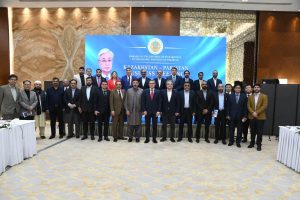
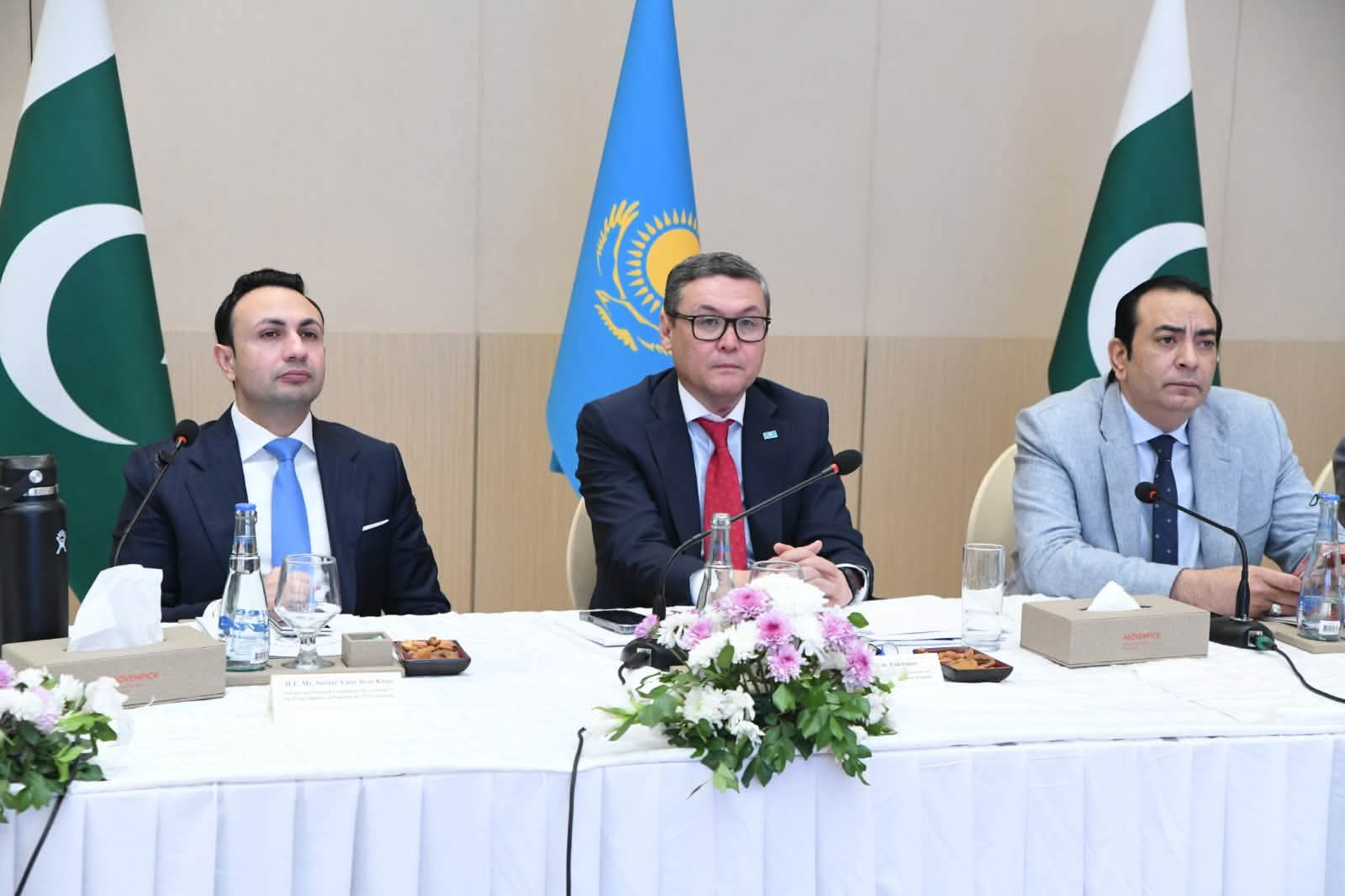
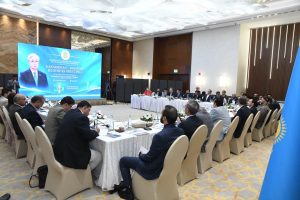
These views were expressed at a business meeting on the State of the Nation Address by President of Kazakhstan Kassym-Jomart Tokayev, titled “Kazakhstan’s Current Priorities in a New Historical Cycle,” organized by the Embassy of Kazakhstan in Pakistan at a local hotel.
Advisor to the Prime Minister of Pakistan on Tourism Sardar Yasir Ilyas Khan, Ambassador of Kazakhstan to Pakistan H.E. Yerkin Tukumov, President Federation of Pakistan Chambers of Commerce and Industry (FPCCI) Atif Ikram Sheikh, President Islamabad Chamber of Commerce and Industry (ICCI) Mohammad Zikria Akbar Zia, President Rawalpindi Chamber of Commerce and Industry (RCCI) Nosherwan Khalil Khan, officials of the Ministry of Commerce, representatives of the Astana International Financial Centre and business leaders from Kazakhstan attended the meeting and shared their views on strengthening bilateral economic relations.
Advisor to the Prime Minister on Tourism Sardar Yasir Ilyas Khan stressed the need to promote the concept of “Travel and Trade” to explore new business opportunities through tourism and strengthen economic cooperation between Pakistan and Kazakhstan.
He highlighted the potential for collaboration in tourism, hospitality, digital economy, information technology, culture and education, saying that stronger cooperation in these sectors could take bilateral relations to new heights.
Yasir Ilyas Khan said the target of $1 billion in bilateral trade was achievable, given the enormous economic potential and complementary strengths of the two countries.
He emphasized the importance of business partnerships, exchange of business delegations and investment in Special Economic Zones (SEZs), saying that greater engagement between the private sectors of both countries would help translate existing opportunities into practical economic gains.
He further pointed out that developing modern hotel infrastructure and improving tourism facilities were essential for promoting Pakistan as an attractive destination for international visitors.
Ambassador of Kazakhstan to Pakistan H.E. Yerkin Tukumov said Pakistan and Kazakhstan had considerable potential to achieve the $1 billion bilateral trade target, but improved regional connectivity and modern infrastructure were essential to realizing this ambition.
He acknowledged the challenges affecting bilateral trade and said both countries were working to remove barriers and create a more conducive environment for economic cooperation.
The Ambassador highlighted the significance of the anticipated visit of Prime Minister Muhammad Shehbaz Sharif to Kazakhstan in 2027, along with the upcoming Shanghai Cooperation Organisation (SCO) Council of Heads of State meeting, as important opportunities for high-level engagement and resolving outstanding bilateral issues.
He said direct air connectivity, railway links, regional transport corridors and improved logistics facilities were crucial to expanding trade and strengthening economic relations.
Referring to President Kassym-Jomart Tokayev’s vision, the Ambassador said Kazakhstan was pursuing comprehensive economic modernization with a particular focus on digital transformation, artificial intelligence, technological innovation, transport infrastructure and economic diversification.
He identified renewable energy, connectivity corridors, logistics, agriculture and food processing as promising areas for enhanced cooperation between Pakistan and Kazakhstan.
President FPCCI Atif Ikram Sheikh called for accelerating the geo-economic agenda to promote regional economic integration and strengthen Pakistan’s commercial engagement with Central Asian markets.
He described the recent visit of the President of Kazakhstan to Pakistan as a milestone in bilateral economic relations, expressing confidence that the high-level engagement would serve as a catalyst for expanding trade, investment and business cooperation.
He said Pakistan’s strategic location, particularly the ports of Gwadar and Karachi, could provide Kazakhstan and other Central Asian countries with improved access to regional and international markets.
Atif Ikram Sheikh identified textiles, information technology, digital economy, agriculture, food processing, energy, pharmaceuticals and medical equipment as key sectors offering significant opportunities for bilateral partnerships.
President ICCI Mohammad Zikria Akbar Zia said Pakistan and Kazakhstan shared historical connections, cultural values and economic interests that could provide a strong foundation for expanding bilateral trade.
Referring to the historic Silk Routes, he said both countries could benefit from their geographical and economic complementarities by strengthening transportation links and commercial exchanges.
President RCCI Nosherwan Khalil Khan proposed introducing a visa-on-arrival facility or reviewing the existing visa regime to facilitate businesspeople and investors travelling between the two countries.
He said easier visa procedures would encourage business mobility, tourism and investment and enable entrepreneurs to explore new commercial opportunities.
Representatives of the Astana International Financial Centre and business leaders from various sectors of Kazakhstan also highlighted the importance of President Tokayev’s economic vision and the need to strengthen regional economic integration through enhanced cooperation with Pakistan.
The meeting concluded with a shared emphasis on translating the existing political goodwill and economic potential into practical business partnerships, improved regional connectivity and sustainable trade growth.
The speakers expressed confidence that coordinated efforts by Pakistan and Kazakhstan, supported by stronger institutional linkages and private-sector participation, could transform bilateral economic relations and connect Central Asia more effectively with South Asian markets and international trade routes.