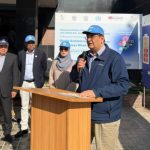
Governor Khyber Pakhtunkhwa Faisal Karim Kundi has chaired a special briefing at the Governor House on the performance of the Education Department and the overall state of the province’s education sector, stressing the need for improved governance, transparency and quality education across schools, colleges and universities.
Governor reviews education reforms, calls for stronger governance & quality learning in KP

PESHAWAR, Nov 18 (APP): Governor Khyber Pakhtunkhwa Faisal Karim Kundi has chaired a special briefing at the Governor House on the performance of the Education Department and the overall state of the province’s education sector, stressing the need for improved governance, transparency and quality education across schools, colleges and universities.
The briefing was attended by Adviser to Governor on Education Dr Syed Aamir Abdullah, provincial advisers, secretaries of various departments, senior government officials and media representatives.
Dr Syed Aamir Abdullah gave a comprehensive presentation on the current status of the education sector, ongoing reforms, administrative measures and future development plans. A question-and-answer session followed the briefing, during which he responded to queries from the participants.
The participants were informed that the provincial government was implementing wide-ranging reforms to improve the education system, strengthen governance, enhance institutional performance and expand access to quality education. Administrative reforms, financial discipline and digitalisation have been prioritised in both the Elementary and Secondary Education Department and the Higher Education Department.
According to the briefing, Khyber Pakhtunkhwa has 34,848 public schools with around 5.96 million students and 187,159 teachers. However, 44,747 teaching posts remain vacant, including 8,837 in the merged districts. The government has revised the e-transfer policy to ensure merit-based teacher deployment and has also introduced measures to improve teacher availability and rationalise staffing.
Participants were told that teacher training and professional development were being strengthened through a 100-day training plan under the Directorate of Professional Development, while attendance monitoring was being carried out in real time through the Education Management Information System (EMIS).
The briefing highlighted 100-day and 180-day action plans aimed at improving transparency in development projects, efficient utilisation of resources and timely completion of schemes. These include the solarisation of 424 schools, conversion of 15 middle and high schools into model schools, establishment of IT laboratories, upgrading girls’ schools and launching an education internship programme with 500 interns.
Officials said the government was also working on the rationalisation of schools, outsourcing 1,500 schools in the second phase, enrolling out-of-school children in 12 priority districts and improving school infrastructure and digital learning facilities, including digital classrooms and IT connectivity.
On higher education, the briefing stated that 34 public universities and institutions have an enrolment of 160,587 students, while 388 government colleges cater to 280,777 students. A high-level working group has been formed to address financial and governance challenges facing universities. It was noted that 26 public universities are facing financial difficulties, with 14 institutions reporting a combined deficit of Rs 5.6 billion. The provincial government has requested Rs18 billion in financial support from the Higher Education Commission to improve their financial sustainability.
The participants were further informed that faculty recruitment in government colleges had been digitalised, scholarship management systems were being developed, and digital library resources were being expanded. Efforts were also underway to strengthen collaboration between universities and industry through Offices of Research, Innovation and Commercialisation (ORICs) and the Sarhad Chamber of Commerce and Industry.
The briefing also highlighted Prime Minister’s special initiatives under which Rs16.5 billion has been allocated for 11 projects related to education, information technology and skills development. These include the establishment of seven Danish Schools, digital libraries in four districts, upgradation of the IT Park in Dera Ismail Khan, overseas agricultural scholarships in China and technical and digital skills training programmes for youth.
The meeting reaffirmed the government’s commitment to ensuring transparency, merit, accountability and effective governance in educational institutions while enhancing learning opportunities and educational facilities for students across the province.