Pakistan’s National Institute of Health (NIH) and the World Health Organization (WHO) have called for responsible antibiotic use, warning that antimicrobial resistance (AMR) contributes to over 200,000 deaths annually in Pakistan.
ISLAMABAD, Nov 18 (APP): Pakistan’s National Institute of Health (NIH) and the World Health Organization (WHO) have called for responsible antibiotic use, warning that antimicrobial resistance (AMR) contributes to over 200,000 deaths annually in Pakistan.
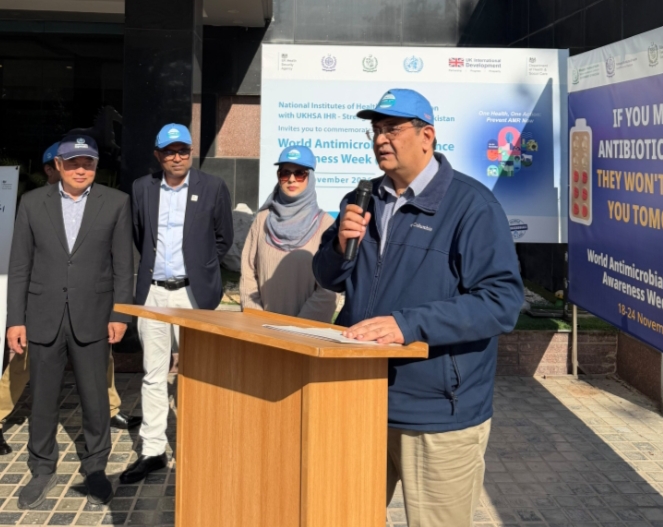
The call was made during the launch of World Antimicrobial Resistance (AMR) Awareness Week under the global theme “One Health, One Action: Prevent AMR Now,” organized in collaboration with the UK Health Security Agency (UKHSA), the Food and Agriculture Organization (FAO), students and civil society representatives.
The event highlighted the need for a coordinated One Health approach, recognizing the close links between human, animal and environmental health in tackling antimicrobial resistance.
AMR occurs when bacteria, viruses, fungi and parasites no longer respond to medicines, making infections increasingly difficult or impossible to treat. The growing threat is largely driven by the misuse and overuse of antibiotics in healthcare, agriculture and livestock farming.
According to estimates, AMR is directly responsible for nearly 40,000 deaths annually in Pakistan, while more than 160,000 additional deaths are associated with it. Without urgent action, the annual toll could rise to 63,000 directly attributable deaths and 262,000 associated deaths by 2050.
Chief Executive Officer NIH Dr Muhammad Salman said combating AMR required a comprehensive One Health approach involving all relevant sectors.
He identified irrational prescribing practices, over-the-counter sales of antibiotics, poor infection prevention and control in hospitals and communities, and inappropriate use of antimicrobials in agriculture and livestock as major factors driving resistance in Pakistan.
WHO Representative in Pakistan Dr Luo Dapeng said AMR-related deaths were preventable and stressed that antibiotics should only be used when medically necessary.
He said misuse and overuse of antibiotics posed a major public health threat, adding that individuals, families and healthcare professionals all had a role in preserving the effectiveness of these medicines.
Dr Zeeshan Iqbal Baig, National Lead UKHSA, described AMR as one of the most pressing public health threats, warning that inappropriate antimicrobial use in humans, animals and agriculture was leading to treatment failures, deaths and rising healthcare costs.
He called for a coordinated One Health response, emphasizing the need to move beyond awareness towards responsible antimicrobial use.
Dr Pawin Padungtod, One Health Team Lead at FAO Pakistan, said tackling AMR required collective action across human, animal and environmental health sectors.
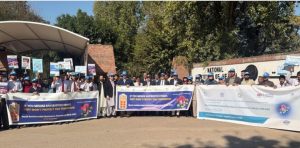
He said strong participation in the awareness walk reflected a shared commitment by the government and development partners to address the growing challenge through responsible antimicrobial use and stronger collaboration.
The awareness campaign also highlighted the key priorities of Pakistan’s National Action Plan (NAP) 2.0 on AMR, including strengthening surveillance in human and animal health sectors, improving public and professional awareness, and enforcing infection prevention and control measures in healthcare facilities.
The NIH, WHO and UKHSA urged policymakers, healthcare providers, veterinarians, farmers and the public to translate commitments into practical measures to prevent AMR and protect the effectiveness of life-saving medicines.