ISLAMABAD, Nov 17 (APP):WaterAid Pakistan convened a high-level panel discussion on “Climate-Resilient WASH Financing Strategies” at the Pakistan Pavilion during COP31, calling for greater recognition and dedicated financing for water, sanitation and hygiene (WASH) within global climate adaptation priorities. Delivering the keynote address, Hamza Farrukh, Chairperson of the Pakistan Climate Change Authority, emphasised the critical relationship between climate change and water, stating, “When climate change strikes, water is hit first.” …
WaterAid calls for greater climate financing for resilient water and sanitation systems at COP31
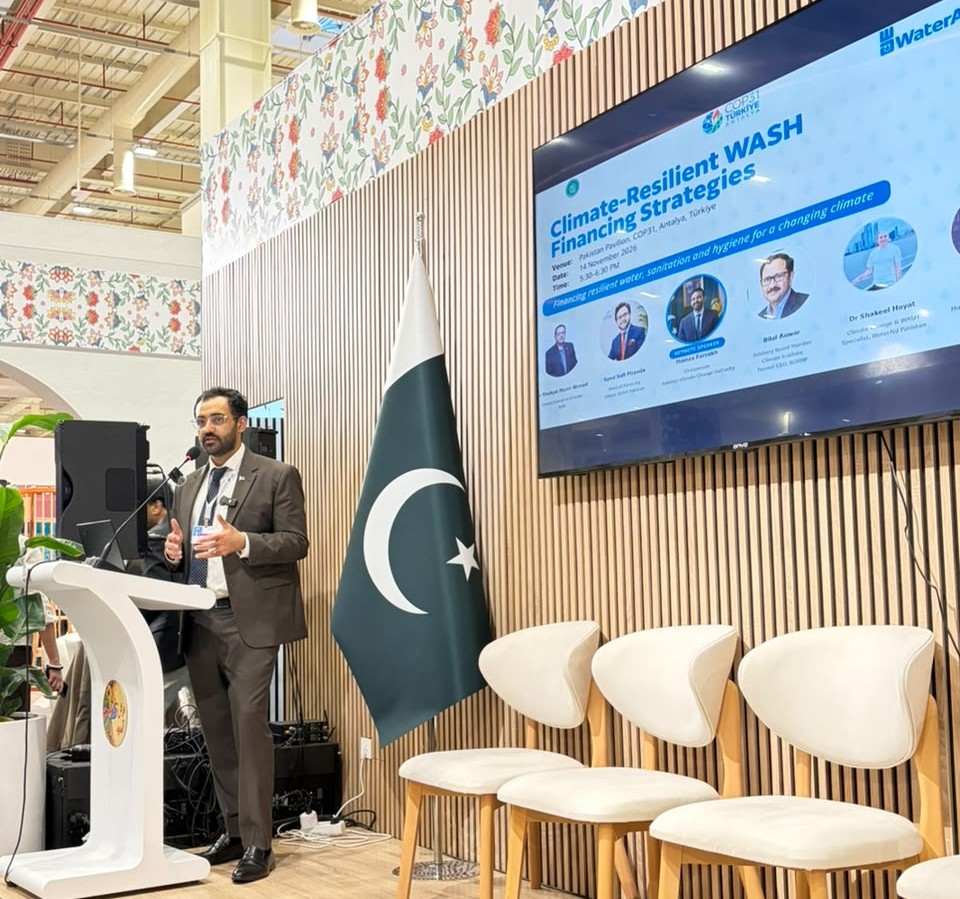
ISLAMABAD, Nov 17 (APP):WaterAid Pakistan convened a high-level panel discussion on “Climate-Resilient WASH Financing Strategies” at the Pakistan Pavilion during COP31, calling for greater recognition and dedicated financing for water, sanitation and hygiene (WASH) within global climate adaptation priorities.
Delivering the keynote address, Hamza Farrukh, Chairperson of the Pakistan Climate Change Authority, emphasised the critical relationship between climate change and water, stating, “When climate change strikes, water is hit first.”
The message underscored how floods, prolonged droughts, changing rainfall patterns and declining water quality place immense pressure on communities and essential services, making water resilience central to climate adaptation, said a message received here on Tuesday.
The session brought together Dr Shafqat Munir Ahmad, Deputy Executive Director, Sustainable Development Policy Institute (SDPI); Syed Safi Pirzada, Head of Advocacy, Islamic Relief Pakistan; and Bilal Anwar, Advisory Board Member, Climate Institute (USA), and former CEO of the National Disaster Risk Management Fund (NDRMF).
Panelists explored the barriers preventing climate-vulnerable countries from accessing dedicated WASH financing, alongside opportunities to strengthen national policy frameworks, locally led adaptation and innovative financing mechanisms, including blended finance and public-private partnerships.
The discussion emphasised that climate-resilient WASH must be integrated into national adaptation plans, climate commitments and public financing frameworks. For Pakistan, where climate-related disasters repeatedly disrupt water and sanitation services, this requires stronger institutional coordination, accessible financing and investment-ready solutions.
A central message emerging from the session was that climate resilience begins with water resilience. Climate financing must move beyond commitments to predictable, equitable investments that protect essential services and strengthen the ability of communities to withstand future climate shocks.