Abdul Samad Tariq ANTALYA , Nov 17 (APP):Pakistan has criticised the international climate finance system for failing to deliver on its commitments, arguing that climate-vulnerable developing countries cannot rebuild after disasters and meet their climate targets through additional borrowing when a substantial share of their revenues is consumed by debt servicing. Federal Minister for Climate Change and Environmental Coordination Dr Musadik Malik said international assistance to developing countries had declined …
Pakistan rejects debt-funded climate recovery, demands grant-based finance at COP31
Abdul Samad Tariq
ANTALYA , Nov 17 (APP):Pakistan has criticised the international climate finance system for failing to deliver on its commitments, arguing that climate-vulnerable developing countries cannot rebuild after disasters and meet their climate targets through additional borrowing when a substantial share of their revenues is consumed by debt servicing.
Federal Minister for Climate Change and Environmental Coordination Dr Musadik Malik said international assistance to developing countries had declined by 23 per cent in a single year, bringing it back to 2015 levels, despite repeated pledges at global climate negotiations to increase financing.
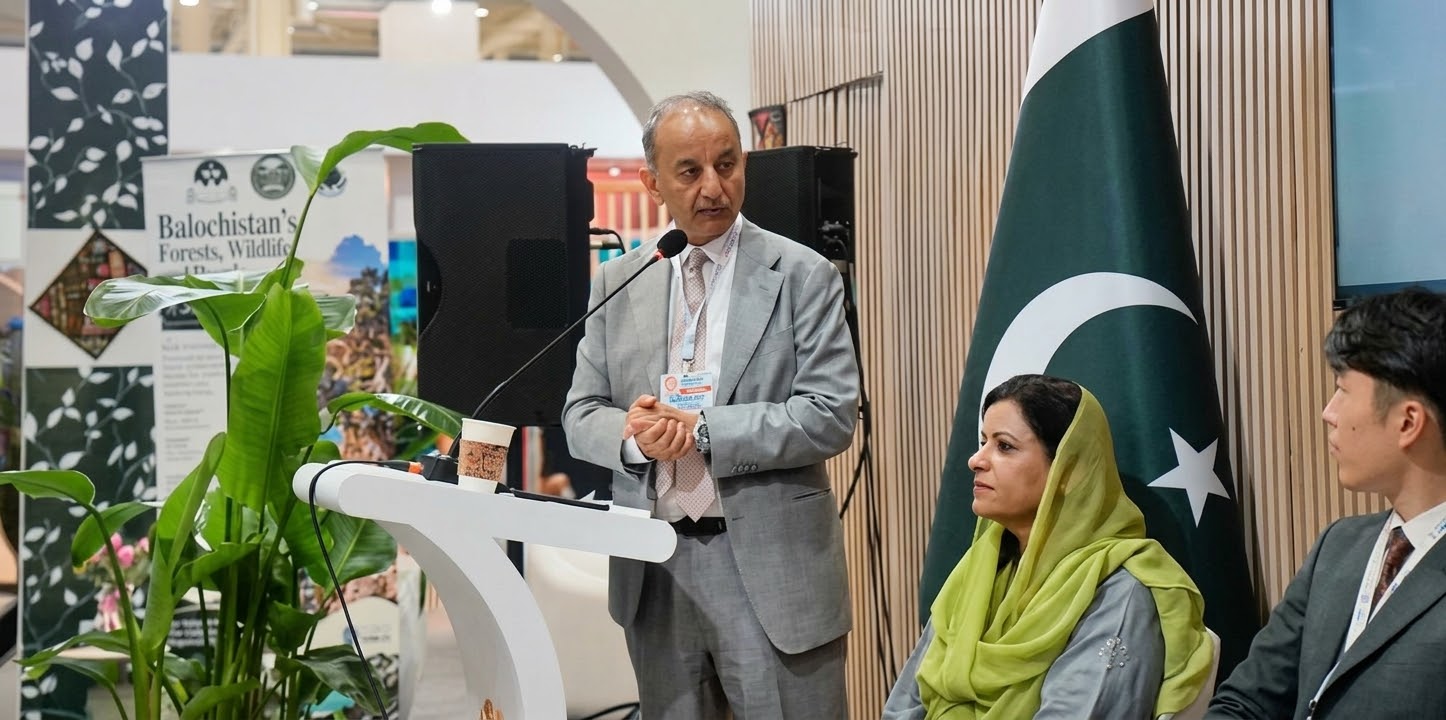
Speaking at a session on debt-stressed, climate-vulnerable economies at the Pakistan Pavilion during COP31, he questioned the credibility of international climate finance commitments, saying lengthy negotiations and ambitious financial targets had not translated into actual assistance.
“We have been talking about increasing climate finance, but assistance to developing countries has gone down by 23 per cent in one year,” he said, questioning the gap between international pledges and financial delivery.
Criticising the promotion of green bonds, blended finance and other financing instruments, Dr Malik said these mechanisms largely involved borrowing rather than providing additional resources to countries already struggling with debt.
“All these fancy words — green sukuk, blended finance, green bonds — these are debt instruments. Our shop is closed for debt,” he said.
He pointed out that Pakistan collected around Rs16 trillion in revenue, of which Rs8 trillion went towards debt servicing, leaving limited fiscal space for development and climate resilience.
Referring to the 2022 floods, he said reconstruction costs had amounted to around nine per cent of the country’s gross domestic product, while the international response largely involved $8 billion to $10 billion in repurposed loans.
He said resources originally intended for health and education had been redirected towards reconstruction, questioning how a country facing serious human development challenges could be expected to finance climate recovery by diverting money from essential social sectors.
The minister said the scale of climate devastation in Pakistan extended beyond economic losses, with the country’s previous five major floods resulting in around 6,000 deaths, 20,000 injuries or disabilities and 40 million people affected or displaced.
He also highlighted the disruption to education caused by repeated disasters, saying millions of children had lost access to schooling for extended periods.
Dr Malik questioned the fairness of global climate financing, citing figures that 10 countries accounted for 70 per cent of greenhouse gas emissions but received 80 per cent of green finance.
“Financing is chasing emissions, not vulnerability, not death, not morbidity, not mortality,” he said, arguing that funding should be directed towards countries and communities most exposed to climate impacts.
He also questioned the performance of the Loss and Damage Fund, saying $822 million had been pledged and $422 million collected, but no money had reached affected communities since the fund’s creation.
The minister said Pakistan had nevertheless accelerated its clean energy transition through domestic investment, with citizens and farmers installing an estimated 33 to 37 gigawatts of rooftop solar capacity without substantial international assistance.
Clean energy sources, he added, now accounted for around 55 per cent of Pakistan’s energy mix, with the country targeting an increase to 70 to 75 per cent in the coming years.
Earlier, opening the session, MNA Dr Nafisa Shah, co-convenor of the Parliamentary Forum on Energy and Economy, said climate-vulnerable communities were being pushed into a “climate-debt trap” as reconstruction after disasters increasingly relied on borrowing.
She said the 2022 floods affected around 33 million people and caused more than $30 billion in losses, while much of the subsequent reconstruction was financed through loans.
“Communities that contributed almost nothing to the climate crisis are being asked to rebuild their lives through additional debt,” she said.
Dr Shah called for alternative financing arrangements, including grants, concessional finance, climate-resilient debt clauses, debt swaps, rechanneling of Special Drawing Rights and improved access to the Loss and Damage Fund.
Minister of State for Climate Change Dr Shezra Mansab Ali Khan Kharal highlighted Pakistan’s adaptation initiatives, saying 284 early-warning stations established with UNDP support were protecting around 700,000 people in Gilgit-Baltistan and Khyber Pakhtunkhwa.
She said more than one million climate-resilient homes had been completed for flood-affected families in Sindh, with ownership rights granted to women. She stressed that future climate financing should also support the maintenance of early-warning systems and adaptation infrastructure.
Dr Shezra said the federal Climate Budget Statement had mapped more than 5,000 cost centres for climate-related expenditure, adding that parliament should be able to track programmes from budget allocations to measurable outcomes.
MNA Danyal Chaudhry, parliamentary secretary for information and broadcasting and secretary of the forum, said legislators had a responsibility to translate international climate commitments into national laws and budgetary priorities.
The session was organised by the Parliamentary Forum on Energy and Economy in collaboration with the Asian Peoples’ Movement on Debt and Development (APMDD), bringing together parliamentarians, policymakers and experts from climate-vulnerable countries.