Secretary General of the Organisation of Islamic Cooperation (OIC) Ismail Ould Cheikh Ahmed on Monday commended Pakistan’s diplomatic leadership and sustained efforts to promote peace and de-escalation in the Middle East, stressing the need for stronger regional cooperation to address shared economic and security challenges.
OIC chief commends Pakistan’s diplomatic efforts for peace, calls for stronger regional cooperation
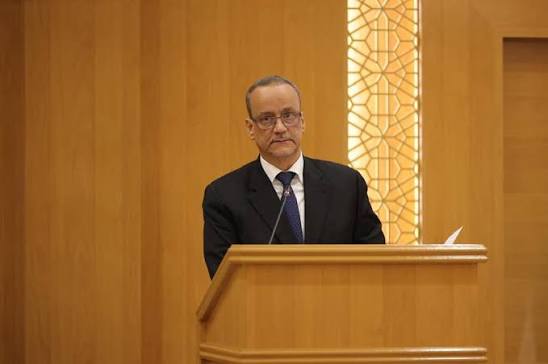
ISLAMABAD, Nov 16 (APP): Secretary General of the Organisation of Islamic Cooperation (OIC) Ismail Ould Cheikh Ahmed on Monday commended Pakistan’s diplomatic leadership and sustained efforts to promote peace and de-escalation in the Middle East, stressing the need for stronger regional cooperation to address shared economic and security challenges.
Addressing the 30th meeting of the Economic Cooperation Organisation (ECO) Council of Ministers here, he appreciated Pakistan’s commitment to dialogue, responsive diplomacy and regional cooperation at a time when the region urgently needed peace and stability.
He also expressed gratitude to the government and people of Pakistan for hosting the important meeting and extending warm hospitality.
Highlighting the prevailing geopolitical and economic uncertainties, the OIC Secretary General said conflicts, disruptions in global supply chains, climate change and rapid technological transformations had made regional cooperation strategically necessary.
He identified four priority areas for strengthening cooperation, including trade and investment, economic diversification and technological development, food and energy security, and investment in human capital.
He stressed the need to remove trade barriers, facilitate customs procedures, harmonise standards and improve regional connectivity through road, rail, maritime and air transport corridors. He noted that intra-OIC trade remained below its desired potential, reaching 19.57 percent at the end of 2025 against the collective target of 25 percent.
He also called for greater investment in innovation, research, digital transformation, artificial intelligence, renewable energy and industrial capacity, highlighting the role of OIC institutions, particularly the Islamic Development Bank Group in mobilising resources and promoting technology transfer.
Emphasising food and energy security, he urged member countries to strengthen cooperation in agricultural productivity, water management, food processing and renewable energy. He also highlighted the economic potential of the global Halal industry, calling for joint efforts to improve Halal production, certification, standards and trade.
On human capital development, he said quality education, vocational training, entrepreneurship and digital skills were essential to transforming the region’s young population into a productive asset. He also underscored the importance of greater participation of women and young people in economic activities.
The OIC Secretary General further called for stronger coordination among regional organisations, including the OIC, ECO and CICA, saying they should complement the global multilateral system, particularly the United Nations, through effective cooperation and collective action.
Speaking at the meeting, Secretary General of the Conference on Interaction and Confidence Building Measures in Asia (CICA), Ambassador Sultan Hajiyev, reaffirmed his organisation’s commitment to strengthening cooperation with ECO and the OIC.
He said the organisations shared common objectives in promoting peace, stability and economic cooperation, adding that their partnership offered considerable potential for expanding inter-regional trade, transport connectivity and digitalisation.
He called for translating the longstanding institutional partnership into practical outcomes through the exchange of expertise, consultations and joint initiatives.
He also highlighted recent developments within CICA, including progress in expanding its membership and strengthening its institutional capacity.
He stressed that stronger institutions, closer partnerships and collective commitment were essential to addressing regional challenges and advancing shared aspirations for peace, security and sustainable development.