Former federal minister Senator Javed Jabbar on Wednesday said Pakistan needs to draw strength from its historical resilience, national identity and achievements while addressing growing non-traditional security challenges.
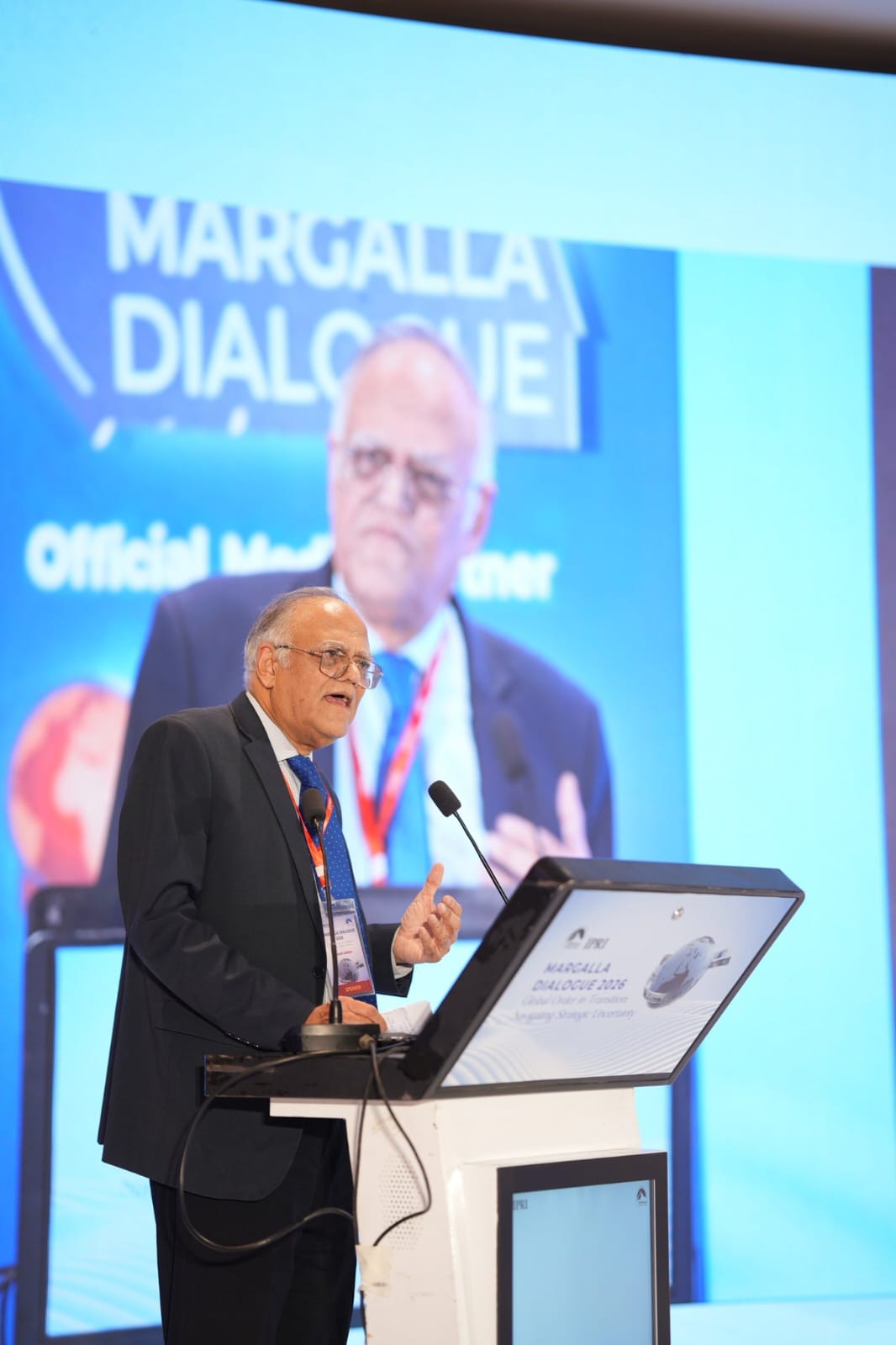
ISLAMABAD, Nov 11 (APP): Former federal minister Senator Javed Jabbar on Wednesday said Pakistan needs to draw strength from its historical resilience, national identity and achievements while addressing growing non-traditional security challenges.
He was delivering the keynote address at Forum D, titled “National Resilience and Non-Traditional Security”, during the Margalla Dialogue 2026.
He said national resilience had two important dimensions: organic resilience, which emerged naturally through people’s shared experiences, relationships and collective determination, and institutional resilience, which developed through institutions established to manage society.
He said Pakistan had demonstrated strong organic resilience since its creation in 1947, despite facing difficult circumstances, including financial constraints, resource shortages and an unfavourable regional environment.
Referring to the country’s early years, he said Pakistan had achieved remarkable progress during its first 18 years, particularly in the 1960s, when its economic growth rate surpassed that of neighbouring India. He attributed this progress to the vision of Quaid-e-Azam Muhammad Ali Jinnah.
He said the country’s resilience was also reflected in its survival after the separation of East Pakistan in 1971. Despite losing a majority of its population, the remaining country retained its identity and rebuilt itself.
He described Pakistan’s nuclear capabilities as another significant achievement, saying the importance of nuclear technology extended beyond military deterrence.
Highlighting non-traditional security threats, Jabbar identified poverty, widening inequality, rapid population growth, low productivity, lack of education and economic dependence as major challenges facing the country.
He said poverty and inequality remained serious concerns, while the pace of population growth reduction was slower than required. Citing an estimated 26 million out-of-school children, he warned that the number could rise to 40 million over the next 15 to 20 years if population growth was not brought under control.
He said the country would face serious social and economic consequences if millions of children remained outside the education system and lacked the skills needed to participate in the economy. He also called for improving productivity in agriculture, industry and services and reducing dependence on external financial support.
Member of the National Assembly Mahtab Akbar Rashdi said national resilience was not merely the ability of a country, its institutions and people to withstand crises, but also their capacity to adapt to changing circumstances, recover from disruptions and continue functioning effectively.
She said Pakistan needed to assess its resilience realistically by examining both traditional and non-traditional security challenges. Referring to the post-World War II global order, she said countries such as Japan, Germany and Britain had demonstrated resilience by rebuilding their economies and restoring their positions in the international community despite suffering severe destruction.
She said resilience required not only surviving crises but also preparing for future challenges and emerging stronger through experience.
Rashdi said Pakistan’s response to the October 8, 2005 earthquake, observed annually as National Resilience Day, demonstrated the importance of community support and collective action. Social cohesion, national values and cultural strength were essential for protecting the country’s identity and soft power, she added.
She said traditional security was primarily linked to military defence and territorial integrity, while non-traditional security covered economic and human security, including access to food, clean water, healthcare, education and employment opportunities.
Identifying climate change, floods, heat waves, droughts, glacier melting, water scarcity, food insecurity, unemployment, inflation, energy shortages and public debt as major challenges, she said climate-related disasters could turn into national humanitarian and economic crises, as demonstrated by the devastating floods of 2022.
She stressed the need for effective disaster preparedness and early-warning systems, stronger hospitals, schools and public services, economic stability, food and water security, and better coordination among federal, provincial and local institutions to strengthen the country’s capacity to withstand and recover from future crises.
The session was moderated by broadcast journalist Sidra Iqbal of Aaj TV. Other speakers included Ambassador Shafqat Kakakhel, Chairperson of the Board of Governors of the Sustainable Development Policy Institute; Lt. Gen. Nasser Khan Janjua (Retd), former National Security Advisor; Aisha Khan, Chief Executive of the Civil Society Coalition for Climate Change; Dr Zafar Mirza, President of the Pakistan Association of Lifestyle Medicine; and Professor Dr Tayyaba Tamim, Dean and Chair of the Syeda Perwin Babar Ali School of Education at LUMS.