ISLAMABAD, Nov 07 (APP):Adviser to the Prime Minister on Industries and Production, Haroon Akhtar Khan here on Saturday unveiled the final draft of the Automotive Industry Policy, aimed at promoting localisation, improving vehicle safety standards and encouraging electric vehicle (EV) adoption. The advisor, along with Federal Minister for Information and Broadcasting Attaullah Tarar, announced the development at a press conference, saying the Prime Minister had approved the final draft, which …
Haroon Akhtar unveils draft auto policy, eyes localisation, vehicle safety, EV promotion
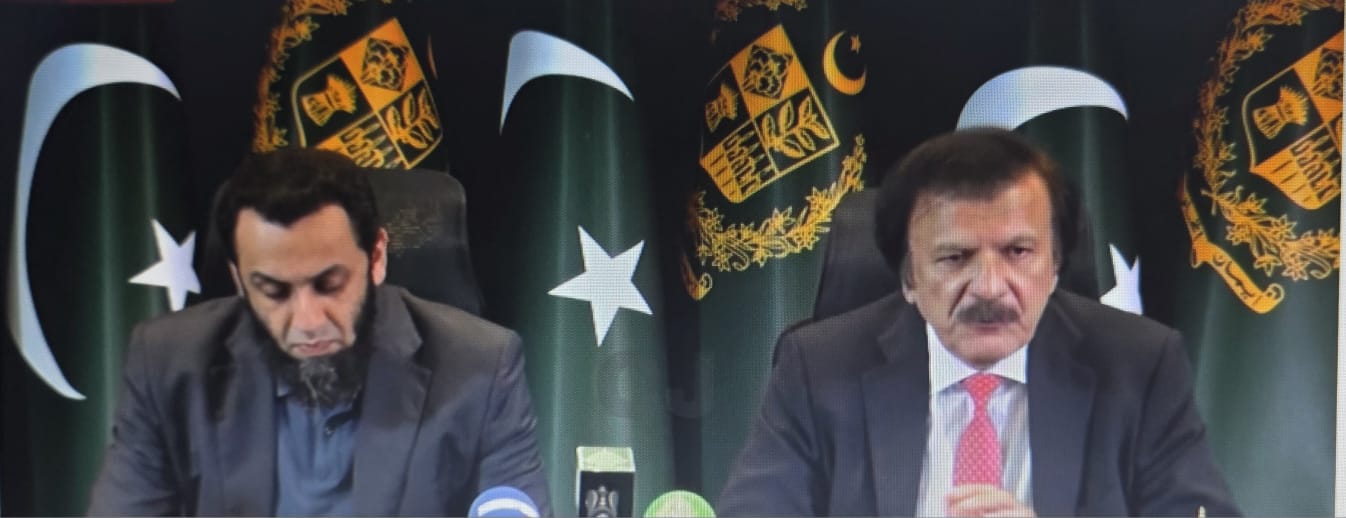
ISLAMABAD, Nov 07 (APP):Adviser to the Prime Minister on Industries and Production, Haroon Akhtar Khan here on Saturday unveiled the final draft of the Automotive Industry Policy, aimed at promoting localisation, improving vehicle safety standards and encouraging electric vehicle (EV) adoption.
The advisor, along with Federal Minister for Information and Broadcasting Attaullah Tarar, announced the development at a press conference, saying the Prime Minister had approved the final draft, which would now be submitted to the Federal Cabinet for consideration.
Khan said that the finalisation of the Auto Policy marked an important step towards addressing structural challenges in Pakistan’s automotive sector and establishing a competitive, export-oriented and locally integrated automobile industry.
The Adviser said that Pakistan had formulated policies over the past decade, but the country had not achieved the desired growth in exports. He emphasised that the government was now pursuing a focused approach to address structural weaknesses in the automotive sector and translate policy commitments into tangible economic outcomes.
He said that localisation was among the foremost priorities of Prime Minister Shehbaz Sharif, as it directly contributes to job creation, industrial development and economic self-reliance.
The government did not want Pakistan’s automotive industry to remain dependent on the import of completely built units (CBUs) or merely assemble completely knocked-down (CKD) kits without developing a strong domestic manufacturing base.
He stressed that the government was encouraging manufacturers to increase local content, develop domestic vendor industries and strengthen the country’s industrial ecosystem, thereby generating employment and retaining greater economic value within Pakistan.
Highlighting vehicle safety, Haroon Akhtar Khan said that the absence of adequate safety standards, particularly in imported used vehicles, had been a serious concern.
He referred to recurring road accidents caused by issues such as defective brakes, tyre failures and inadequate safety features, including non-functional seat belts. He said that ensuring the safety of consumers and passengers was an important consideration in the government’s policy framework.
The Adviser identified the promotion of electric vehicles (EVs) as another major priority, particularly in view of Pakistan’s vulnerability to fluctuations in international oil prices.
He explained that rising oil prices increase the country’s import bill, put pressure on the current account and contribute to inflationary pressures. The government was therefore placing particular emphasis on EV adoption to reduce dependence on imported petroleum products and mitigate external economic vulnerabilities.
He recalled that the Prime Minister had already launched the National Electric Vehicle Policy last year, adding that its implementation results would also be shared. He said the government was committed to accelerating the transition towards cleaner and more sustainable transportation.
Emphasising transparency and consumer protection, Haroon Akhtar Khan said that the Prime Minister had consistently directed that transparency be ensured in all government schemes and initiatives. He highlighted the inclusion of third-party audits as an important feature of the policy to strengthen accountability and public confidence.
Addressing the issue of additional charges commonly known as on-money in vehicle bookings, the Adviser said that, on the Prime Minister’s instructions, the policy makes it mandatory for manufacturers not to charge more than 20 per cent of the vehicle price as an advance payment at the time of booking. The measure aims to protect consumers from excessive advance demands and promote greater transparency in the automotive market.
The Adviser also highlighted the role of the National Tariff Policy in reducing the cost of production by making imported raw materials and intermediate goods more affordable. He said that lower input costs would enable domestic manufacturers to produce finished goods at competitive prices, benefiting consumers in the local market while improving Pakistan’s competitiveness in international markets.
Haroon Akhtar Khan reiterated that the government’s broader objective was to transform Pakistan’s automotive industry from an import-dependent and assembly-oriented sector into a competitive, export-oriented manufacturing base, supported by localisation, technological advancement, consumer protection and transparent governance.
The Adviser said that following the Prime Minister’s approval of the final draft, the policy would proceed to the Federal Cabinet and subsequent stages of the approval process before its implementation.