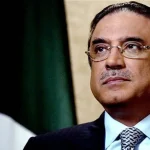
LARKANA, Nov 07 (APP):Chairman Pakistan Peoples Party (PPP) Bilawal Bhutto Zardari he urged the federal government to keep its doors open for talks with the opposition, give up its habit of picking fights with everyone, and engage with all stakeholders. He laid foundation of 600-Bed hospital in Chandka Medical Hospital Larkana and talking with media person and said that when he was first elected to the National Assembly from Larkana, …
Federal government to keep its doors open for talks with the opposition:says Bilawal Bhutto

LARKANA, Nov 07 (APP):Chairman Pakistan Peoples Party (PPP) Bilawal Bhutto Zardari he urged the federal government to keep its doors open for talks with the opposition, give up its habit of picking fights with everyone, and engage with all stakeholders.
He laid foundation of 600-Bed hospital in Chandka Medical Hospital Larkana and talking with media person and said that when he was first elected to the National Assembly from Larkana, his meetings with doctors and staff at Chandka Medical Hospital made him realise how heavily that hospital, established by Quaid-e-Awam Shaheed Zulfikar Ali Bhutto for the people of Larkana in 1970, was now burdened. A growing population, a vast catchment area, and patients coming from Balochistan had stretched its capacity to an extraordinary degree. It was with this need in mind
He said, that he decided to give Larkana the gift of a new hospital. He said he was pleased to see the project for himself today and to learn that construction of the 600-bed hospital is on course to finish a month ahead of schedule.
Chairman Bilawal Bhutto Zardari said that providing free, quality healthcare, and especially bringing world-class treatment to underprivileged communities and deprived areas, has always been among the PPP’s priorities.
He pointed out that the Sindh government has given special attention to the health sector across the province. He expressed hope that the proposed SIUT facility in Larkana will also play an important role in providing free treatment to the people of the city and surrounding areas.
Turning to education, he said he was delighted to have inaugurated Larkana University the previous day, as young people here are now getting a new opportunity to pursue higher education. Speaking of the Sindh government’s financial support for higher education, he said that while the federal Higher Education Commission provides roughly Rs65 billion in grants to universities across the country, the Sindh government alone is providing roughly Rs45 billion to the universities of its own province. This, he said, reflects the exceptional priority Sindh gives to higher education.
He said that some development projects deliver results quickly, while others call for long-term investment and sustained attention.He added the development schemes that Quaid-e-Awam Shaheed Zulfikar Ali Bhutto launched in the 1970s and Shaheed Mohtarma Benazir Bhutto in the 1990s for the people of Larkana, Qambar Shahdadkot and Ratodero, including water supply, drainage and sewerage, served the population of their time well. Over the years, however, population growth has left these facilities inadequate.
He said the water supply, sewerage and drainage projects for Larkana city are currently at the planning stage and work on them will begin soon, while work on water supply and sewerage schemes in Qambar Shahdadkot is under way. These projects, he hoped, would be completed within the next one to two years.
On relations and cooperation between the federal and provincial governments,
Chairman Bilawal Bhutto Zardari said that his meeting with the Prime Minister in Islamabad before coming to Larkana was highly positive and constructive. He said a strategy for better coordination had also been agreed in that meeting so that the two sides can work together with the Prime Minister and his team. The federal and provincial governments may differ on some political and administrative matters, he said, but where they share responsibilities and where projects serve the public interest, cooperation and joint effort should take priority.
Responding to a question about the uneven distribution of federal development projects in Sindh and other provinces, he said that a look at federal projects and Public Sector Development Programme (PSDP) allocations in Sindh makes it clear that the province did not receive its fair share of federal development resources for a long time.
He said the journalist’s observation was entirely correct and deserved attention: Sindh has long been neglected when it comes to federal development projects, and a clear disparity has existed.
He said that building and maintaining national highways is a federal responsibility, yet Balochistan complains that it has not been given even such federal road projects in adequate measure. Sindh, too, faces problems with roads, including the national highway from Karachi to Sukkur, but Balochistan’s grievances are even more serious.
He stressed that this disparity between provinces in the distribution of federal projects and resources must be examined seriously.
Commenting on the global political situation and the recent US midterm election results, he said that whenever people anywhere get the chance to express their views through the ballot, they react against war policies and the economic crises that follow.
He said US President Donald Trump had promised during his election campaign to end wars rather than start them and to be a “president of peace”, and received the American people’s mandate on that promise. But the situation that followed Israel’s attack on Iran, with the United States brought in alongside it, has provoked a backlash against war even among the American public.
He said the economic burden of war is not limited to the countries directly involved, and that ordinary citizens, from America to Larkana, are bearing its effects. All countries, including Pakistan, are working for peace, he said, but every government’s first duty right now is to protect its people from economic pressure and take practical steps to ease their hardship.
Speaking on the current situation in Pakistan, Chairman Bilawal Bhutto Zardari advised the federal government to prioritise meaningful consultation and engagement with all political, social and provincial stakeholders instead of political confrontation and constant clashes with various parties.
He said that on one side there are political differences and confrontation with the Pakistan Tehreek-e-Insaf (PTI) and other parties, and on the other there are numerous challenges, including terrorism and relations with India and Afghanistan. In such circumstances, he said, if the national leadership keeps spending all its energy fighting one another, the attention and resources needed to ease people’s suffering will not be available.
On efforts to bring the government and opposition to one table for electoral reforms, he said electoral reform is a fundamental and long-standing issue for the country. He said the PPP, and Shaheed Mohtarma Benazir Bhutto in particular, had always struggled to make the electoral process transparent and credible. Various methods were used at different times to keep Benazir Bhutto out of the political process, he said, yet at every stage she continued to work for electoral reform, and significant efforts on electoral reform and legislation were made even in the last phase of her life.
He thanked Prime Minister Shehbaz Sharif for accepting the PPP’s proposal to set up an electoral reforms committee, saying that the committee could prove an important first step towards bringing all political parties onto a common platform and resolving the basic problems of the electoral process. He said he has contacted the leaders of the opposition in the Senate and the National Assembly through his delegations and asked them to have the opposition nominate its full complement of members to the committee. He noted that the PTI has at times argued that a meeting with its founder must be arranged first, or that his release must be ensured. But the PTI founder has now given the opposition leaders in the Senate and the National Assembly full authority, he said, so those office-holders should decide to ensure the party is represented on the electoral reforms committee. He added that if, despite all efforts and invitations, the PTI still refuses to join the committee, it will at the very least have to consider whether it can later present its concerns and complaints about rigging in future elections to the public.
Responding to Maulana Fazlur Rehman’s position that major national decisions are being taken outside Parliament, Chairman Bilawal Bhutto Zardari said the PPP has always supported a strong and empowered Parliament. He said he had stressed in his recent address to the National Assembly that it is in the interest of all political parties, and ultimately of the people of Pakistan, to make Parliament as strong as possible, since Parliament is the primary institution of the people’s power and representation.
He said that making Parliament effective is not the responsibility of the government alone but of all political parties, the opposition included. The government and its allies, the Speaker and the parliamentary leadership must play their part responsibly, he said, but the opposition must also take an active part in parliamentary proceedings. If the opposition refuses to attend forums such as the financial committee, the judicial commission and now the electoral reforms committee, then when it criticises the weakness of Parliament it should also examine its own role. If Parliament is weak today, he said, the blame cannot be laid on the government’s failings alone; the conduct of opposition parties has contributed to it as well.
He therefore invited all political parties to begin strengthening Parliament through the electoral reforms committee, even if only on this one point. All parties agree on the importance of the issue, he said, and so they should join the committee and take decisions on electoral reform inside Parliament.
Speaking on the imposition of governor’s rule in Khyber Pakhtunkhwa and its background, Chairman Bilawal Bhutto Zardari said every party and leader may have their own view, but the PPP’s principled position is that removing an elected government is never an ideal situation. He made clear that the PPP would never want any party’s democratic mandate to be undermined. He added that terrorism is a red line for the PPP. To dismiss terrorism as a mere pretext, he said, is not only to deny ground realities but also to disregard the sacrifices of the Pakistani citizens and security personnel who gave their lives in the war on terror. He said the number of terrorist incidents and resulting deaths in Pakistan has once again reached an alarming level, comparable to the years after 2008.
He said that terrorist threats facing Pakistan have risen markedly since the change of government in Afghanistan. Referring to the release of terrorists held in Pakistan and Afghanistan under former Prime Minister Imran Khan’s government, he said Pakistan is now paying a heavy price for those decisions.
He said that Khyber Pakhtunkhwa is currently the frontline province in the war against terrorism. At such a time, he said, the province’s chief minister is expected to show clear resolve to protect the people, defend the lives of police officers, soldiers and citizens, and act effectively against terrorists.
He pointed out that the province’s former chief minister had promised the public during his long march that he would not confront the terrorists, a deeply worrying position given the current security situation.
Chairman Bilawal Bhutto Zardari said that when the matter of the summary and notification on imposing governor’s rule came up, with the Prime Minister keeping constitutional and legal requirements in view, he examined the situation as a democratic Pakistani.
He thanked Prime Minister Shehbaz Sharif and his entire team for taking up the path of talks and engagement with the PTI on the PPP’s advice. He said that as a result of negotiations between the Prime Minister and PTI representatives, a draft agreement had even been prepared, under which both sides had agreed not to impose governor’s rule and to act jointly against terrorism. Once these matters had been settled between the government and the opposition and talks had produced a workable way forward, he said, the chief minister’s subsequent refusal to honour that consensus cannot be blamed on him, nor on the Prime Minister or the other representatives who took part in the talks.
He made clear that all parties to the negotiations are aware of the progress made and what was agreed.
Chairman Bilawal Bhutto Zardari once again urged the PTI and the federal government not to close the door to dialogue. He said that if the federal government and the PTI can still reach consensus on a joint strategy against terrorism and strike an agreement, he would be the first to demand that governor’s rule in Khyber Pakhtunkhwa be lifted.
He said in clear terms that the PPP’s position rests on respect for the democratic mandate and unwavering resolve against terrorism. In his view, political differences notwithstanding, protecting people’s lives and property and eliminating terrorism must take precedence over any political expediency.