Pakistan’s upcoming chairmanship of the Intergovernmental Group of Twenty-Four (G-24) offers an opportunity to strengthen the collective voice of developing economies in global financial decision-making, with Finance Minister Senator Muhammad Aurangzeb pledging to pursue an inclusive, results-oriented agenda focused on economic resilience, development financing and reforms to the international financial system.
Finance Minister sets priorities for Pakistan’s G-24 Chairmanship, calls for stronger voice of global south
ISLAMABAD, Nov 04 (APP): Pakistan’s upcoming chairmanship of the Intergovernmental Group of Twenty-Four (G-24) offers an opportunity to strengthen the collective voice of developing economies in global financial decision-making, with Finance Minister Senator Muhammad Aurangzeb pledging to pursue an inclusive, results-oriented agenda focused on economic resilience, development financing and reforms to the international financial system.
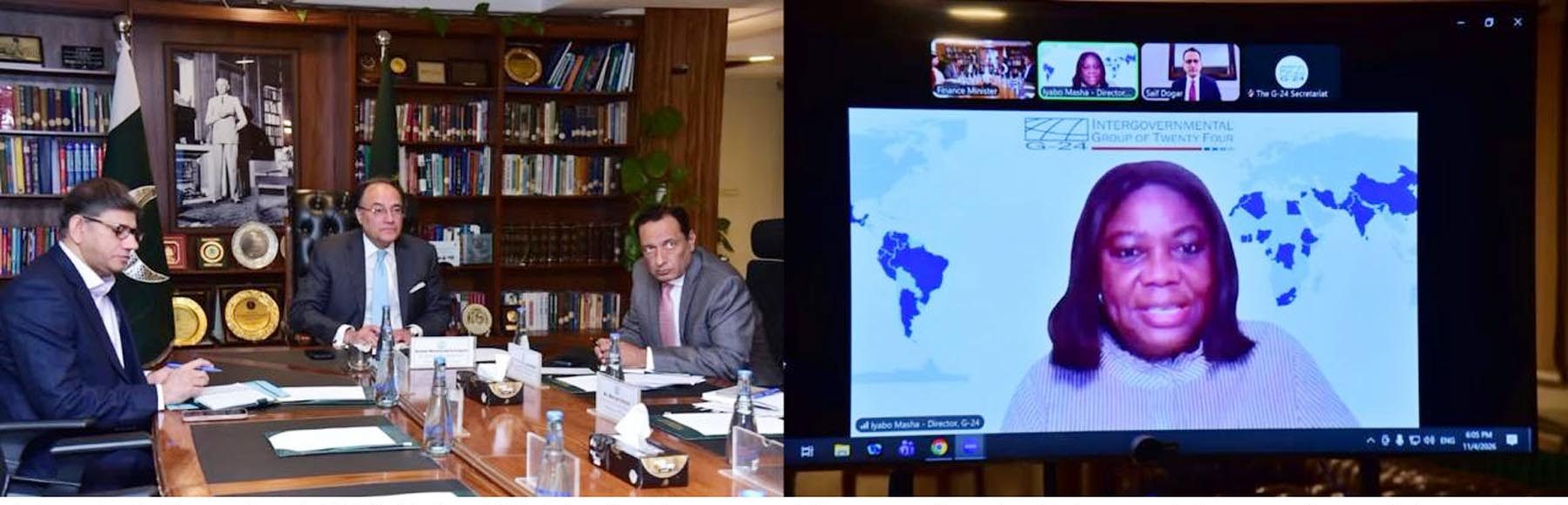
Aurangzeb made these remarks during a virtual briefing with Dr. Iyabo Masha, Director of the G-24 Secretariat, on the responsibilities and forthcoming work programme associated with Pakistan’s assumption of the group’s chairmanship. Saif Ullah Dogar, Senior Advisor to the Executive Director at the International Monetary Fund (IMF), also participated in the briefing, according to a press release issued by the Ministry of Finance.
Dr. Masha briefed the finance minister on the G-24’s institutional structure, ongoing policy and research activities, and engagement with international financial institutions and other multilateral forums. She also outlined the group’s upcoming programme, including preparations for the G-24 Technical Group Meeting, which Pakistan is expected to host in February 2027, as well as ministerial meetings held alongside the IMF-World Bank Spring and Annual Meetings.
Appreciating the G-24 Secretariat’s role in supporting the group and advancing the shared interests of emerging markets and developing economies, Aurangzeb said Pakistan would build on the work of previous chairmanships while pursuing a focused and forward-looking agenda. He emphasised policy coordination, consensus-building and meaningful engagement among member countries as the key pillars of Pakistan’s tenure.
The finance minister highlighted the need to strengthen the G-24’s influence in international economic and financial policy discussions, particularly regarding reforms to the global monetary and financial system, access to affordable development financing and measures to improve the resilience of emerging and developing economies.
He stressed that the priorities and development concerns of these countries must receive adequate consideration in the deliberations and decision-making processes of international financial institutions. Greater representation, he noted, should be accompanied by constructive engagement and practical policy proposals capable of building wider international consensus.
Aurangzeb said Pakistan’s chairmanship would provide an important opportunity to bring developing countries closer on issues of common interest and strengthen the collective voice of the Global South. He underscored the importance of promoting a more inclusive and responsive international financial architecture that better reflects the economic realities and development needs of emerging markets.
Referring to growing global uncertainty, geopolitical and geoeconomic fragmentation, persistent development financing gaps and mounting economic pressures on developing nations, the minister said the G-24 needed an agenda that responded effectively to emerging challenges while remaining committed to its longstanding development priorities.
He identified effective multilateral cooperation, adequate and affordable development financing, stronger economic resilience and expanded opportunities for trade, investment and economic integration as essential areas requiring sustained attention.
The minister also reaffirmed Pakistan’s commitment to maintaining close consultations with member countries and the G-24 Secretariat to identify shared priorities and translate them into practical policy recommendations. He said the country would seek to promote greater convergence among members while contributing constructively to wider discussions on reforming the international economic and financial system.
Particular emphasis was placed on preparations for the February 2027 Technical Group Meeting in Pakistan. Aurangzeb called for early planning, broad participation and substantive policy discussions to ensure the meeting provides a strong analytical foundation for subsequent ministerial deliberations and engagements.
He further stressed that continued coordination with the G-24 Secretariat would be essential as Pakistan develops its chairmanship priorities and prepares for upcoming engagements. Consultations across the membership, he said, would help build consensus on common challenges and develop actionable proposals reflecting the collective interests of developing economies.
Reiterating Pakistan’s commitment to working closely with the G-24 Secretariat and member countries, Aurangzeb said the country would seek to strengthen the group’s collective voice, advance the priorities of the Global South and contribute to building a more inclusive, responsive and resilient international monetary and financial system.